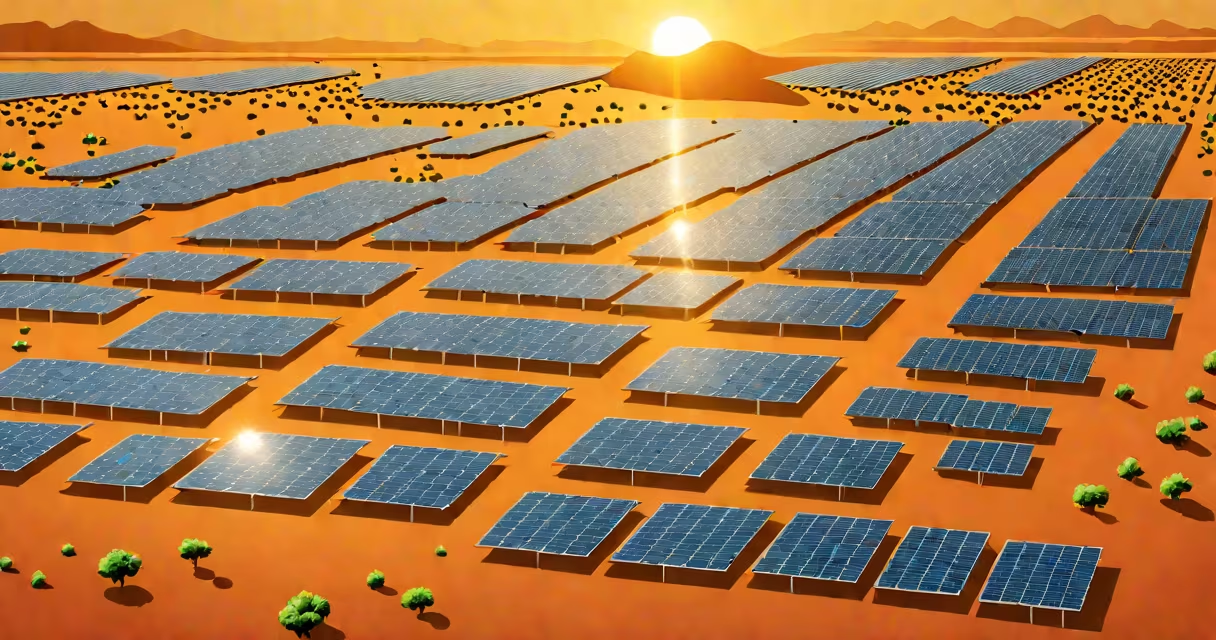
Solar energy converts sunlight into electricity using photovoltaic cells, offering a clean, renewable alternative to fossil fuels. Its core benefits include reduced utility costs, minimal environmental impact, and energy independence. These advantages drive widespread adoption across homes, businesses, and nations.
Solar panels absorb photons from sunlight and convert them into direct current (DC) electricity through the photovoltaic effect. An inverter transforms DC into alternating current (AC), which powers homes and feeds excess energy back into the grid. This process requires no fuel, emits no greenhouse gases during operation, and relies on a resource available everywhere sunlight reaches.
The U.S. Department of Energy confirms that solar power systems generate electricity with zero air pollution and lower water usage compared to coal or natural gas plants. According to the National Renewable Energy Laboratory (NREL), solar installations reduce carbon dioxide emissions by approximately 150 grams per kilowatt-hour-equivalent to removing 1.5 million cars from the road annually if scaled nationwide.
A residential solar system typically includes rooftop panels, an inverter, a meter, and a connection to the utility grid. When sunlight hits the panels, electrons move within the semiconductor material (usually silicon), creating an electric current. The system automatically adjusts output based on sun intensity and weather conditions.
During peak daylight hours, excess electricity flows to the grid, earning credits through net metering. At night or during low-light periods, the home draws power from the grid, using accumulated credits to offset costs. This cycle reduces monthly bills and increases energy reliability.
In 2023, the average U.S. household with a 6-kilowatt solar system produced about 8,000 kilowatt-hours annually-enough to cover 70% of typical electricity consumption. The system paid for itself in 8 to 12 years, depending on location and incentives, then generated free power for the remaining 15 to 20 years of its 25-year lifespan.
Solar energy applications fall into three main categories: residential, commercial, and utility-scale. Each serves distinct needs and operates at different scales.
| System Type | Typical Size | Primary Use | Key Advantage |
|---|---|---|---|
| Residential | 3-10 kW | Home electricity, heating, water heating | Lower monthly bills, increased property value |
| Commercial | 10-500 kW | Business operations, warehouse lighting, HVAC | Reduced operational costs, meeting ESG goals |
| Utility-scale | 10 MW - 500 MW | Grid supply, regional power distribution | Massive emission reductions, stable long-term pricing |
For example, a 500-kilowatt solar range installed on a factory roof in California generates 850,000 kWh yearly-enough to power 80 homes. The facility saved $120,000 in energy costs over five years, according to a 2022 report by the California Energy Commission.
Many assume solar panels stop working on cloudy days. In reality, they produce 10-25% of their rated capacity under overcast skies. Modern panels are designed to capture diffuse light, making them effective even in northern climates like Germany and Canada.
Another myth is that solar installation requires extensive roof repairs. Most systems mount via non-penetrating rails, preserving roof integrity. A 2021 study by the Solar Energy Industries Association (SEIA) found that 92% of residential installations did not require roof replacement.
Some confuse solar thermal systems with photovoltaic ones. Photovoltaic panels convert light directly into electricity. Solar thermal systems use mirrors or lenses to concentrate heat, which drives turbines or heats water. While both use solar energy, they serve different purposes-electricity vs. thermal energy.
Solar energy reduces dependence on imported oil and volatile fuel markets. The International Energy Agency (IEA) reports that solar power accounted for 40% of new global electricity capacity added in 2023-surpassing wind and gas combined. Countries like Morocco and Chile now meet over 30% of national demand through solar farms.
During the 2022 European energy crisis, households with solar systems experienced 40% lower energy costs compared to grid-only users. In Germany, solar contributed 12% of total electricity generation, helping stabilize prices amid supply disruptions.
I installed a 7.2-kW system on my garage roof in 2020. After the first year, my electricity bill dropped from $180 to $22 monthly. Over four years, I've saved $6,800 and earned $1,400 in net metering credits. The system pays for itself faster than expected, and maintenance has been negligible.
When comparing solar to other renewables, its scalability stands out. A single panel produces 300 watts; a single solar farm can generate enough power for 100,000 homes. Unlike wind, solar doesn't require consistent wind patterns or complex mechanical parts. It's silent, modular, and deployable in remote areas without grid access.
Understanding the advantages of solar energy helps explain why over 1.5 million U.S. homes have solar panels. The technology delivers measurable financial, environmental, and energy security benefits. As efficiency improves and storage becomes cheaper, solar energy will continue to grow as a key part of the global energy mix.