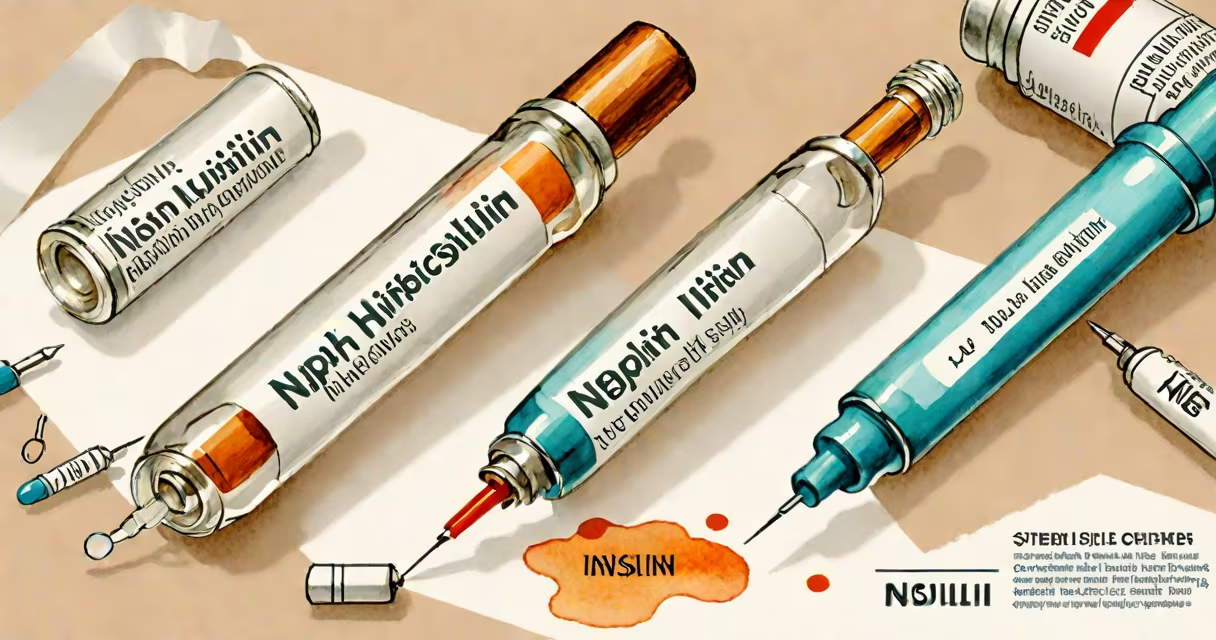
NPH stands for Neutral Protamine Hagedorn, a type of intermediate-acting insulin used to control blood glucose levels in people with diabetes. It begins working about 1 to 2 hours after injection, peaks around 4 to 12 hours, and lasts 12 to 18 hours. This timing makes it suitable for twice-daily dosing, often in combination with rapid-acting insulin.
NPH insulin is created by adding protamine, a protein derived from fish sperm, to regular human insulin. The protamine delays absorption from the injection site, creating a slower onset and longer duration compared to short-acting insulin. The "neutral" part refers to the pH of the solution-adjusted to match the body's natural environment to prevent irritation.
It is not a brand name. Instead, NPH is a generic term used across multiple manufacturers. Common brand names include Humulin N, Novolin N, and Insulin NPH. These products have the same active ingredient and pharmacokinetic profile, though minor differences in formulation may exist.
After subcutaneous injection, NPH insulin gradually releases insulin into the bloodstream. The protamine forms a complex with insulin molecules, slowing their diffusion. As the protamine dissolves over time, free insulin becomes available to bind to receptors on cells, promoting glucose uptake from the blood.
This mechanism allows NPH to cover baseline insulin needs throughout the day. It helps maintain stable blood sugar during fasting periods-such as between meals and overnight-reducing the risk of hyperglycemia. However, because it peaks several hours after injection, timing is critical to avoid hypoglycemia.
A typical regimen involves injecting NPH twice daily-once in the morning and once before bedtime. For example, a patient might take 20 units of NPH at 7 a.m. and 15 units at 9 p.m., with mealtime insulin added before breakfast and dinner. Without proper timing, the peak effect can coincide with low blood sugar during sleep or midday.
NPH insulin is available in standard vials (10 mL), prefilled pens (3 mL), and cartridges. All contain 100 units per milliliter (U-100). The concentration is standardized across brands, allowing for direct substitution.
| Form | Volume | Units per Milliliter | Common Brands |
|---|---|---|---|
| Vial | 10 mL | 100 U/mL | Humulin N, Novolin N |
| Prefilled Pen | 3 mL | 100 U/mL | NovoLog FlexPen (NPH variant) |
| Cartridge | 3 mL | 100 U/mL | Insulin Pen Cartridges |
Each form requires a specific delivery device. Vials must be used with a syringe and needle. Pens and cartridges require compatible insulin pens. Using the wrong device leads to inaccurate dosing and potential complications.
NPH insulin is prescribed for type 1 and type 2 diabetes when basal insulin coverage is needed. It is especially useful in patients who cannot afford newer long-acting insulins or live in areas with limited access to advanced treatments.
According to the American Diabetes Association (ADA), NPH remains a foundational therapy in global diabetes care due to its low cost and proven efficacy. A 2021 review in Diabetes Care noted that NPH was used in over 60% of insulin regimens in low- and middle-income countries, where newer analogs are less accessible.
It is also used in hospital settings for blood glucose control during acute illness. For example, a patient admitted with sepsis and elevated blood sugar may receive NPH insulin via sliding scale protocol to prevent hyperglycemia-induced complications.
NPH is sometimes confused with long-acting insulin analogs such as insulin glargine or insulin detemir. While both provide basal coverage, they differ in action profile. Long-acting analogs have a flat, consistent release with minimal peak, reducing hypoglycemia risk. NPH has a distinct peak, increasing the chance of low blood sugar if timing is off.
Another misconception is that NPH insulin is outdated. While newer options offer better predictability, NPH remains effective and widely used. A 2020 study in The Lancet Diabetes & Endocrinology found that patients using NPH had similar HbA1c outcomes to those on insulin glargine, though with higher rates of nocturnal hypoglycemia.
NPH insulin must be mixed thoroughly before use. Shaking the vial causes foaming, which can lead to inaccurate dosing. Instead, roll the vial gently between palms until the solution appears uniformly cloudy. Failure to do so results in inconsistent insulin delivery.
I observed a patient with type 2 diabetes struggling with nighttime hypoglycemia after switching from insulin glargine to NPH. His blood sugar dropped below 60 mg/dL at 2 a.m. despite eating a snack. Upon review, his evening dose was administered at 8 p.m.-too early for the peak effect. Adjusting the timing to 9 p.m. and adding a small bedtime snack stabilized his levels. This case illustrates how precise timing is essential with NPH.
NPH shares the abbreviation format with other medical terms, but its meaning is unique. For example:
These terms are unrelated to insulin. Confusing them can lead to serious errors. For instance, mistaking NPH for ERCP could result in incorrect procedural planning. Always verify context when interpreting abbreviations.
Understanding what NPH means in medical terms ensures accurate treatment. It is not a brand, not a new drug, but a well-established form of insulin with predictable effects when used correctly. Its role in managing diabetes remains important, especially where cost and access are concerns.