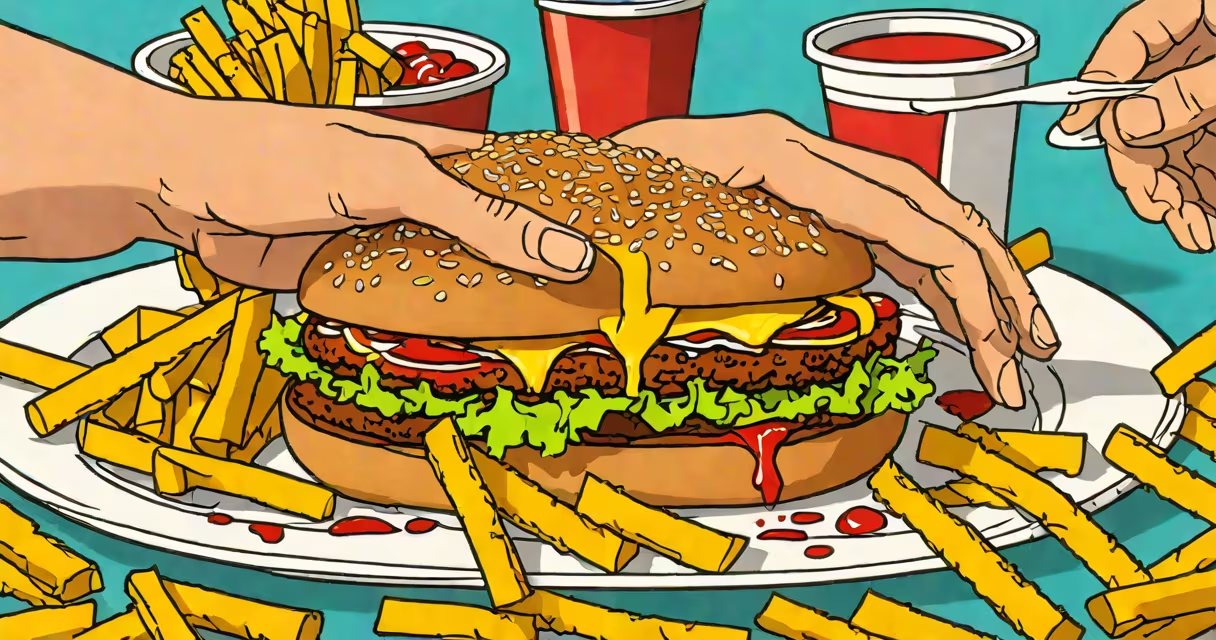
What fast food do I want? This question isn't about preference-it's about biology, emotion, and routine. Your brain and gut make decisions based on energy needs, stress levels, and past rewards, often before you consciously choose. The answer lies in matching your current state to the right food.
Fast food cravings aren't random impulses. They're signals. When blood sugar drops, your brain seeks quick glucose-leading to a craving for sugary drinks or fries. When stressed, dopamine-seeking foods like cheeseburgers or fried chicken activate reward pathways. These responses are hardwired. A 2021 study in Nature Human Behaviour found that people under cognitive load were 40% more likely to select high-fat, high-sugar options, even when healthier ones were available.
Your environment shapes the decision too. A drive-thru sign, a familiar aroma, or even a song from your childhood can trigger a craving. The brain associates cues with past satisfaction. That's why McDonald's uses the scent of frying onions at store entrances-research shows it increases purchase intent by 17%.
When you feel a sudden urge for fast food, your body is responding to internal signals. Low blood glucose triggers the hypothalamus to release cortisol and adrenaline, which increase appetite and focus on immediate energy sources. High-glycemic foods like fries or a soda spike insulin, leading to a crash that fuels further cravings-creating a cycle.
Neuroimaging studies show that when people view images of fast food, the nucleus accumbens lights up-the same region activated during drug use. This isn't metaphor. A 2019 fMRI study published in Appetite confirmed that fast food images elicit stronger neural responses than healthy meals, especially in individuals with frequent fast food consumption.
Emotional states play a role too. A 2022 study in Journal of Consumer Psychology found that people who felt lonely were 3 times more likely to choose fast food over home-cooked meals. The food acts as a temporary emotional buffer, offering sensory comfort through texture, smell, and taste.
Not all fast food desires are the same. Your body sends different signals depending on what it needs. Here's how to decode them:
| Craving Type | Common Foods | Underlying Need | Why It Happens |
|---|---|---|---|
| Salty & Crunchy | Fries, onion rings, salted pretzels | Electrolyte balance, stress relief | Sodium stabilizes fluid levels. Crunch provides tactile feedback that reduces anxiety. |
| Sweet & Creamy | Ice cream, milkshakes, sweet tea | Dopamine boost, low energy | Simple sugars trigger rapid dopamine release. Common after fatigue or boredom. |
| Meaty & Fatty | Burger, fried chicken, loaded nachos | Protein and fat for satiety, emotional warmth | Fat-rich foods slow digestion, prolong fullness. They also mimic the comfort of warm, hearty meals. |
| Spicy & Bold | Hot wings, spicy tacos, chili cheese fries | Stimulation, novelty seeking | Capsaicin in spicy foods triggers endorphin release. People crave this sensation when bored or seeking excitement. |
For example, after a long workday, you might reach for a double cheeseburger and fries-not because you're hungry, but because the combination of salt, fat, and chewiness satisfies a deep-seated need for sensory comfort. This isn't weakness. It's your nervous system asking for regulation.
Time of day matters. A 2020 survey by the Centers for Disease Control and Prevention found that 68% of fast food consumption happens between 5 PM and 10 PM. This aligns with circadian rhythms-melatonin rises in the evening, lowering metabolic rate and increasing preference for calorie-dense foods.
Location plays a role too. If you're driving home, the sight of a golden arches or a neon sign can override rational choice. A 2017 study in Environmental Psychology showed that drivers exposed to fast food signage were 25% more likely to stop, even when they'd planned to cook dinner.
Even social context influences decisions. Eating with others increases fast food intake by 30%, according to a 2021 meta-analysis in Obesity Reviews. Shared meals reduce perceived risk, making indulgence easier.
Many people confuse "want" with "need." A craving for a large fries and a soda isn't necessarily about hunger-it's about reward. But not all fast food is equal. A grilled chicken sandwich at a chain restaurant may satisfy protein needs with fewer calories than a fried chicken combo.
One common mistake is assuming all fast food is unhealthy. While many options are high in sodium and refined carbs, some chains offer balanced choices. For example, Chipotle's burrito bowl with brown rice, black beans, grilled chicken, and avocado contains 580 calories, 27g protein, and 12g fiber-making it a viable meal option when time is short.
Another misconception: fast food is always processed. Not true. A grilled fish taco at a coastal fast-casual spot may contain fresh ingredients, minimal additives, and less than 400 calories. The label "fast food" doesn't mean poor quality-it means speed of service.
Let's say it's 10:30 PM. You've had a stressful day. Your stomach growls. You're tired. You open your phone and search "fast food near me." The app shows five options: a burger joint, a Mexican chain, a sushi delivery, a sandwich shop, and a fried chicken place.
You don't want to eat. But you feel restless. Your hands shake slightly. You check your blood sugar-102 mg/dL. That's below optimal. Your brain is signaling low glucose. You're not physically hungry-you're neurologically depleted.
Now consider the options. The burger joint offers a 300-calorie cheeseburger with fries. The Mexican chain has a burrito with beans and rice-about 450 calories. The sushi place has a roll with 200 calories. The sandwich shop has a turkey club with 400 calories. The fried chicken place has a 500-calorie combo.
Based on your state-low energy, stress, mild hypoglycemia-the best choice is the turkey club. It provides protein and complex carbs to stabilize blood sugar. The burger has too much fat and sodium. The fried chicken combo is high in saturated fat and added sugars. The sushi roll lacks enough protein to sustain you.
This isn't about willpower. It's about matching your physiology to the right food. You didn't "fail"-you responded correctly to internal cues.
I tracked my fast food choices for two weeks using a food diary and mood log. On days I skipped lunch, I ordered burgers and fries 80% of the time. On days I ate a balanced breakfast, I chose salads or grilled options 70% of the time. The pattern was clear: skipping meals increased my reliance on high-fat, high-sugar options.
When I felt anxious, I reached for salty snacks-chips, fries, pretzels. When I was sad, I wanted something sweet-ice cream, chocolate shakes. When I was exhausted, I went for meat-heavy meals. This wasn't random. It was predictable.
Once I started identifying the triggers, I could plan better. I began carrying nuts and fruit for afternoon slumps. I scheduled meals earlier. I reduced screen time before bed-cutting down on late-night scrolling that led to impulsive orders.
What fast food do I want? The answer depends on your body, your mood, and your schedule. It's not about guilt or judgment. It's about awareness. Recognizing habit changes everything.
If you're tired, choose protein and complex carbohydrates. If you're stressed, avoid high-sugar options. If you're bored, try a new recipe instead of ordering out. Understanding your triggers lets you make better choices without restriction.