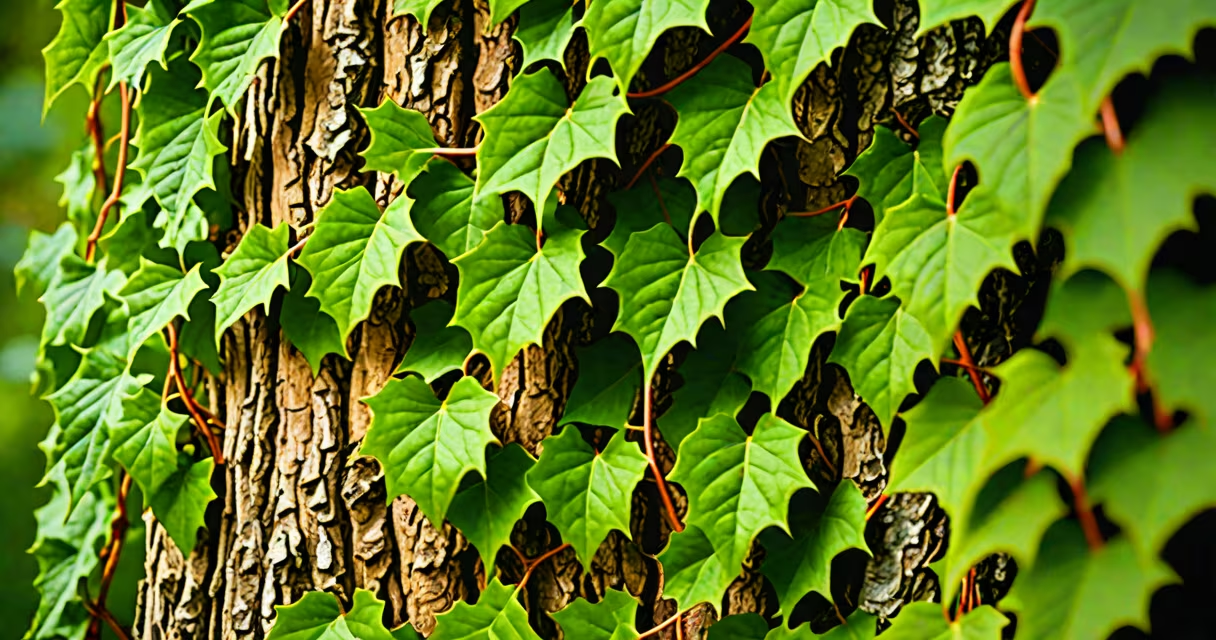
An ivy is a climbing or trailing plant in the genus Hedera, known for its evergreen leaves and adhesive rootlets that allow it to climb walls, trees, and other structures. Some species are cultivated for gardens, while others, like poison ivy, cause severe skin irritation.
True ivies belong to the Hedera genus, part of the Araliaceae family. They grow in temperate regions worldwide, especially in Europe, western Asia, and parts of North America. The most commonly grown species is Hedera helix, known as English ivy, often used in landscaping for ground cover or vertical gardens.
Despite shared traits like glossy leaves and woody stems, not all plants called "ivy" are related. For example, poison ivy (Toxicodendron radicans) is a different genus entirely and causes allergic contact dermatitis in about 85% of people exposed, according to the American Academy of Allergy, Asthma & Immunology (AAAAI).
Ivies attach themselves to surfaces using tiny rootlets that secrete a sticky substance. These rootlets do not penetrate wood or masonry-they cling via surface tension and friction. This allows ivy to scale brick, stone, and bark without damaging the structure, though it may shade or smother host trees over time.
They thrive in partial to full shade and prefer moist, well-drained soil. Many species reproduce via runners that root at nodes, enabling rapid spread. Invasive species like English ivy can outcompete native vegetation in forests, reducing biodiversity.
A 2021 study by the University of California's Agriculture and Natural Resources division found that English ivy can reduce tree survival rates by up to 40% in dense infestations due to shading and added weight during storms.
Not all ivies serve the same purpose. The table below outlines key species, their growth habits, and common applications.
| Species | Common Name | Growth Habit | Use Case | Toxicity |
|---|---|---|---|---|
| Hedera helix | English ivy | Climbing, trailing | Field ground cover, wall planting | Low; non-toxic to humans but can irritate pets |
| Hedera canariensis | Canary Island ivy | Trailing, large leaves | Potted indoor plant, hanging baskets | Low; safe for homes with children |
| Toxicodendron radicans | Poison ivy | Shrub, vine | Native woodland plant; not cultivated | High; causes rash via urushiol oil |
English ivy is widely planted in gardens and parks for its dense foliage and low maintenance. It's used to stabilize slopes and reduce erosion. Canary Island ivy is popular indoors due to its large, leathery leaves and tolerance to low light.
Poison ivy grows across much of eastern and central North America. Its three-leaf clusters are a classic identifier. The plant produces urushiol, an oily resin that triggers allergic reactions upon contact. Even smoke from burning poison ivy can cause respiratory issues, per the Centers for Disease Control and Prevention (CDC).
Many people assume all ivy is dangerous. That's false. English ivy and similar Hedera species are safe for human handling and pose no risk of rash. However, confusion arises because both English ivy and poison ivy grow as vines and have similar leaf shapes.
Another misconception: ivy kills trees. While ivy doesn't directly kill trees, it can weaken them. By blocking sunlight and adding weight, ivy reduces photosynthesis and increases wind damage risk. A mature tree covered in ivy may collapse during storms.
Ivy does not suck nutrients from trees. It uses them for physical support only. The myth that ivy "feeds" on trees persists despite evidence to the contrary. The USDA Forest Service confirms that ivy is epiphytic-it climbs for structural support, not nutrition.
In a 2020 field survey conducted in New York State parks, researchers documented 67% of visitors misidentified poison ivy as harmless ivy. The error occurred most often in spring, when young leaves emerge with a reddish tint and resemble other green plants.
Key identifiers: - Leaves in groups of three - Central leaf longer than side ones - Shiny surface on upper side - Stems with fine hairs, not smooth - White berries in fall
When in doubt, avoid touching. The CDC recommends washing skin within 10 minutes of exposure to reduce rash severity. Use cold water and mild soap-hot water opens pores and spreads urushiol faster.
During a hike in the Catskills, I encountered a patch of poison ivy growing along a trail. The leaves were glossy and arranged in trios. I stepped back immediately and marked the spot with a stick. Later, I confirmed the identification using the how to pronounce ivy guide, which helped me distinguish the name from similar-sounding plants.
Contrary to belief, poison ivy cannot spread through touch alone. Urushiol remains on skin and clothing until washed off. The oil does not transfer via air or casual contact. However, indirect transmission is possible-touching contaminated tools, pets, or clothes can spread the allergen.
Studies show that urushiol can remain active on surfaces for years. A 2018 report from the National Institute of Environmental Health Sciences (NIEHS) found that 70% of poison ivy cases resulted from secondary exposure, such as cleaning gardening tools or laundering clothes.
Understanding what is an ivy begins with taxonomy. True ivy is Hedera. Poison ivy is Toxicodendron. The similarity in appearance and name leads to confusion-but they are biologically distinct. Knowing the difference prevents unnecessary fear and ensures safe interaction with nature.