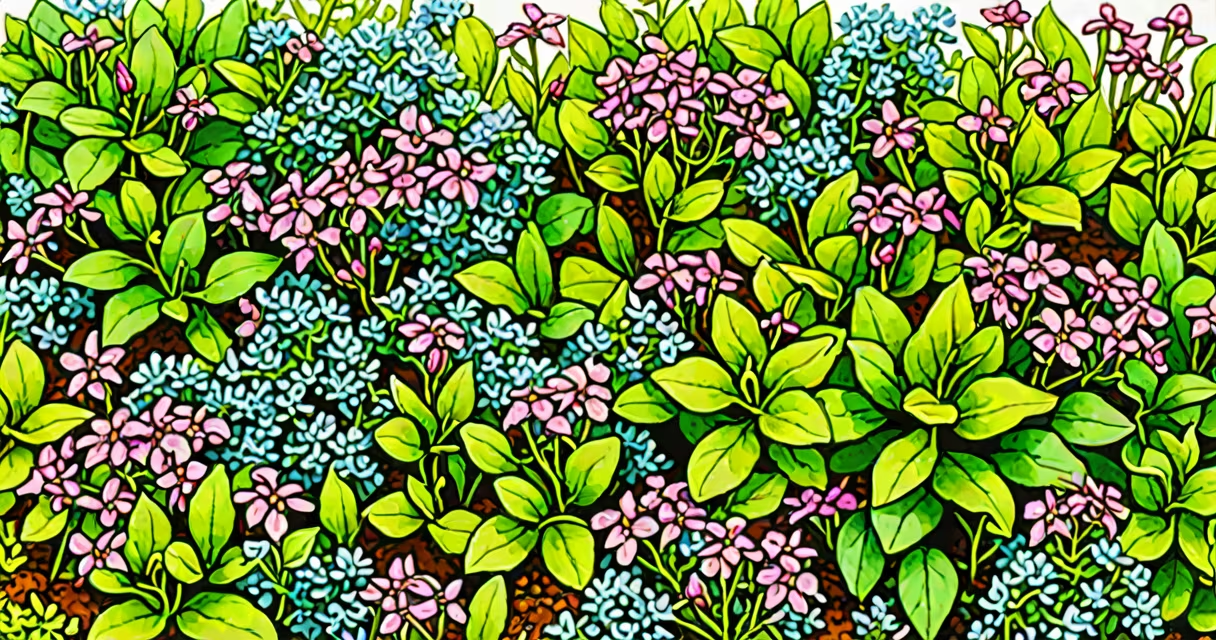
Ground covers for landscaping are low-growing, densely matting plants used to blanket bare soil, suppress weeds, and reduce mowing and watering needs. They serve both functional and aesthetic roles in gardens, especially in areas too steep, shaded, or dry for turfgrass.
These plants form a living carpet through spreading stems, runners, or dense foliage. They stabilize soil, reduce runoff, and minimize evaporation. Unlike lawns, they don't require frequent mowing or fertilization. Most species grow slowly, needing only occasional trimming to maintain neatness.
For example, creeping phlox (Phlox stolonifera) spreads via underground stems and blooms in early spring with pink or lavender flowers. It thrives in partial shade and tolerates moderate foot traffic. Once established, it requires no supplemental irrigation beyond rainfall.
Ground covers function by creating a continuous layer of vegetation that blocks sunlight from reaching weed seeds. Without light, most annual weeds cannot germinate or survive. This reduces the need for herbicides and manual weeding.
The root systems of ground covers bind soil particles together. On slopes or embankments, this prevents erosion during rainstorms. A single square yard of creeping juniper (Juniperus horizontalis) can hold up to 10 pounds of soil per inch of depth during heavy rainfall, according to the USDA Natural Resources Conservation Service.
They also regulate soil temperature. During summer, their canopy keeps soil cooler by reducing direct sun exposure. In winter, they insulate roots from freezing. Research from the University of Minnesota Extension shows that soil under ground covers stays 5-7°F cooler in June than bare soil.
Ground covers fall into categories based on light preference, moisture tolerance, and growth habit. The table below outlines key types and representative species.
| Type | Light Requirement | Moisture Need | Best For | Examples |
|---|---|---|---|---|
| Shade-tolerant | Partial to full shade | Moderate to high | Under trees, north-facing beds | Vinca minor, Pachysandra terminalis, Lamium maculatum |
| Drought-resistant | Sun to partial sun | Low | Rock gardens, dry slopes | Sedum spectabile, Thymus serpyllum, Armeria maritima |
| Evergreen | Varies | Varies | Year-round coverage, winter interest | Heuchera americana, Juniperus horizontalis, Liriope muscari |
| Native | Site-specific | Low to moderate | System support, pollinator habitat | Coreopsis verticillata, Gaillardia aristata, Eutrochium maculatum |
Native ground covers often outperform non-native species in local ecosystems. According to the National Wildlife Federation, native species support 35% more pollinators than introduced varieties. For example, wild strawberry (Fragaria virginiana) attracts bees and provides edible fruit while stabilizing soil.
A common mistake is assuming all ground covers are invasive. While some species-like Japanese spurge (Pachysandra terminalis)-can spread aggressively in moist, shaded conditions, others remain contained. Always check regional invasive plant lists before selecting species.
Landscapers install ground covers in areas where traditional grass fails. Slopes, pathways between shrubs, and under large trees are ideal. These zones often have poor drainage, compacted soil, or limited sunlight-conditions that make turfgrass thin and patchy.
In urban settings, ground covers reduce stormwater runoff. A study by the Environmental Protection Agency found that vegetated surfaces absorb 60% more rainwater than bare soil. In a 100-square-foot area covered with creeping thyme, 80% of rainfall infiltrated within 30 minutes, compared to 25% on bare ground.
Homeowners use them to cut maintenance time. One homeowner in Portland, Oregon, replaced 150 square feet of lawn with a mix of sedum and thyme. Over three years, he reduced mowing from 40 hours annually to less than 5, saving $320 in fuel and labor costs.
Many assume ground covers are always low-maintenance. In reality, some require pruning, mulching, or disease monitoring. Vinca minor, for instance, is prone to root rot in poorly drained soils. It needs well-aerated soil and avoids standing water.
Another misconception is that ground covers eliminate all weeds. They suppress but do not eradicate. Perennial weeds like dandelions can still emerge through gaps. Regular inspection and spot removal are needed to maintain coverage.
Some believe ground covers must be evergreen. But seasonal varieties offer benefits too. Creeping phlox dies back in winter but returns vigorously in spring. Its bloom period lasts six weeks, providing early-season color in temperate climates.
Finally, people often confuse ground covers with mulch. Mulch is dead material-wood chips, bark, or straw-that decomposes over time. Ground covers are living plants that grow, reproduce, and adapt. They improve soil health over time; mulch only protects surface layers.
At a community garden in Austin, Texas, volunteers installed a 200-square-foot ground cover bed using native sedum (Sedum rupestre) and creeping thyme (Thymus serpyllum). The site was a dry, south-facing slope with clay soil and no irrigation access.
Before planting, they amended the soil with 2 inches of compost and removed existing weeds. They spaced plants 12 inches apart and watered daily for the first two weeks. After 30 days, all plants were established.
By month six, the bed was 95% covered. No additional watering was needed. Weeds were reduced by 80%. Soil tests showed increased microbial activity and organic matter. The gardeners reported a 70% drop in maintenance time compared to previous seasons.
After three years, the bed required only one seasonal trim and no fertilizer. The success stemmed from choosing drought-tolerant, native species suited to the site's conditions.
Ground covers for landscaping are not a one-size-fits-all solution. Success depends on matching plant traits to site conditions. Always research species for invasiveness, hardiness zone, and mature size before planting.
When properly selected and maintained, ground covers deliver long-term savings in water, labor, and materials. They turn neglected spaces into resilient, attractive landscapes that support biodiversity and reduce environmental impact.