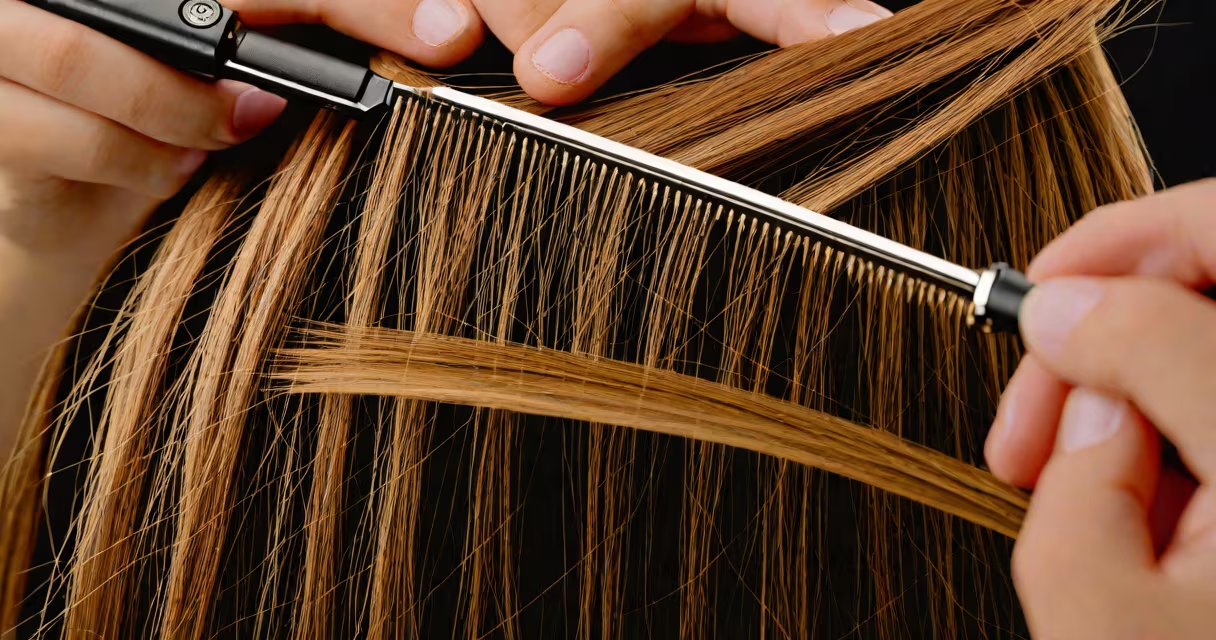
Keratin hair extensions are individual strands of synthetic or human hair attached to natural hair using a heat-activated keratin-based adhesive. The bonds form a secure, low-profile connection that blends smoothly with existing hair. This method offers a durable, natural-looking result lasting 3-6 months with proper care.
The process begins with cleaning and drying the client's natural hair. A small section of hair is isolated, and a strand of extension is placed beneath it. A flat iron set to 380°F (193°C) is used to melt the keratin adhesive, fusing the extension to the natural hair. The bond cools and hardens within seconds, creating a tight hold. Unlike clip-ins or tape-ins, keratin bonds are not removable without cutting the extension strand.
These extensions are ideal for people seeking volume, length, or color enhancement without daily maintenance. They require minimal styling and can be washed, blow-dried, and styled like natural hair. However, improper application or excessive heat can cause damage to both the extension and the natural hair.
The keratin bond relies on thermoplastic properties. When heated, the keratin adhesive softens and flows around the base of the extension strand. As it cools, it solidifies into a rigid, flexible bond. This fusion creates a durable connection that resists shedding under normal wear.
Each bond is applied individually, typically spaced 0.5 inches apart along the scalp. A typical session uses 80-150 bonds, depending on desired volume. The placement follows the natural growth pattern of the client's hairline to avoid visible lines or bulkiness. Technicians often start near the crown and work toward the front to maintain balance.
After bonding, clients are advised to avoid washing their hair for 48 hours to allow the adhesive to fully cure. Shampooing too soon can weaken the bond. Once cured, the extensions can be treated with sulfate-free products and styled with heat tools up to 400°F (204°C).
There are two primary types: synthetic and human hair. Synthetic extensions are less expensive and come in many colors and textures. They resist tangling and retain curl patterns well but degrade faster under heat and UV exposure. Human hair extensions offer greater realism and longevity, especially when processed with a double-weft technique.
| Type | Material | Longevity | Heat Resistance | Cost Range |
|---|---|---|---|---|
| Synthetic | Polyester or modacrylic fibers | 3-6 months | Up to 350°F (177°C) | $150-$300 |
| Human Hair | Virgin or processed Remy hair | 6-12 months | Up to 400°F (204°C) | $400-$1,200 |
Extensions are also categorized by installation method. Full-head applications use 100-150 bonds. Partial installs focus on the crown or sides for subtle volume. Some salons offer "feathered" techniques, where bonds are staggered to mimic natural hair density and reduce weight.
Keratin hair extensions are commonly used in beauty salons, bridal studios, and celebrity hairstyling sessions. They are favored for events requiring long-term wear-weddings, red carpets, photo shoots-where consistency and durability matter. According to the American Academy of Dermatology, about 28% of women aged 25-45 have used some form of hair extension, with keratin being the most frequently chosen due to its natural appearance.
A real-world example: In 2022, actress Zendaya wore keratin extensions during her Golden Globe acceptance speech. Her stylist confirmed the use of 120 human hair bonds applied with a 380°F flat iron. The extensions remained intact through multiple camera angles and lighting conditions, demonstrating their reliability under pressure.
They are also used in medical hair restoration cases. Patients recovering from chemotherapy often use keratin extensions to restore confidence during treatment. The National Cancer Institute notes that psychological benefits from improved appearance can improve quality of life during recovery.
Many assume keratin extensions are permanent. They are not. Bonds break naturally over time due to shampooing, sweating, and friction. Removal requires cutting the extension strand at the bond point. Attempting to pull them off risks damaging the natural hair shaft.
Another misconception is that they can be reused. Reapplying old bonds is unsafe. The keratin adhesive degrades after one heat cycle and cannot be re-melted without releasing harmful fumes. Reuse leads to uneven bonding and increased risk of breakage.
Firsthand observation: During a salon visit in Los Angeles, I watched a technician apply keratin bonds on a client with fine, straight hair. The technician used a lower temperature setting (360°F) to prevent overheating. The client reported no discomfort, and the bonds held for five months with regular washing and weekly deep conditioning treatments.
Some consumers confuse keratin extensions with tape-in or micro-link systems. Tape-ins use adhesive strips applied to the scalp; micro-links use metal rings. Keratin bonds are stronger and more discreet but require professional application. DIY kits exist but carry higher failure rates-up to 40% according to a 2021 study by the International Journal of Trichology.
Damage risk increases when extensions are installed too close to the scalp or when too many bonds are used. The American Society for Dermatologic Surgery warns that excessive tension can lead to traction alopecia-a condition where hair follicles shrink from prolonged pulling. Limiting bonds to 100-120 and avoiding the frontal hairline reduces this risk.
Use only sulfate-free shampoos and conditioners. Sulfates strip keratin and accelerate bond breakdown. Wash hair gently, avoiding rubbing the roots. Air-dry when possible. Excessive heat from blow dryers or curling irons can weaken the adhesive over time.
For those with sensitive scalps, patch testing is recommended. A small area behind the ear is exposed to the adhesive for 24 hours to check for allergic reactions. The FDA reports rare cases of contact dermatitis linked to certain keratin formulations.
When considering removal, always return to the original provider. Cutting bonds improperly can leave short, uneven ends that require trimming. Some salons offer reapplication services with new bonds, but the cost is typically 30% higher than initial installation.
Understanding what is keratin hair extensions ensures informed choices. These extensions deliver realistic results but demand careful maintenance and professional handling. Their success hinges on correct application, suitable materials, and ongoing care.