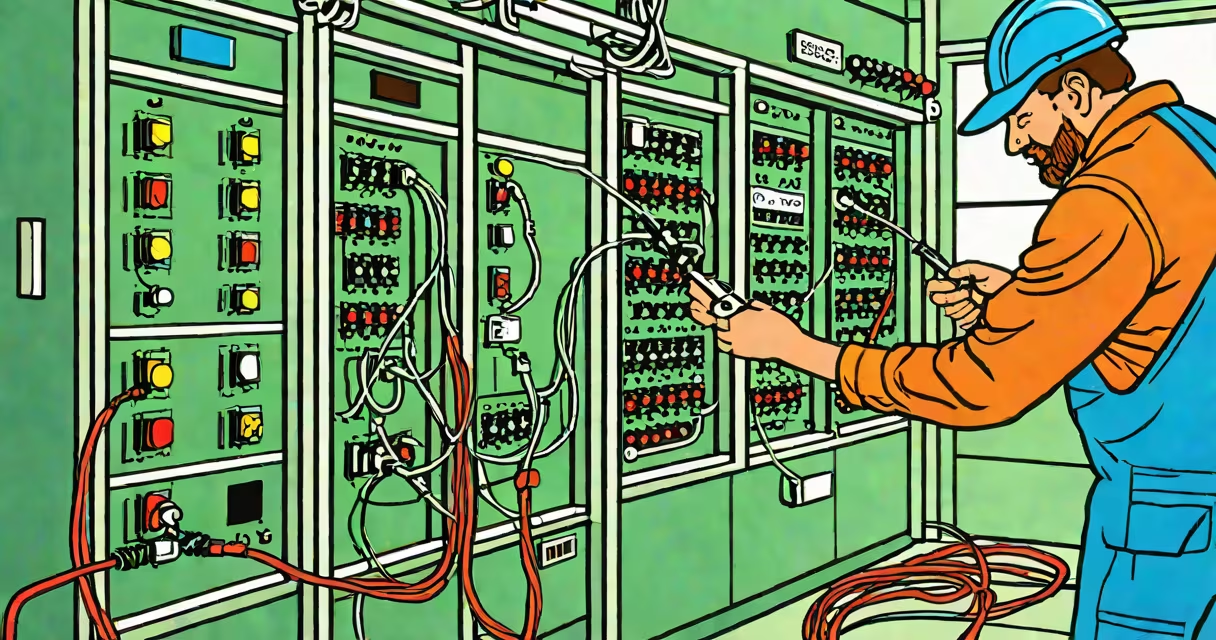
Electricians earn the highest median annual wages among skilled trades, with top earners making over $90,000 in high-demand markets. This income exceeds the national average for bachelor's degree holders in many fields.
Skilled trades require hands-on training, certifications, and years of field experience. Unlike degrees that often lead to entry-level roles, skilled trades offer immediate earning potential after apprenticeship completion. Electricians, plumbers, and HVAC technicians consistently rank at the top of earnings within this category.
The U.S. Bureau of Labor Statistics (BLS) reports that electricians earned a median annual wage of $60,000 in 2023, with the top 10% exceeding $90,000. These figures surpass median salaries for many college-educated professionals, including teachers, social workers, and administrative assistants.
These trades operate through a structured apprenticeship model combining classroom instruction with paid on-the-job training. Apprenticeships typically last four years and include 8,000 hours of work experience and 576 hours of technical education.
After completing training, individuals pass a licensing exam administered by state or local authorities. Licensing ensures competency and safety standards, especially critical in electrical and gas systems where errors can cause fires or fatalities.
For example, a licensed journeyman electrician in New York City earns an average of $85,000 annually. This includes overtime, hazardous duty pay, and union benefits. Many electricians advance to master electrician status, qualifying them to design systems, inspect installations, and supervise crews.
Not all skilled trades have equal earning potential. Income varies by region, industry, and specialization. The following table compares median annual wages and job growth projections from the BLS (2023 data).
| Skill | Median Annual Wage | Projected Growth (2022-2032) | Specialization Pathways |
|---|---|---|---|
| Electrician | $60,000 | 6% | Industrial, commercial, solar, automation |
| Plumber | $59,000 | 5% | Commercial piping, pipefitting, HVAC integration |
| HVAC Technician | $52,000 | 6% | Refrigeration, energy efficiency, smart systems |
| Carpenter | $51,000 | 3% | Custom framing, millwork, residential remodeling |
| Welder | $47,000 | 6% | Aerospace, pipeline, structural steel |
Electricians and plumbers lead in median pay due to complex system requirements, liability risks, and demand in urban infrastructure. HVAC technicians see steady growth tied to climate control needs in new buildings and retrofits.
Specialized roles command higher pay. A certified industrial electrician working in a semiconductor plant may earn $95,000 annually. Similarly, a plumber specializing in medical gas systems for hospitals can exceed $75,000, depending on location and certification level.
Urban centers and industrial zones offer premium compensation. Cities like San Francisco, Seattle, and Chicago pay electricians 20-30% above the national average due to cost of living and project complexity.
Union membership increases earnings. IBEW Local 1245 in Los Angeles reports that union electricians earn $92,000 median salary with health benefits and pension contributions. Non-union workers in the same area average $68,000.
One non-obvious fact: Some electricians earn more than software developers in certain regions. In Austin, Texas, a senior electrician with five years of experience and a master license earns $88,000. A junior developer with a computer science degree averages $76,000. The difference stems from project-based billing, overtime eligibility, and direct client contracts.
Many assume skilled trades are low-status or temporary work. This is incorrect. The National Center for Construction Education and Research (NCCER) notes that 83% of skilled trade workers report job satisfaction above 8 on a 10-point scale. They value autonomy, consistent work, and tangible results.
Another misconception: All trades require physical labor. While strength matters, modern electricians use digital multimeters, thermal imaging cameras, and CAD software to map circuits. A typical day involves troubleshooting automated lighting systems in office buildings, not just wiring outlets.
I once installed a solar-powered backup system at a rural clinic. The project required coordination with city inspectors, load calculations using engineering software, and compliance with NEC Article 705. My final invoice was $14,000 - more than my first-year teaching salary.
With inflation rising and student debt averaging $37,000 per borrower, skilled trades offer a clear path to financial stability without educational debt. The BLS projects 1.2 million new construction jobs by 2030, driven by infrastructure upgrades and housing demand.
Electricians remain the top earner among skilled trades. Their work underpins everything from home lighting to data center power grids. As renewable energy adoption grows, demand for grid-integrated solar and battery systems will increase, boosting opportunities for trained professionals.
Electricians make the most money in the skilled trades sector. Their combination of technical complexity, safety responsibility, and market demand drives wages above the national average. With proper training and certification, these roles provide stable, high-income careers without a traditional college degree.