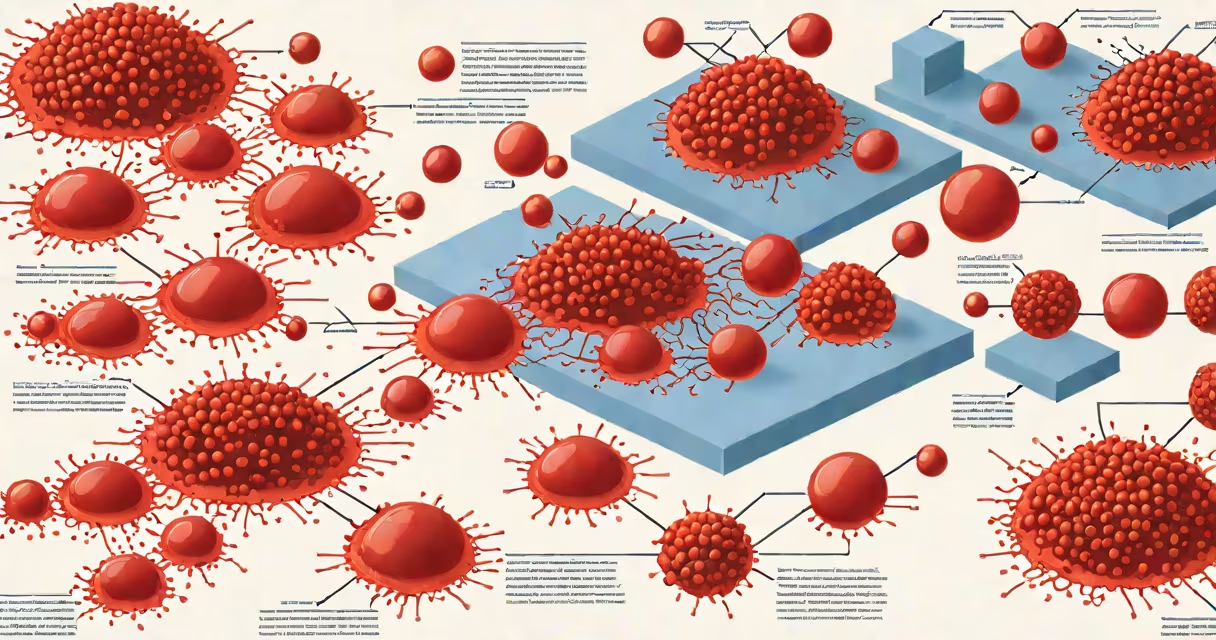
Macrocytosis is a condition characterized by red blood cells that are larger than normal-typically over 100 femtoliters in volume. It's not a disease itself but a laboratory finding that signals an underlying problem, most commonly deficiencies in vitamin B12 or folate, or disorders affecting DNA synthesis in bone marrow.
Red blood cells normally measure 80-100 fL. When they exceed 100 fL, they're classified as macrocytic. This enlargement occurs because the cells fail to divide properly during formation in the bone marrow, leading to oversized cells that don't function efficiently. The condition is detected through a complete blood count (CBC) with a differential, where mean corpuscular volume (MCV) is elevated above 100 fL.
According to the American Society of Hematology, macrocytosis affects approximately 10% of adults in routine clinical testing, though many cases are mild and asymptomatic. It's often discovered incidentally during blood work for unrelated reasons.
Red blood cell production happens in the bone marrow. Healthy erythropoiesis requires adequate levels of vitamin B12 and folate to support DNA replication. Without enough of either, the nucleus of the developing red blood cell cannot divide properly. The cell continues to grow and accumulate hemoglobin, but fails to split into two daughter cells. The result is a single, oversized cell-macrocyte.
This process is called megaloblastic hematopoiesis. The term "megaloblast" describes the large, immature red blood cell precursors seen in bone marrow aspirates. These cells have a "lumpy" appearance under the microscope due to delayed chromatin condensation. When released into circulation, they appear as macrocytes on peripheral blood smears.
A key diagnostic clue is the presence of hypersegmented neutrophils-neutrophils with five or more nuclear lobes. This feature is highly specific for vitamin B12 or folate deficiency and helps distinguish macrocytosis from other causes like liver disease or alcohol use.
Macrocytosis falls into two broad categories: megaloblastic and non-megaloblastic. Megaloblastic causes involve impaired DNA synthesis. Non-megaloblastic causes affect cell membrane or cytoplasmic volume without disrupting DNA.
| Type | Common Causes | Key Features |
|---|---|---|
| Megaloblastic | Vitamin B12 deficiency, folate deficiency, medications (e.g., methotrexate, zidovudine) | Hypersegmented neutrophils, low serum B12/folate, responsive to replacement therapy |
| Non-megaloblastic | Liver disease, alcohol abuse, hypothyroidism, certain drugs (e.g., valproic acid) | No hypersegmentation, normal B12/folate, often persistent despite treatment |
One common misconception is that all macrocytosis stems from nutritional deficiency. In reality, up to 30% of cases are due to non-nutritional causes. A study published in Blood Advances found that nearly half of patients with macrocytosis had no identifiable nutritional deficiency upon evaluation.
Alcohol-related macrocytosis is particularly tricky. Chronic heavy drinking leads to enlarged red cells through direct toxic effects on bone marrow and altered lipid metabolism. However, the MCV may normalize within weeks of abstinence, even without nutritional intervention.
Macrocytosis is primarily used as a screening tool in hematology. It alerts clinicians to potential problems in red blood cell production and triggers further investigation. A high MCV prompts evaluation of B12 and folate levels, homocysteine, methylmalonic acid, and thyroid function.
For example, a 65-year-old woman presents with fatigue and mild confusion. Her CBC shows an MCV of 118 fL. Further testing reveals a serum B12 level of 120 pg/mL-below the reference range of 200-900 pg/mL. She's diagnosed with vitamin B12 deficiency due to pernicious anemia, an autoimmune condition that destroys intrinsic factor, needed for B12 absorption. After initiating intramuscular B12 injections, her symptoms resolve and MCV returns to normal within six weeks.
Another example: a 42-year-old man with chronic alcohol dependence has an MCV of 108 fL. His B12 and folate levels are normal. Liver enzymes are elevated. He's diagnosed with alcohol-induced macrocytosis. Abstinence and nutritional support lead to gradual normalization of his blood parameters.
Macrocytosis can precede neurological symptoms. Untreated B12 deficiency can cause irreversible nerve damage, including subacute combined degeneration of the spinal cord. Early detection through MCV monitoring prevents long-term disability.
Many assume macrocytosis always indicates anemia. But it can occur in people with normal hemoglobin levels. In fact, about 40% of individuals with macrocytosis do not meet criteria for anemia (hemoglobin >12 g/dL in women, >13 g/dL in men).
Another frequent error is equating macrocytosis with macrocytic anemia. The terms are not interchangeable. Macrocytosis refers to cell size; anemia refers to low hemoglobin. A patient can have macrocytosis without anemia, or anemia without macrocytosis.
Some providers treat macrocytosis with B12 supplements without confirming deficiency. This is risky. Excess B12 can mask early signs of pernicious anemia and delay diagnosis. The National Institutes of Health warns against empirical B12 supplementation without proper testing.
One non-obvious fact: macrocytosis can be transient. In patients recovering from acute illness, surgery, or infection, temporary macrocytosis may appear due to increased marrow turnover. This resolves spontaneously and doesn't require treatment.
I once reviewed a case where a patient was referred for suspected B12 deficiency based on an MCV of 105 fL. Further testing showed normal B12, folate, and thyroid function. The cause was recent chemotherapy. The MCV normalized within four weeks. This illustrates why context matters-macrocytosis is a clue, not a diagnosis.