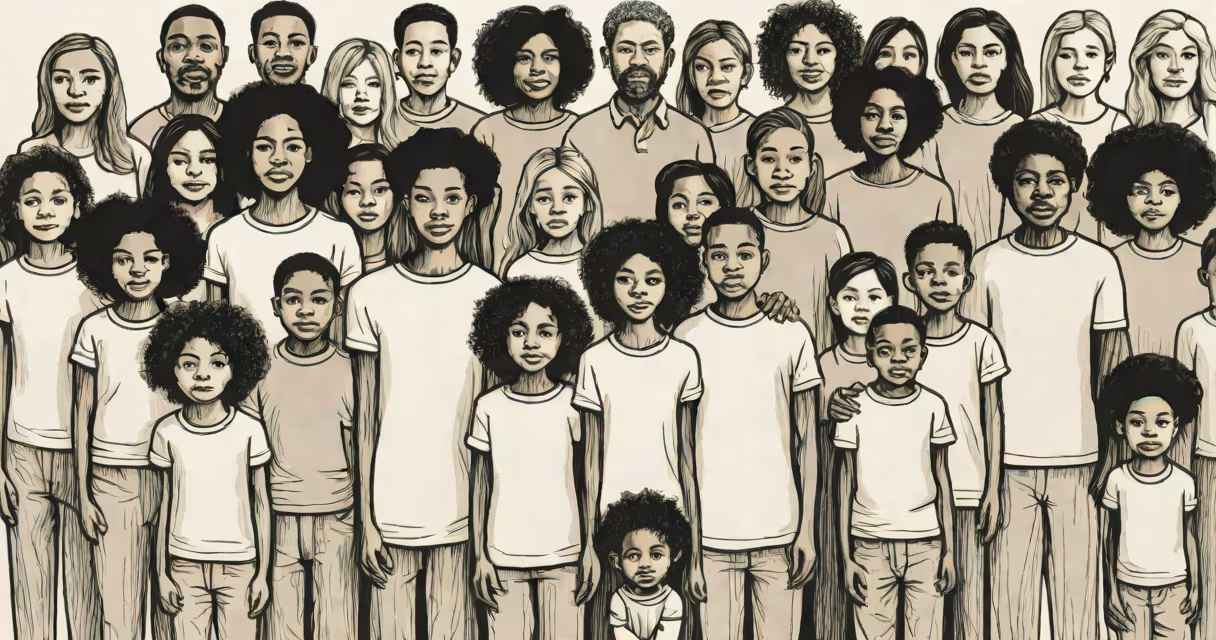
"What is race mean" asks for a clear definition: race refers to socially constructed categories used to classify people based on perceived physical traits like skin color, hair texture, and facial features. These groupings have no basis in biological science but carry real-world consequences in law, education, healthcare, and daily life.
Modern anthropology and genetics confirm that human genetic variation does not align with traditional racial categories. The American Association of Physical Anthropologists states that "there is no scientific basis for dividing humans into biologically distinct races." Instead, race functions as a social and political construct shaped by history, power, and culture.
For example, in the United States, the U.S. Census Bureau defines race using categories such as White, Black or African American, Asian, Native Hawaiian or Other Pacific Islander, and American Indian or Alaska Native. These categories are not rooted in biology but reflect historical decisions made during slavery, immigration policy, and civil rights movements. The same person may be classified differently in other countries-someone from Brazil might be labeled "Pardo" (brown), while in the U.S., they'd likely fall under "Black" or "Hispanic."
Despite lacking biological validity, race shapes access to opportunity. Studies show disparities in income, housing, education, and health outcomes linked to race. For instance, data from the Centers for Disease Control and Prevention (CDC) shows Black Americans have a higher infant mortality rate than White Americans-6.9 vs. 4.4 deaths per 1,000 live births in 2021. This gap persists even after adjusting for income and education, indicating systemic factors tied to racial identity.
Race influences how individuals are treated in institutions. A 2020 study published in *The Lancet* found that Black patients were less likely to receive pain medication than White patients, even when presenting identical symptoms. This reflects implicit bias embedded in social systems, not individual malice.
Race is not the same as ethnicity. Ethnicity refers to shared cultural practices, language, religion, and ancestry. A person can be both Black and Jewish, or Japanese and Mexican. The confusion between race and ethnicity leads to misclassification and oversimplification of identity.
Different nations use varying frameworks to categorize race. The following table outlines common approaches:
| Country/Region | Primary Race Categories | Based On |
|---|---|---|
| United States | White, Black/African American, Asian, Native Hawaiian/Pacific Islander, American Indian/Alaska Native | Self-identification, federal policy |
| United Kingdom | White, Mixed, Asian, Black, Other | Census guidelines, social perception |
| Brazil | White, Black, Brown (Pardo), Indigenous, Asian | Social self-perception, historical caste-like system |
| South Africa | White, Black African, Coloured, Indian/Asian | Apartheid-era legislation, still used in statistics |
These systems differ. South Africa's "Coloured" category includes people of mixed European, African, and Asian descent-a classification absent in U.S. censuses. Brazil uses a spectrum of skin tones rather than discrete categories, reflecting a more fluid understanding of race.
One non-obvious fact: race is not static. In the U.S., the number of people identifying as "Multiracial" increased from 2.4 million in 2000 to 9.0 million in 2020, according to the U.S. Census. This growth reflects changing social norms and greater acceptance of mixed heritage identities.
Many assume race is about biology. But DNA analysis shows that genetic diversity within racial groups exceeds differences between them. According to the Human Genome Project, humans share 99.9% of their DNA regardless of race. The small variations that exist are distributed continuously across populations-not in discrete clusters.
Another misconception is that race is purely subjective. While categories are socially constructed, their effects are objectively measurable. Housing discrimination, employment gaps, and health disparities are documented through data. The National Academy of Sciences reports that "racial disparities in health outcomes cannot be explained by genetics alone."
Some confuse race with nationality. A person born in Japan may be ethnically Japanese but identify as Black due to adoption or personal identity. Nationality relates to citizenship and country of origin; race is about social perception and categorization.
I once attended a university diversity workshop where a student described being asked, "Where are you really from?" after saying they were born in the U.S. They were Asian American, but the question implied their identity was suspect. That moment revealed how race operates not just in laws or surveys, but in everyday interactions-where belonging is questioned based on appearance.
This incident mirrors findings from a 2019 Pew Research Center survey showing 64% of Asian Americans reported experiencing discrimination in the past year. The question "Where are you really from?" is not about geography-it's a racial microaggression signaling exclusion.
Knowing what "race mean" truly refers to prevents harmful assumptions. It allows individuals to recognize that race is not a natural category but a system of classification with real impacts. Acknowledging this helps dismantle stereotypes and supports equitable policies.
For example, schools using race-conscious admissions policies aim to correct historical imbalances. The Supreme Court upheld affirmative action in 2023, ruling that diversity in education serves a compelling interest. This decision recognized that race continues to affect opportunity-even if it is not biologically real.
Understanding race meaning also aids in accurate research. When scientists study health outcomes, they must account for race not as a biological variable but as a social determinant. The CDC advises researchers to "avoid using race as a proxy for genetics" because doing so reinforces false beliefs and can lead to misdiagnosis.
"what is race mean" points to a deeper truth: race is a tool of social organization, not a reflection of nature. It shapes lives, influences systems, and demands critical awareness. Recognizing this helps build fairer institutions and more honest conversations.