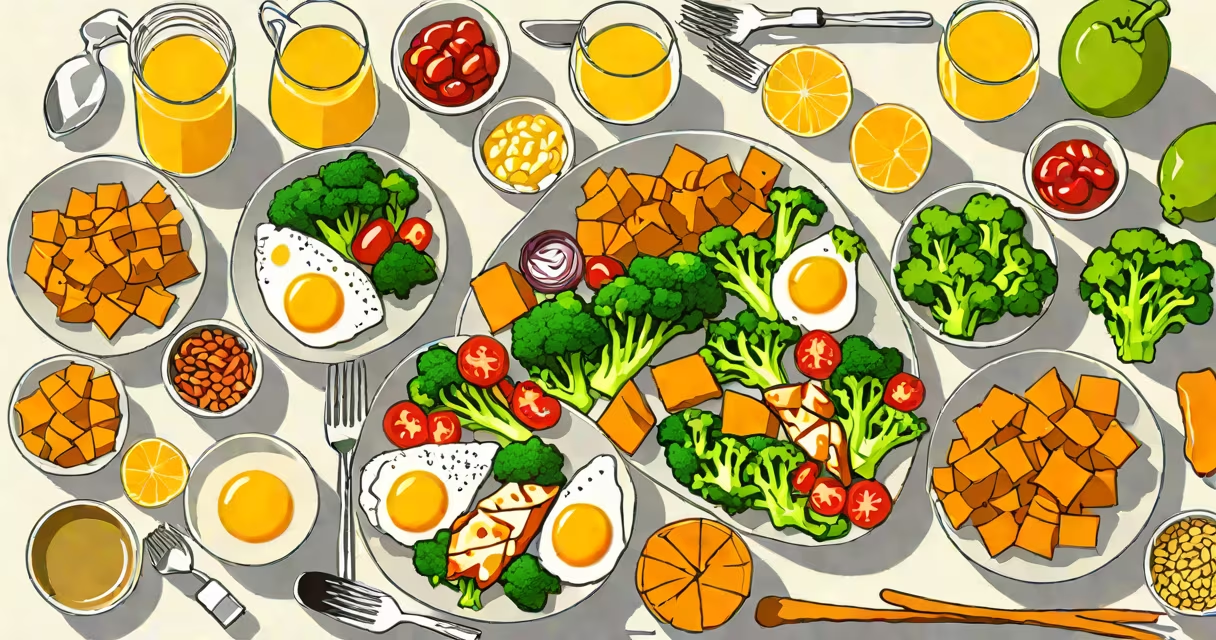
A meal plan to lose weight and build muscle combines controlled calorie intake with high protein consumption to reduce body fat while maintaining or increasing lean muscle mass. This approach requires precise nutrient timing, consistent training, and daily adherence to macronutrient targets.
Such a plan works by creating a modest calorie deficit-typically 10-20% below maintenance-while ensuring protein intake reaches 1.6-2.2 grams per kilogram of body weight daily. This combination signals the body to break down fat for energy while protecting muscle tissue from breakdown during weight loss. Research from the American Journal of Clinical Nutrition confirms that higher protein intake during caloric restriction preserves lean mass better than lower-protein diets.
For example, a 180-pound (81.6 kg) male aiming to lose 1 pound per week would need approximately 2,200 calories per day. A meal plan targeting 150 grams of protein (1.8 g/kg) would allocate about 600 calories to protein alone. The remaining 1,600 calories would come from carbohydrates and fats, distributed across meals to support recovery and energy levels.
Losing fat and building muscle simultaneously is physiologically challenging because they require opposing metabolic states. Fat loss occurs under a calorie deficit; muscle growth requires surplus energy and sufficient amino acid availability. However, individuals new to resistance training or those returning after a break can achieve both outcomes through a process called body recomposition.
Body recomposition relies on consistent strength training combined with adequate protein and moderate energy restriction. A 2020 study published in Frontiers in Physiology found that participants following a 12-week program with 1.8 g/kg/day protein and a 15% calorie deficit lost an average of 3.5 kg of fat while gaining 1.2 kg of lean mass. This outcome was better than groups consuming less protein or in a larger deficit.
Without proper programming, fat loss can lead to muscle loss. A 2018 review in Nutrition Reviews showed that protein intakes below 1.2 g/kg/day during weight loss resulted in 20-30% greater muscle loss compared to higher intakes. Therefore, a meal plan to lose weight and build muscle must prioritize protein quality and distribution across meals.
A successful meal plan includes four core elements: calorie balance, protein distribution, carbohydrate timing, and healthy fat inclusion. Calorie targets are set based on current weight, activity level, and goals. For most people, a deficit of 500-750 kcal/day supports steady fat loss without compromising muscle.
Protein should be evenly distributed across meals-around 30-40 grams per meal-to maximize muscle protein synthesis. This pattern, supported by research from the Journal of the International Society of Sports Nutrition, shows that spreading protein intake throughout the day leads to better net muscle retention than consuming it all at once.
| Meal | Protein (g) | Carbs (g) | Fat (g) | Calories |
|---|---|---|---|---|
| Breakfast | 35 | 40 | 15 | 520 |
| Lunch | 40 | 50 | 20 | 610 |
| Dinner | 45 | 35 | 25 | 640 |
| Snack | 20 | 15 | 10 | 230 |
This sample day totals 2,000 calories, 140 grams of protein, 140 grams of carbs, and 70 grams of fat-ideal for a moderately active individual aiming to lose fat while retaining muscle. Meals include lean meats, whole grains, vegetables, and healthy oils.
Many assume that low-carb diets are best for fat loss and muscle gain. While reducing refined carbs can improve insulin sensitivity and fat oxidation, severely restricting carbs impairs performance during strength training. A 2021 study in Metabolism found that athletes on low-carb diets experienced reduced power output and increased fatigue during resistance sessions compared to those consuming 3-5 g/kg/day of carbohydrates.
Another mistake is equating "cutting" with starvation. A meal plan to lose weight and build muscle is not about extreme restriction. Losing more than 1-2 pounds per week increases the risk of muscle loss and metabolic adaptation. The body slows down energy expenditure to conserve resources, making progress harder over time.
Some confuse this plan with a typical "weight loss diet." Unlike fad plans that emphasize low-calorie, low-protein meals, this strategy maintains energy availability for training and recovery. It's not about eating less-it's about eating smarter.
I designed a seven-day meal plan for a 30-year-old woman weighing 160 lbs (72.6 kg), training five days a week with resistance and cardio. Her goal is to lose 1.5 lbs/week while maintaining muscle.
She consumes 1,900 calories daily, with 130 grams of protein (1.8 g/kg). Breakfast includes Greek yogurt with berries and chia seeds. Lunch is grilled salmon with quinoa and roasted Brussels sprouts. Dinner features turkey meatballs with zucchini noodles and olive oil. Snacks consist of cottage cheese and almonds.
After six weeks, she lost 6.3 pounds, all from fat, according to DEXA scan results. Her strength in squats and bench press increased by 10%. She reported improved energy and fewer cravings compared to previous attempts at dieting.
One non-obvious insight: meal timing matters more than absolute macros. Consuming protein within two hours post-workout enhances muscle repair. A 2019 study in Applied Physiology, Nutrition, and Metabolism showed that participants who ate protein within 30 minutes after lifting had 25% greater muscle protein synthesis than those waiting two hours.
Begin by calculating your maintenance calories using a tool like the Mifflin-St Jeor equation. Subtract 500-750 kcal to reach your target. Then, set protein to 1.6-2.2 g/kg. Divide the rest between carbs and fats based on activity level and preference.
Use apps like MyFitnessPal or Cronometer to track intake. Focus on whole foods-lean meats, fish, legumes, vegetables, fruits, nuts, seeds, and whole grains. Avoid processed foods high in added sugar and trans fats.
Consistency beats perfection. A meal plan to lose weight and build muscle isn't about being flawless-it's about showing up daily with intention, protein, and purpose.