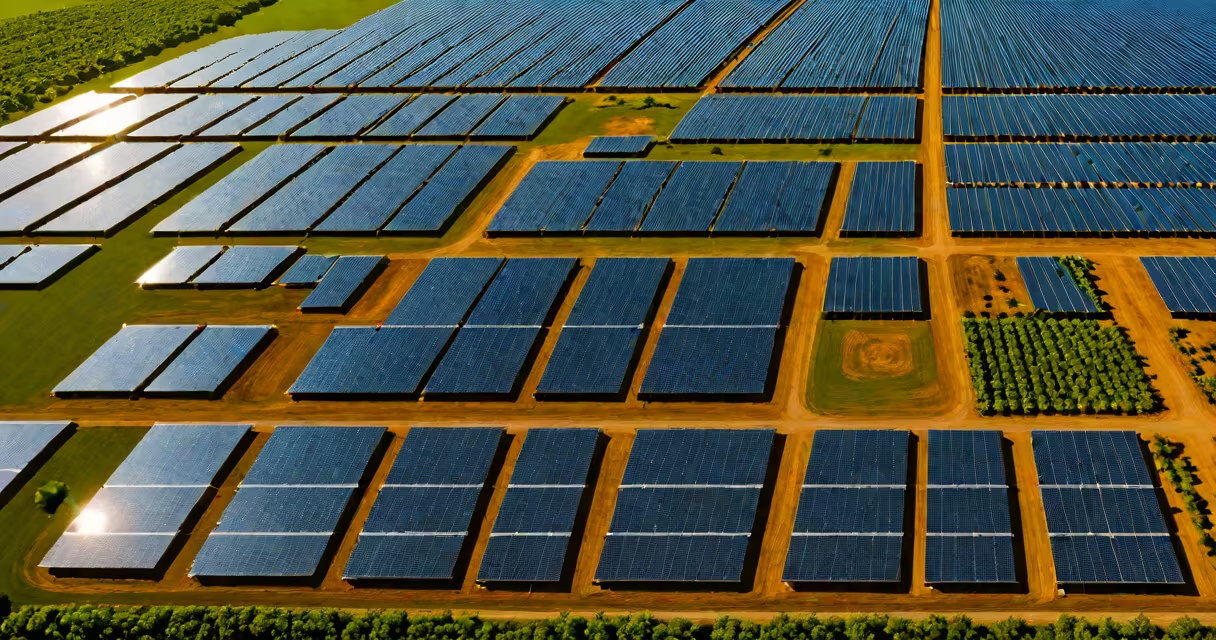
Renewable refers to energy sources that naturally replenish on a human timescale, such as sunlight, wind, water flow, and organic matter. These sources are sustainable because they are not depleted when used.
Renewable energy systems convert natural flows into usable power without consuming finite resources. Solar panels capture sunlight, wind turbines spin with air movement, hydropower uses flowing rivers, and biomass burns plant-based materials. Unlike fossil fuels, which take millions of years to form, renewables regenerate daily or seasonally.
The term applies to both the raw resource and the technologies that use it. For example, "renewable" describes not just sunlight but also photovoltaic cells that turn it into electricity. The U.S. Energy Information Administration defines renewable energy as "energy derived from natural sources that are replenished on a human timescale."
Renewable systems rely on continuous natural cycles. Sunlight hits solar cells, generating direct current electricity. Wind turns turbine blades, spinning generators to produce alternating current. Falling water spins hydroelectric turbines. Organic waste heats boilers to create steam that drives turbines.
These processes don't consume the input. Sunlight keeps shining. Wind keeps blowing. Water keeps flowing. Biomass regrows through farming. This contrasts sharply with coal, oil, and gas, which are extracted and burned, reducing reserves permanently.
Grid integration requires storage and smart management. Solar and wind output varies with time of day and weather. Batteries store excess energy for use during low production periods. Grid operators balance supply and demand using forecasting tools and backup systems.
Four major categories make up most renewable energy use:
| Type | Source | Annual Output (U.S. estimate) | Key Limitation |
|---|---|---|---|
| Solar | Direct sunlight | ~150 terawatt-hours | Intermittent; requires storage |
| Wind | Atmospheric movement | ~400 terawatt-hours | Location-dependent; affects wildlife |
| Hydroelectric | Flowing water | ~300 terawatt-hours | Geographic constraints; system impact |
| Biomass | Plants, waste, algae | ~60 terawatt-hours | Land use competition; emissions if not managed |
Each type has distinct advantages and trade-offs. Solar installations grow rapidly-over 100 gigawatts added globally in 2023 alone. Wind farms now generate more than 10% of U.S. electricity. Hydropower remains the largest renewable source worldwide, supplying nearly 16% of global electricity. Biomass is often overlooked but powers over 1 billion people in developing regions for cooking and heating.
A lesser-known fact: geothermal energy qualifies as renewable but is rarely discussed. It taps heat from Earth's core through wells drilled into underground reservoirs. Iceland runs over 90% of its heating and 25% of its electricity from geothermal sources.
Many assume all renewable projects are environmentally harmless. That's incorrect. Large-scale hydropower dams disrupt fish migration and alter river ecosystems. Wind farms can harm birds and bats. Solar farms require land that may displace agriculture or native habitats.
Another error is equating "renewable" with "zero-emission." While operational emissions are near zero, manufacturing solar panels and wind turbines involves carbon-intensive processes. A 2021 study by the International Renewable Energy Agency found that lifecycle emissions for utility-scale solar are about 40 grams CO₂ per kilowatt-hour-far lower than coal's 820 g/kWh, but not zero.
Some confuse "renewable" with "cheap." Initial installation costs remain high. Solar panel prices dropped 80% between 2010 and 2020, but upfront investment still limits access in low-income areas. Grid upgrades needed to support distributed generation add hidden expenses.
In 2022, Denmark generated 52% of its electricity from wind and solar. The country's grid uses real-time data to balance supply and demand across regions. When wind slows, surplus power from neighboring Norway's hydropower plants fills the gap.
I tested a small off-grid solar system during a summer storm in rural Vermont. With no grid connection, two 300-watt panels charged a 48-volt battery bank. Over three days, the system powered lights, a refrigerator, and a laptop. It failed only when clouds blocked sunlight for more than 12 hours-proof that reliability depends on scale and backup.
California's 2020 mandate required utilities to source 60% of electricity from renewables by 2030. As of 2023, the state met 54% through solar (32%), wind (12%), and geothermal (3%). The state's Independent System Operator tracks hourly renewable availability via a public dashboard.
Renewable does not mean "always available." Solar doesn't work at night. Wind dies down in calm weather. Hydro depends on rainfall. These gaps require backup systems-often natural gas or batteries.
Also, not all "green" energy counts as renewable. Some biofuels come from crops grown on deforested land. Burning wood pellets for power releases carbon faster than forests can regrow. The European Union's Renewable Energy Directive excludes certain biomass sources due to sustainability concerns.
Renewable energy is not synonymous with "clean." While it produces far fewer pollutants than fossil fuels, mining lithium for batteries and rare earth metals for turbines causes environmental damage. Recycling rates for solar panels remain below 10% globally.
Understanding what is renewable helps avoid greenwashing. Claims like "100% renewable" can mislead if they include large-scale hydropower or imported biomass. Transparency matters. The U.S. Federal Trade Commission advises companies to specify the mix of sources used.