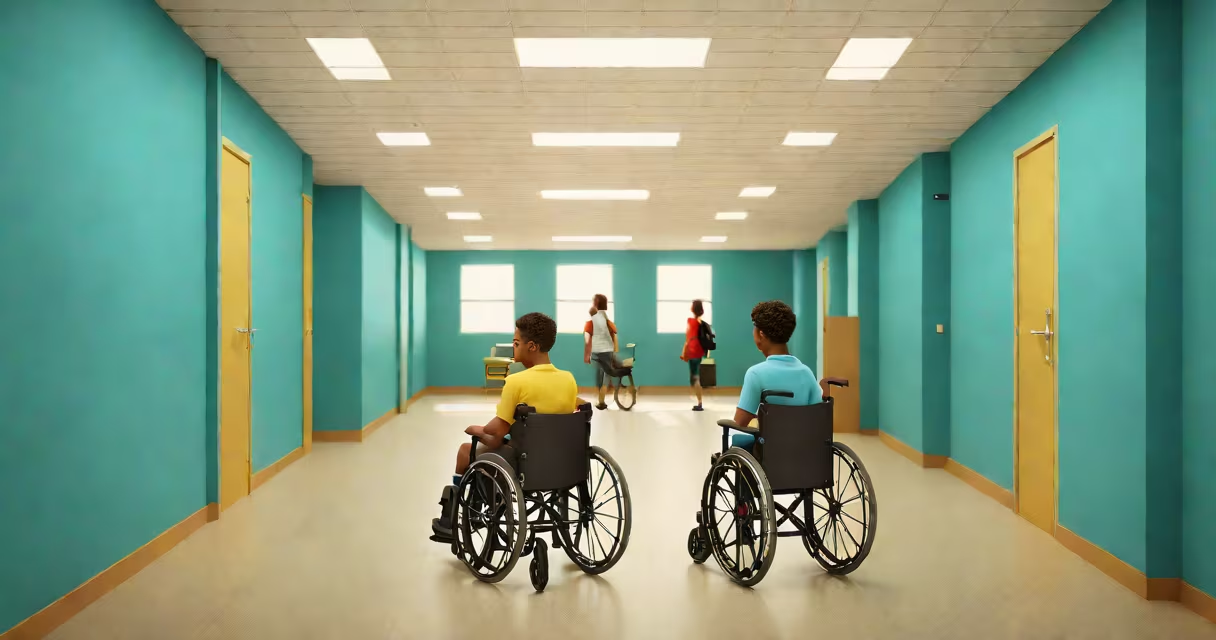
Section 504 of the Rehabilitation Act of 1973 is a federal civil rights law that prohibits discrimination against individuals with disabilities in programs receiving federal funding, including public schools. It guarantees students with qualifying disabilities equal access to education and related services.
Unlike special education under IDEA, Section 504 does not require specialized instruction. Instead, it mandates reasonable accommodations and modifications to ensure students can participate fully in school activities. A student qualifies if they have a physical or mental impairment that substantially limits one or more major life activities, such as learning, concentrating, or communicating.
The law applies to all public schools, charter schools, and private institutions receiving federal funds. Schools must identify eligible students through evaluations and develop a written accommodation plan called a 504 Plan. These plans are reviewed annually and adjusted as needed.
When a student's disability affects their ability to learn or participate in school, the school district must conduct an evaluation. This includes reviewing academic records, teacher observations, medical documentation, and input from parents. The team determines whether the student meets the legal definition of disability under Section 504.
If eligibility is confirmed, the school creates a 504 Plan tailored to the student's needs. Common accommodations include extended time on tests, preferential seating, modified assignments, reduced homework load, and access to assistive technology. The plan is implemented by teachers and staff, who are legally required to follow it.
Parents have the right to review the evaluation process and the plan. They can request changes or dispute decisions through a formal hearing process. Schools must notify parents in writing before making changes to a student's placement or services.
Section 504 covers many conditions. Not all disabilities are visible. Conditions like ADHD, anxiety disorders, diabetes, epilepsy, and chronic illnesses qualify if they substantially limit a major life activity.
For example, a student with severe asthma may struggle to attend school regularly due to frequent hospitalizations. Their condition substantially limits breathing and stamina, making them eligible for a 504 Plan. Accommodations might include a flexible attendance policy, access to medication during school hours, and a designated safe space during flare-ups.
| Disability Type | Examples | Common Accommodations |
|---|---|---|
| Learning Disabilities | Dyslexia, dyscalculia | Extended test time, audiobooks, speech-to-text software |
| Mental Health Conditions | Anxiety, depression, PTSD | Quiet testing environment, scheduled breaks, counselor check-ins |
| Physical Disabilities | Cerebral palsy, spina bifida | Wheelchair-accessible classrooms, note-taker support, modified PE |
| Chronic Medical Conditions | Diabetes, seizure disorder | Medication access, emergency response plan, flexible scheduling |
Section 504 applies to all public elementary and secondary schools in the United States. It also extends to private schools receiving federal funds, though enforcement is less consistent. The law helps students with disabilities are not excluded from participation in extracurricular activities, field trips, or sports.
For instance, a high school student with autism spectrum disorder may struggle with social interactions during group projects. A 504 Plan might assign a peer mentor, provide clear instructions in writing, and allow the student to present work via video instead of live presentation. These adjustments do not alter curriculum standards but remove barriers to engagement.
Section 504 is especially critical for students whose needs don't meet the stricter criteria for special education under the Individuals with Disabilities Education Act (IDEA). While IDEA offers intensive services and individualized education programs (IEPs), Section 504 serves students who need support but not specialized instruction.
Many people confuse Section 504 with IDEA. IDEA requires schools to provide free appropriate public education (FAPE) through an IEP, which includes specially designed instruction, related services, and measurable annual goals. Section 504 does not mandate specialized instruction. It focuses on access and equal opportunity.
A key distinction lies in eligibility. A student with mild ADHD who struggles with focus but performs well academically may not qualify for an IEP. However, if their attention deficit substantially limits learning, they may still qualify for a 504 Plan. The threshold is lower than under IDEA.
Another misconception is that Section 504 only applies to physical disabilities. The law explicitly covers mental health conditions and chronic illnesses. According to the U.S. Department of Education's Office for Civil Rights, over 5 million students nationwide are served under Section 504, with learning and emotional/behavioral disabilities being the most common categories.
I once observed a middle school student with generalized anxiety disorder who avoided speaking in class. After a 504 Plan was implemented, the teacher allowed written responses during discussions and gave the student a quiet corner to complete assignments. Within weeks, the student's confidence improved, and grades rose. The change wasn't about lowering expectations-it was about removing obstacles.
Section 504 applies even if a student's disability doesn't affect academic performance. For example, a student with a mobility impairment may be able to keep up with coursework but still need accommodations to access the school building or restroom facilities. The law protects access to the entire educational environment, not just academics.
Another lesser-known point: schools cannot deny a 504 Plan based on cost or lack of resources. The law requires schools to provide necessary accommodations regardless of budget constraints. If a requested accommodation is not feasible, the school must document alternatives and justify the decision.
Under Section 504, students retain their rights through graduation. A student with a documented disability can request accommodations during college entrance exams like the SAT or ACT through the College Board's Disability Services program. The 504 Plan itself is not transferred, but the documentation and history of accommodations can support requests.
Section 504 in schools helps students with disabilities are not excluded from education due to their condition. It provides legal protection and practical accommodations to level the playing field. Schools must evaluate students fairly, create individualized plans, and enforce them consistently. Understanding this law helps families advocate effectively and supports equitable access to learning.