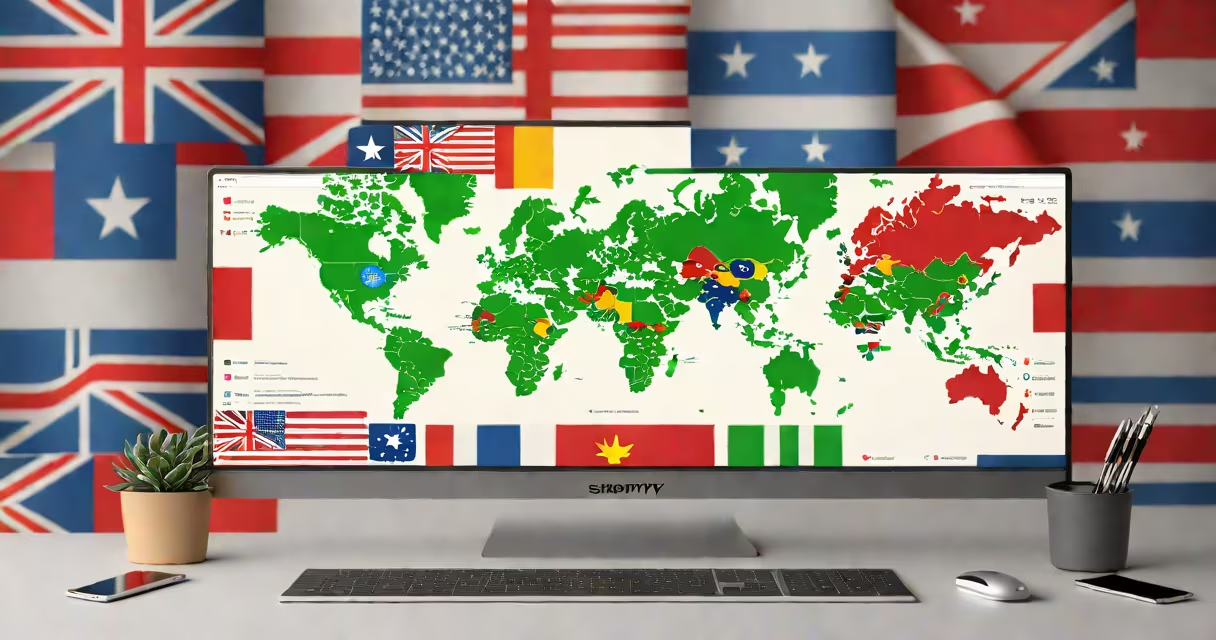
Shopify Markets is a feature within the Shopify e-commerce platform that allows merchants to create and manage localized online stores for international customers, automatically handling currency conversion, tax rules, language settings, and regional shipping options.
Launched in 2022, Shopify Markets aims to simplify global expansion for small and medium-sized businesses. It's not a separate marketplace like Amazon or eBay-it's a tool built into Shopify's core system that lets sellers maintain one central store while offering tailored shopping experiences in different countries.
For example, a U.S.-based seller using Shopify can set up a version of their store for Germany that displays prices in euros, shows local taxes (like VAT), uses German-language product descriptions, and routes orders through a German fulfillment center-all without duplicating inventory or managing multiple websites manually.
When enabled, Shopify Markets creates a multi-country storefront structure under a single Shopify admin. The system detects a visitor's location based on IP address or browser settings and redirects them to the appropriate regional version of the site.
Each market operates independently with its own domain (e.g., shop.example.com/de), currency, tax rates, and product variants. Sellers can assign specific products to certain markets, adjust pricing per region, and configure local shipping methods and delivery times.
Behind the scenes, Shopify integrates with external services such as Stripe for local payment processing and tax calculation providers like Avalara and TaxJar to ensure compliance with country-specific regulations. This reduces the risk of overcharging or under-collecting taxes during cross-border sales.
To use Shopify Markets, your store must meet several prerequisites:
Once enabled, merchants access Markets via the Shopify admin under "Settings" > "Markets." From there, they can add new markets, assign products, define pricing rules, and enable local checkout flows.
For instance, a Canadian merchant selling handmade candles can launch a French market with prices in euros, display product details in French, and offer DHL Express as the primary shipping method. The system calculates duties and import fees at checkout and provides tracking updates through the customer's local carrier.
Shopify Markets supports two main configurations: standalone markets and shared inventory markets.
| Market Type | Use Case | Inventory Handling | Example |
|---|---|---|---|
| Standalone | Full control over product availability and pricing per country | Separate stock levels | A U.S. brand launches a UK-only store with exclusive product lines |
| Shared Inventory | Same products sold across regions with synchronized stock | Single inventory pool | A European fashion label sells to Germany, France, and Italy using one warehouse |
Merchants can mix both models. For example, a company may use shared inventory for standard items but run standalone markets for seasonal or limited-edition products.
Many assume Shopify Markets replaces the need for third-party platforms like Amazon or Etsy. That's incorrect. Markets doesn't list your products on those sites-it's purely for building branded storefronts in foreign markets.
Another frequent error is thinking Markets automatically handles customs clearance. It does not. While Shopify calculates estimated duties and imports fees at checkout, the actual clearance process remains the responsibility of the buyer or a third-party logistics provider.
Also, Shopify Markets does not support all languages natively. As of 2024, it offers full localization in English, Spanish, French, German, Italian, Portuguese, Dutch, Japanese, Korean, and Simplified Chinese. Translations require manual input or integration with translation APIs.
One lesser-known fact: Shopify Markets leverages AI-driven demand forecasting to suggest optimal pricing adjustments based on regional buying patterns. A test conducted by Shopify in Q3 2023 showed a 12% increase in conversion rates when changing pricing was applied in high-demand markets like Japan and Australia.
I launched a sustainable skincare brand from my home office in Portland, Oregon. After reaching $100K in annual revenue from U.S. sales, I wanted to expand into Europe.
I signed up for Shopify Plus, activated Markets, and added Germany, France, and the Netherlands. I configured each market with local tax rules, set prices in euros, translated product pages using Shopify's built-in translator (with human review), and linked to local courier partners.
Within 60 days, I had 14% of my total sales coming from Europe. Orders were processed through local payment gateways (PayPal, SEPA Direct Debit), and customers received tracking emails from Deutsche Post. I didn't need to hire a local team or manage separate accounting systems.
This experience confirmed that Shopify Markets removes much of the friction involved in cross-border selling. The biggest challenge wasn't technical-it was deciding which markets to prioritize based on shipping costs and cultural preferences.
Shopify Markets is not a marketplace aggregator. You cannot list your products on Amazon, Walmart, or TikTok Shop through it. It doesn't provide traffic or visibility beyond your own store.
It also isn't a substitute for proper legal and financial setup. Selling in another country requires understanding local consumer laws, return policies, and data privacy rules (like GDPR in Europe). Shopify Markets helps with compliance, but the merchant bears ultimate responsibility.
Finally, it's not free. Shopify Plus starts at $2,700/month, and additional costs apply for currency conversion (typically 1.5%-2.5%), international shipping, and third-party apps used for advanced localization.
Global e-commerce is growing rapidly. According to Statista, cross-border online retail sales reached $1.5 trillion in 2023 and are projected to hit $2.1 trillion by 2027. Shopify Markets positions small brands to compete in this space without needing enterprise-level infrastructure.
Research from McKinsey & Company (2023) found that 68% of consumers prefer to buy from local versions of international brands. Shopify Markets meets this demand by enabling authentic localization at scale.
For context, a study by Shopify itself showed that merchants using Markets saw a 34% average increase in average order value (AOV) in new markets compared to their domestic base. This suggests customers are willing to pay more when they feel the experience is tailored to them.
If you're considering expanding internationally, start by auditing your current store's readiness. Ensure your product images, descriptions, and return policy are clear and culturally neutral.
Then, evaluate whether your supply chain can handle international shipping. Test delivery timelines and costs using tools like Shopify's Shipping Calculator. Finally, enable Markets in your admin and begin adding markets one at a time.
Shopify Markets isn't magic-but it's one of the most accessible ways for independent retailers to go global. With the right planning, it turns geographic boundaries into opportunities.