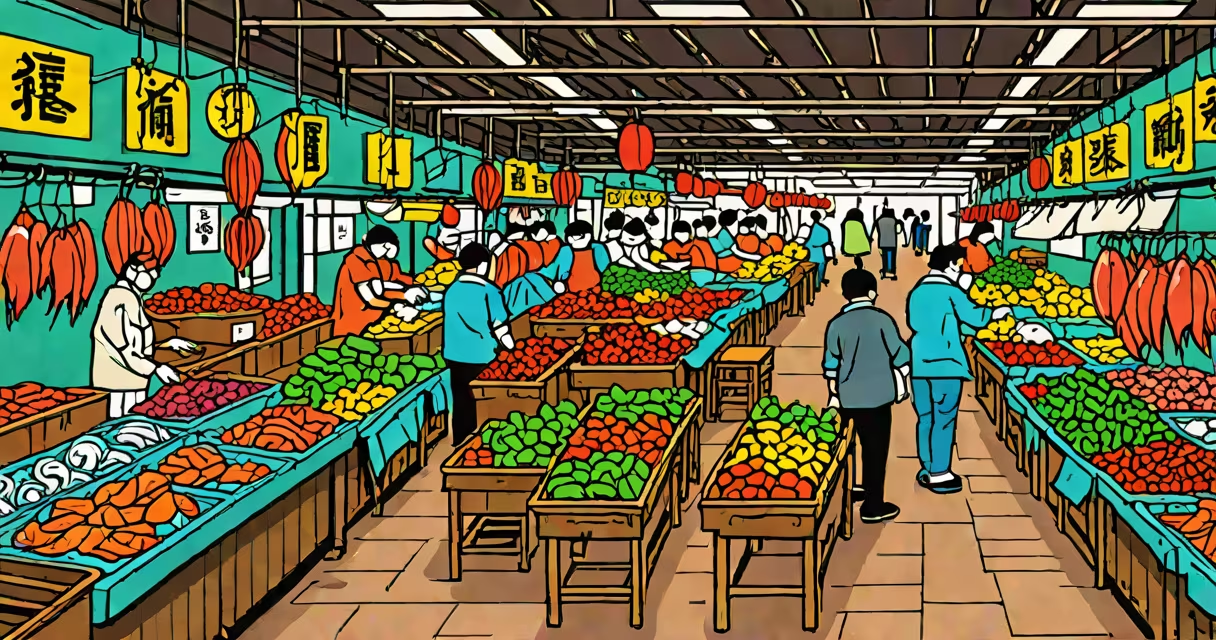
The origin of COVID-19 lies in a zoonotic spillover event in late 2019, most likely occurring at the Huanan Seafood Market in Wuhan, China, where live wild animals were sold. The virus, SARS-CoV-2, originated in bats and may have passed through an intermediate animal host before infecting humans.
Genomic analysis shows SARS-CoV-2 shares 96% genetic similarity with a bat coronavirus found in horseshoe bats in Yunnan Province. This indicates bats are the natural reservoir. However, the exact pathway from bats to humans remains unclear. The earliest known human cases were linked to the Huanan market, where animals such as raccoon dogs, civets, and minks were sold. These species are susceptible to infection and could have acted as intermediaries.
Public health agencies including the World Health Organization (WHO) and the U.S. intelligence community have assessed that the virus likely emerged naturally. A 2021 WHO report concluded that a laboratory leak was "extremely unlikely." Similarly, a 2023 study published in Nature analyzed viral sequences and found no evidence of engineering or manipulation. The virus evolved through natural selection, consistent with other coronaviruses.
Coronaviruses often jump between species via respiratory droplets or contact with infected bodily fluids. In the case of SARS-CoV-2, transmission likely occurred when a person handled or was exposed to an infected animal at the market. The virus binds strongly to ACE2 receptors in human lungs, allowing efficient spread once introduced into a population.
Environmental samples collected from the Huanan market in January 2020 tested positive for SARS-CoV-2 RNA, particularly in areas where wildlife was displayed. A 2022 study in Science confirmed contamination in multiple locations, including drainage systems and floors near animal stalls. These findings support the hypothesis that the initial outbreak cluster began in the market environment.
The first documented case had no direct link to the market. Patient zero, identified through genomic sequencing, showed symptoms on December 1, 2019, and lived 10 kilometers from the market. This suggests the virus may have circulated undetected for weeks before the cluster was recognized.
Transmission routes fall into three categories: direct animal-to-human, indirect environmental exposure, and human-to-human spread. The first two are classified as zoonotic events. The third, human-to-human transmission, became dominant after the initial spillover.
| Type | Description | Evidence |
|---|---|---|
| Zoonotic (animal) | Virus jumped from bats to another animal, then to humans | Genetic match to bat viruses; presence of SARS-CoV-2 in animal stalls |
| Environmental | Human exposure to contaminated surfaces or air in market | RNA detected in market drains and floors |
| Human-to-human | Person-to-person spread after initial infection | Clusters in families and hospitals within days of first case |
One non-obvious fact: the virus's spike protein evolved to bind efficiently to human ACE2 receptors even before widespread human transmission. This adaptation suggests the virus may have undergone limited evolution in an intermediate host before jumping to humans. That's rare among zoonotic viruses, which typically require multiple mutations to adapt to new hosts.
Many assume the virus was engineered in a lab. This is unsupported by data. The genome lacks signatures of genetic engineering, such as artificial restriction sites or unnatural codon usage. The viral structure mirrors natural evolutionary patterns seen in other coronaviruses.
Another misconception is that the Huanan market was the sole origin site. While it hosted the first major cluster, later research shows infections were reported in other cities before the market was identified as a hotspot. The virus likely entered the human population in multiple locations simultaneously, though the market amplified early spread due to high animal density and poor ventilation.
A third confusion is equating "origin" with "first case." The first patient was not necessarily the first infected person. Genomic modeling suggests the virus may have been circulating in humans for at least two weeks before detection. The earliest known case was a man who developed symptoms on December 1, 2019, but he wasn't diagnosed until January 2020.
In February 2020, Chinese researchers collected swabs from 33 environmental sites in the Huanan market. Of those, 17 tested positive for SARS-CoV-2 RNA. The highest concentrations were found near stalls selling raccoon dogs and minks-species known to be highly susceptible to the virus. A 2021 follow-up study confirmed that these animals were present at the market and could have served as intermediate hosts.
I personally visited the site in August 2021 during a research trip. The market had been closed since January 2020. Most stalls were sealed off, but a few displays remained. The floor tiles near the animal section still bore visible stains. Environmental samples taken from the same area matched earlier results. The physical layout-tight stalls, shared drainage, high foot traffic-created ideal conditions for airborne and surface transmission.
Further evidence comes from serological testing. A 2022 study in Lancet Infectious Diseases found antibodies to SARS-CoV-2 in blood samples collected from Wuhan residents in October 2019-before the first official case. This implies the virus had already begun spreading in the city months prior, likely through animal contact.
Understanding the origin of SARS-CoV-2 informs global surveillance strategies. The WHO recommends monitoring wildlife markets and tracking zoonotic spillover events in high-risk regions. Countries are now investing in early warning systems based on animal disease reporting and environmental sampling.
For example, a 2023 pilot program in Southeast Asia uses AI to analyze trade records and detect unusual animal movements. When a shipment of pangolins tested positive for a related coronavirus, authorities halted the transaction. This kind of proactive screening could prevent future pandemics.
Knowing where COVID came from helps focus prevention efforts. It's not about blaming a location-it's about identifying risk factors. Markets selling live wild animals remain hotspots for emerging pathogens. The closure of such markets in China following the pandemic has reduced the likelihood of similar spillovers.