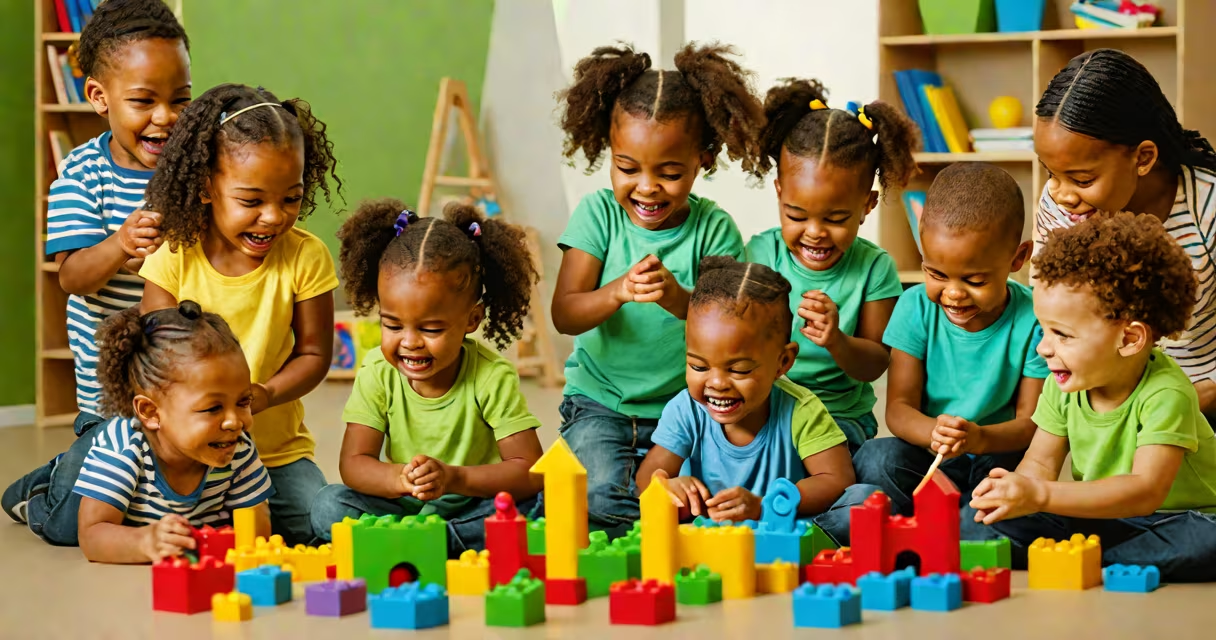
Social emotional development in early childhood refers to the process through which children learn to understand, express, and manage their emotions, form positive relationships, and engage with others in healthy ways. This foundational skill set emerges between birth and age five and directly influences behavior, learning, and long-term well-being.
Children begin developing social emotional skills from infancy. A newborn's cry communicates distress; by 6 months, they show joy through smiles and eye contact. By age 3, most can identify basic emotions like happy, sad, or angry, and start using words to describe feelings. These abilities grow through consistent interactions with caregivers, peers, and structured environments like preschool.
Research from the Centers for Disease Control and Prevention (CDC) confirms that early social emotional development predicts later academic success, mental health outcomes, and even career readiness. Children who demonstrate empathy, self-control, and cooperation during preschool are more likely to graduate high school and avoid behavioral issues later in life.
It operates through three core components: emotion recognition, emotional regulation, and interpersonal interaction. Children first learn to label emotions-"I feel frustrated"-then practice calming strategies such as taking deep breaths or asking for help. They also observe and mimic behaviors, especially those modeled by trusted adults.
Neuroscience shows that the prefrontal cortex-the brain region responsible for decision-making and impulse control-develops rapidly between ages 2 and 5. As this area matures, children gain better control over reactions. For example, a toddler who previously threw a tantrum over losing a game may, by age 4, pause, take a breath, and say, "I'm upset, but I'll try again."
Consistent routines and responsive caregiving strengthen neural pathways tied to emotional regulation. When a caregiver responds calmly to a child's meltdown-saying, "I see you're sad. Let's sit together until you feel better"-they reinforce secure attachment and teach emotional vocabulary.
By age 2, children typically recognize facial expressions and begin showing empathy, such as offering a toy to a crying peer. At age 3, they can follow simple rules, wait their turn, and express gratitude. By age 4, many can negotiate conflicts verbally, share resources, and understand different perspectives.
| Age Range | Emotion Recognition | Emotional Regulation | Social Interaction |
|---|---|---|---|
| 1-2 years | Identifies happy, sad, angry faces | Uses comfort objects; seeks adult reassurance | Imitates others; plays alongside peers |
| 3-4 years | Names emotions in self and others | Uses words to describe feelings; takes short breaks | Shares toys; cooperates in games |
| 5 years | Understands complex emotions (e.g., jealousy, pride) | Manages frustration with self-talk or breathing | Resolves minor disputes without adult help |
A common misconception is that social emotional development is purely about "good behavior." In reality, it's about internal processes-how children interpret situations, regulate stress, and make choices. A child who throws a book because they're overwhelmed isn't being defiant; they're struggling to manage overwhelming input.
Early childhood programs, home environments, and pediatric settings all play roles in shaping social emotional growth. The National Association for the Education of Young Children (NAEYC) emphasizes that classrooms should include time for free play, conflict resolution circles, and daily check-ins using emotion cards.
For example, a preschool teacher might start the day with a "feelings circle," where each child holds up a card showing their mood. A child who picks "angry" might say, "I'm mad because my friend took my crayon." The teacher validates the feeling and guides problem-solving: "What can we do to fix this?"
Without support, children may develop maladaptive coping mechanisms. A 2021 study published in Child Development found that children with poor emotional regulation in kindergarten were twice as likely to be diagnosed with ADHD by age 8. Early intervention reduces long-term risks.
Some assume social emotional development is a soft skill or secondary to academics. But research from the University of Wisconsin-Madison shows that children with strong social emotional foundations score 15% higher on standardized tests by third grade. Emotional stability enables focus, memory retention, and motivation.
Another misunderstanding is that emotional expression equals misbehavior. A child who cries during storytime isn't disrupting class-they may be processing grief, fear, or sensory overload. Caregivers trained in trauma-informed practices can distinguish between behavioral issues and emotional needs.
One non-obvious fact: social emotional development doesn't progress linearly. A 4-year-old may handle disappointment calmly one day and melt down over a missing sock the next. This inconsistency reflects brain development, not failure. The nervous system is still wiring itself to respond consistently under stress.
Consider Maya, age 4, in a public preschool program. During snack time, her friend Leo takes her favorite blue cup. Maya's face tightens. She says, "That's mine!" and tries to grab it. The teacher steps in, not to punish, but to model language: "I see you're upset. Can you tell Leo you want your cup back?"
Maya repeats the phrase. Leo hands it over. The teacher adds, "Now you both have a turn." Maya nods. Later, during circle time, she raises her hand to share a drawing. Her confidence grows-not because she won, but because she was heard.
This scenario illustrates how small moments build lasting skills. Over weeks, Maya learns to name emotions, use words instead of actions, and trust that adults will support her in expressing herself.
As a parent, I've seen this in action. My daughter struggled with transitions-leaving the playground, ending screen time. After introducing a visual timer and naming emotions ("You're frustrated because it's time to go"), her outbursts decreased by 70% within six weeks. The change wasn't magic-it was consistency, modeling, and patience.
Parents and educators can support development by talking about feelings during daily routines. Ask, "How did that make you feel?" after a fall or a disagreement. Use books like The Color Monster or When Sophie Gets Angry-Really, Really Angry to spark conversation.
Social emotional development in early childhood is not a checklist. It's a living, evolving process shaped by connection, safety, and opportunity. When nurtured intentionally, it becomes the bedrock of resilience, empathy, and lifelong learning.