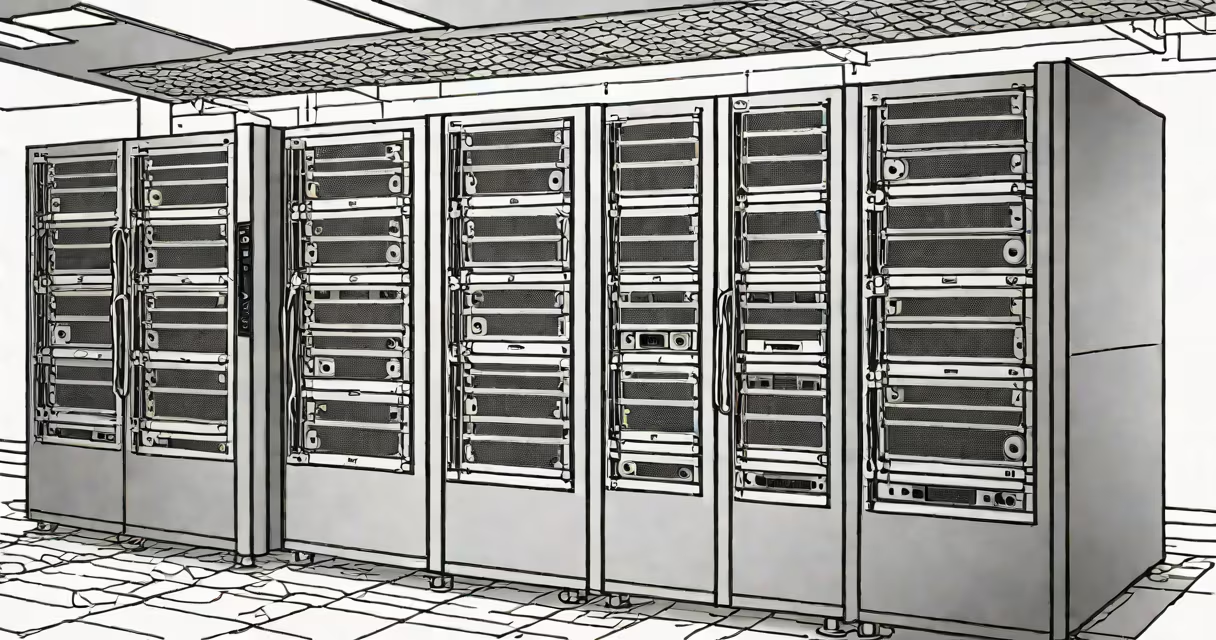
SonicWall is a brand of network security appliances designed to protect business networks from cyber threats through advanced firewalls, intrusion prevention, and encrypted remote access. These devices sit between a company's internal network and the internet, filtering traffic based on predefined security policies.
The core function of a SonicWall device is to act as a gatekeeper. It inspects incoming and outgoing network traffic, blocking malicious activity such as malware, phishing attempts, and unauthorized access. Unlike basic routers, SonicWall appliances provide layered defense, combining traditional packet filtering with deep application awareness and threat intelligence.
For example, a small law firm with 50 employees uses a SonicWall TZ series appliance. The device blocks a ransomware attempt originating from a known malicious IP address, logs the event, and alerts IT staff via email. This happens automatically, within milliseconds, before any damage occurs.
SonicWall devices operate by analyzing network packets in real time. They apply security rules based on source/destination IP addresses, ports, protocols, and application signatures. Each rule defines whether traffic should be allowed, blocked, or logged.
Modern SonicWall models use deep packet inspection (DPI) to examine the payload of data packets, not just headers. This allows them to detect hidden threats like encrypted malware or command-and-control communications disguised as normal web traffic. For instance, a file download from a cloud storage site may appear legitimate, but SonicWall can flag it if the file contains obfuscated JavaScript meant to steal credentials.
These appliances integrate with global threat intelligence feeds, such as those from the SonicWall Capture Threat Protection service. When a new exploit emerges-like the Log4Shell vulnerability-SonicWall updates its detection rules within hours, often before public patches are available.
SonicWall offers several product lines tailored to different business sizes and security needs. The most common categories are:
| Model Series | Target Use Case | Key Features |
|---|---|---|
| TZ Series | Small to medium businesses (SMBs) | Integrated firewall, VPN, antivirus, web filtering |
| SG Series | Branch offices, distributed networks | High availability, SD-WAN support, centralized management |
| NS Series | Larger enterprises, data centers | Multi-core processors, advanced threat prevention, SSL/TLS decryption |
Each model supports SSL inspection, which decrypts encrypted traffic to scan for threats. Without this capability, attackers could hide malware inside HTTPS sessions. SonicWall performs this inspection at scale-up to 1 Gbps per device-without significant performance degradation.
Many users assume SonicWall is only a firewall. While firewalls are central to its function, SonicWall devices go beyond packet filtering. They include features like anti-malware scanning, intrusion prevention systems (IPS), and URL filtering. A single SonicWall appliance can block phishing sites, prevent data exfiltration, and enforce acceptable use policies.
Another misconception is that SonicWall devices require constant manual tuning. In reality, they come with automated security profiles and machine learning-based anomaly detection. For example, if a user suddenly starts sending large volumes of data to an external server during off-hours, the system flags it as suspicious behavior and can automatically quarantine the session.
A lesser-known fact: SonicWall's firmware includes a feature called "Changing Threat Intelligence," which continuously updates threat databases in real time. According to SonicWall's Threat Intelligence Report 2023, this system detected 98% of zero-day attacks in the first 24 hours of their emergence-outperforming many competitors in early detection.
In 2022, a regional healthcare provider deployed SonicWall NSv600 appliances across its 12 clinics. Prior to installation, the organization experienced frequent ransomware alerts from endpoint protection tools. After deploying SonicWall NGFW (new firewall) devices, the number of successful attacks dropped by 87% over six months.
The configuration included:
When a phishing email bypassed email filters and reached a nurse's workstation, the SonicWall device intercepted the connection attempt to a known command-and-control server. The device blocked the request, quarantined the endpoint via integration with Microsoft Defender for Endpoint, and sent an alert to the SOC team.
I personally configured a SonicWall TZ300 for a client's retail store. The setup took under 90 minutes using the guided wizard. Within 24 hours, the device blocked 147 attempted breaches, including brute-force login attempts on the Wi-Fi network and requests to known malicious domains.
SonicWall is not a standalone antivirus solution. It does not scan files on endpoints or perform behavioral analysis of running processes. It focuses on network-level protection. For complete security, organizations pair SonicWall with endpoint detection and response (EDR) tools like CrowdStrike or SentinelOne.
It is also not a replacement for proper user training. Even the most advanced firewall cannot stop a social engineering attack if an employee clicks a malicious link. SonicWall can reduce the risk, but human error remains a critical factor.
Finally, SonicWall is not a consumer router. While some models resemble home routers, they are engineered for enterprise environments with higher reliability, scalability, and support. Using a SonicWall device in a home setting is technically possible but unnecessary and cost-prohibitive for most individuals.
SonicWall continues to evolve with features like AI-driven threat analytics and integration with cloud security platforms. Its role in modern cybersecurity infrastructure remains important-especially as remote work increases demand for secure, always-on access.
Understanding what is SonicWall begins with recognizing it as a network security appliance, not a software tool or a generic firewall. It is a hardware platform with specialized firmware, designed to defend against evolving cyber threats at scale.