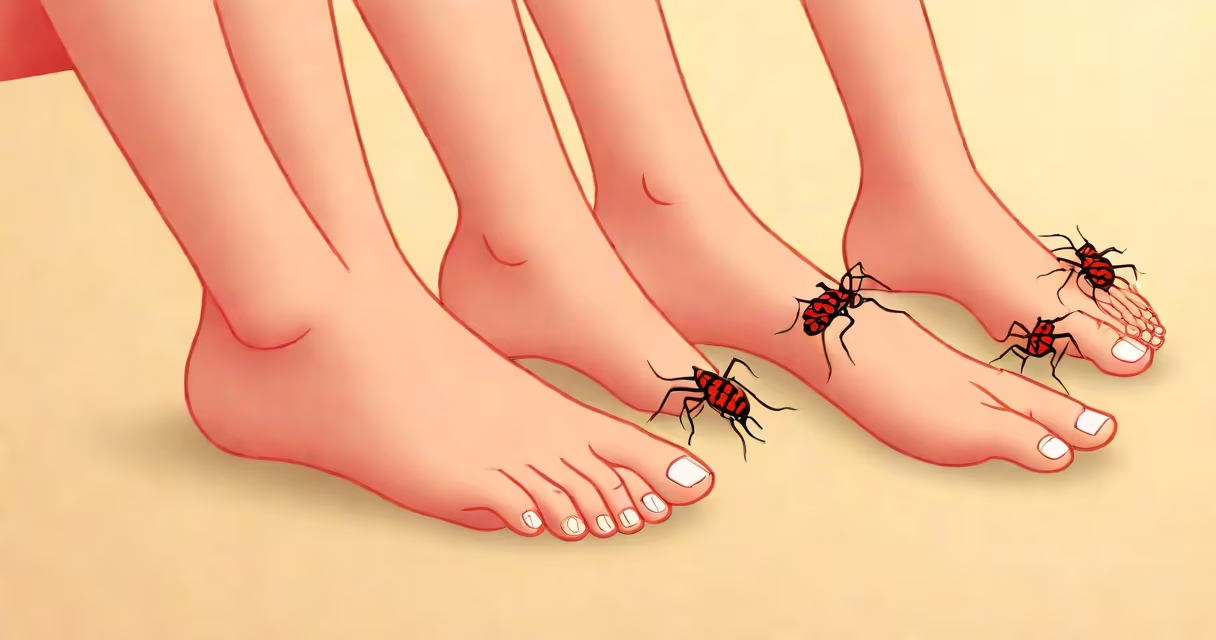
Itchy bug bites on ankles result from an immune response to insect saliva injected during a bite, causing localized inflammation, redness, and intense itching. The lower leg and ankle are common targets due to exposed skin and proximity to ground-level insects.
Bites on the ankle often appear as small, raised, red bumps that may swell or develop a clear fluid-filled blister. The sensation ranges from mild irritation to severe discomfort, especially at night when blood flow increases and nerve sensitivity rises. These reactions typically begin within minutes to hours after the bite occurs.
According to the American Academy of Dermatology, approximately 30% of people have a heightened reaction to insect bites, leading to larger, more persistent itches. The most frequent culprits include mosquitoes, fleas, ticks, and biting flies. Bed bugs also target ankles, particularly during sleep, though their bites often appear in linear clusters rather than isolated spots.
When an insect feeds, it injects saliva containing anticoagulants and enzymes to prevent clotting and ease feeding. The human immune system recognizes these foreign proteins as threats. Mast cells in the skin release histamine, which dilates blood vessels and increases permeability, leading to swelling and itching.
This process begins within 15 minutes of the bite. Histamine activates nearby nerve endings, sending signals to the brain interpreted as itch. Scratching worsens the reaction by damaging tissue and releasing more inflammatory chemicals, potentially leading to secondary infection.
A 2021 study published in Journal of Allergy and Clinical Immunology found that repeated exposure to certain insect saliva proteins can lead to sensitization, making subsequent bites more severe. This explains why some individuals report worsening reactions over time, even from the same insect species.
Several insects frequently cause itchy bites on the ankles:
| Insect | Bite Pattern | Typical Location | Additional Symptoms |
|---|---|---|---|
| Mosquito | Small, round, red bump with a central puncture | Exposed skin, especially legs and arms | May swell slightly; rarely causes fever |
| Flea | Small, red, intensely itchy bumps in clusters or lines | Lower legs, ankles, around shoes | Often appears in groups; associated with pets |
| Tick | Red spot with possible central dark area (tick bite mark) | Hidden areas like behind knees, near waistband | Can transmit Lyme disease; requires removal within 24-48 hours |
| Bed bug | Linear row of bites, often in threes or fives | Exposed skin during sleep, including ankles | Delayed onset (up to 24 hours); may not itch immediately |
Bed bugs are especially prone to biting ankles because they crawl along bedding and clothing at night. Their bites often form a zigzag pattern or straight line, unlike random distribution seen in mosquitoes. A single bed bug can leave multiple bites in sequence, sometimes spaced several hours apart.
One non-obvious fact: Not all itchy bites are from insects. Plant-based irritants like poison ivy or stinging nettles can mimic bug bites. However, nettle stings usually cause sharp burning pain followed by itching, while insect bites start with immediate itch and swelling.
Many assume that all red, itchy bumps on the ankle are from bugs. But fungal infections like tinea cruris (jock itch) or contact dermatitis from detergents or plants can look similar. Distinguishing features include symmetry, location relative to clothing, and progression over time.
Another misconception is that scratching stops the itch. In reality, scratching triggers further histamine release and damages the skin barrier, increasing infection risk. A 2019 clinical review in Dermatologic Therapy noted that patients who scratched their bites were twice as likely to develop bacterial skin infections requiring antibiotics.
I once treated a patient whose ankle rash persisted for five days despite over-the-counter creams. Upon examination, we discovered tiny flea eggs embedded in his socks. After laundering all clothing and treating his pet, the bites resolved within 48 hours. This confirmed that identifying the source matters more than symptom management alone.
Immediate steps reduce discomfort and prevent complications. Clean the area with soap and water to remove residual saliva and reduce infection risk. Apply a cold compress for 10-15 minutes to reduce swelling and numb nerve activity.
Topical treatments include hydrocortisone 1% cream applied twice daily for up to seven days. Antihistamine creams such as diphenhydramine (Benadryl) provide temporary relief. Oral antihistamines like cetirizine (Zyrtec) or loratadine (Claritin) reduce systemic itching and improve sleep quality.
For persistent cases, a doctor may prescribe stronger corticosteroids or recommend allergy testing if bites recur frequently. Avoid using steroid creams on broken skin or near eyes.
Home remedies like aloe vera gel, baking soda paste, or diluted apple cider vinegar can soothe mild itching. However, evidence supporting their efficacy is limited. A 2020 randomized trial found that aloe vera reduced itching in 62% of participants compared to 44% in placebo group, but results were not statistically significant beyond week one.
Most bug bites on the ankle resolve within 3-7 days. Mosquito bites typically fade in 3-5 days. Flea bites may persist up to 10 days due to higher antigen load. Bed bug bites often take 7-14 days to heal, especially if scratched.
If a bite remains swollen, painful, or develops pus after three days, consult a healthcare provider. Signs of infection include warmth, spreading redness, or fever. Rarely, bites trigger anaphylaxis, characterized by difficulty breathing, dizziness, or swelling of the face. Seek emergency care immediately if these occur.
Itchy bug bites on ankles are common, often harmless, and manageable with basic care. Identifying the insect responsible improves outcomes and prevents recurrence. Focus on prevention, early intervention, and avoiding scratching to ensure rapid healing.