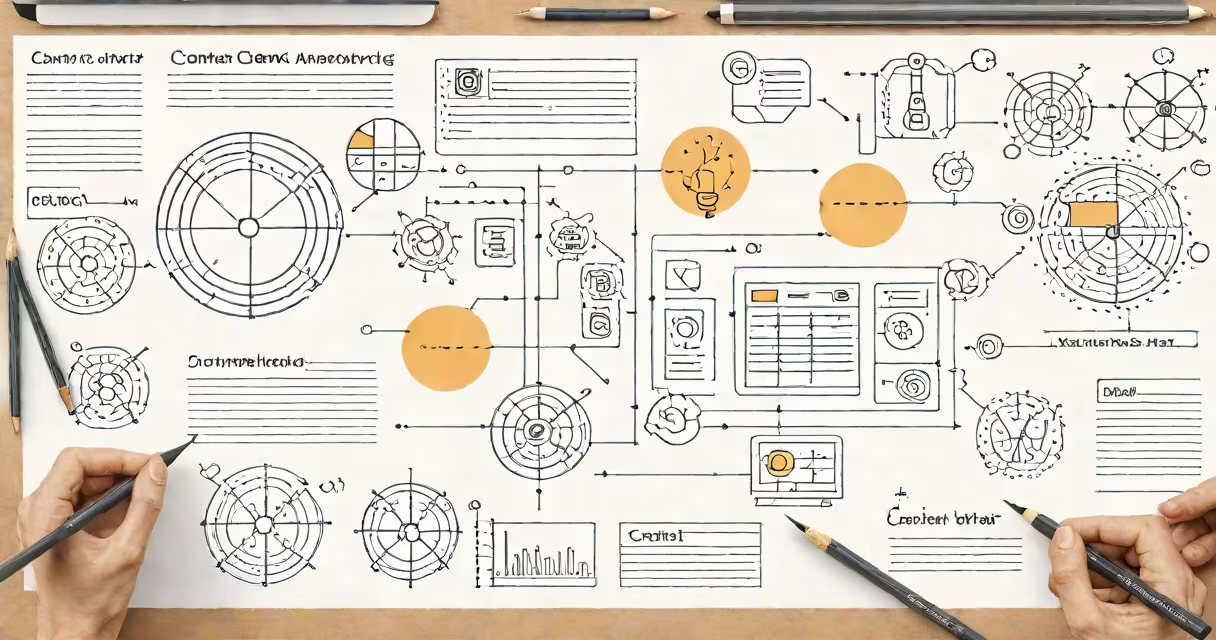
Content marketing automation uses software to manage, schedule, personalize, and analyze content delivery across channels without manual intervention. It replaces repetitive human tasks with rules-based systems that trigger actions based on user behavior, timing, or data inputs.
Automated content workflows handle tasks such as sending targeted email sequences, publishing social media posts at optimal times, updating landing pages based on visitor data, and distributing blog content to newsletters. These systems integrate with CRM platforms, analytics tools, and content management systems to act on real-time signals.
For example, a B2B SaaS company uses automation to send a series of educational emails to leads who download a gated whitepaper. The system triggers the first email within 15 minutes, follows up with a case study after three days, and sends a personalized demo offer if the lead opens two emails. This entire sequence runs without staff input after setup.
Content marketing automation operates through predefined rules and integrations. A central platform collects data-such as user location, past interactions, or page views-and applies logic to determine which content to deliver, when, and through which channel.
Each action is triggered by a condition. For instance, if a user clicks a link in a newsletter, the system may automatically add them to a nurture campaign. If they visit a pricing page five times in a week, the system may trigger a live chat invitation or send a discount offer via email.
These workflows rely on APIs and webhooks to connect tools. A content management system pushes new blog posts to a social scheduler, which posts them across Facebook, LinkedIn, and Twitter at scheduled intervals. Analytics tools then track engagement and feed performance data back into the system to refine future content delivery.
Content marketing automation isn't a single tool-it's a stack of integrated technologies. The most common components include:
There are three primary automation levels:
| Type | Description | Use Case Example |
|---|---|---|
| Basic | Pre-scheduled content delivery with no user interaction tracking. | Posting weekly blog updates to social media every Monday at 9 a.m. |
| Behavioral | Content changes based on user actions or profile data. | Showing different homepage banners to returning visitors vs. first-time users. |
| Changing | Real-time content adaptation using AI or live data feeds. | Displaying weather-specific product recommendations on a travel site during peak storm season. |
Many teams assume automation means "set and forget." That's incorrect. Effective automation requires ongoing tuning. A campaign that sends the same follow-up email to all users-even those who've already converted-can damage trust and hurt deliverability.
One widespread error is equating automation with mass messaging. Automated doesn't mean generic. Sending the same email to 10,000 subscribers without segmentation leads to high unsubscribe rates and spam complaints.
Another mistake is assuming automation replaces creativity. The opposite is true. Automation frees marketers to focus on strategy, audience research, and message development. It handles repetition so humans can innovate.
A lesser-known issue is data silos. If your CRM, email platform, and website analytics don't sync, automation fails. For example, a lead might receive a promotional email even though their profile shows they're in the "do not contact" list. This happens when integration settings aren't reviewed quarterly.
I once audited a client's automation flow where a form submission triggered a thank-you email-but the system didn't check if the user had already subscribed. Over six months, 12% of users received duplicate messages. Fixing the logic reduced unwanted emails by 87%.
Businesses use content marketing automation to scale outreach, improve response rates, and reduce operational load. A 2023 report from HubSpot found that companies using automation saw a 45% increase in lead conversion rates compared to manual processes.
Industries with high customer touchpoints benefit most. E-commerce brands use automation to send abandoned cart reminders with changing product suggestions. Financial services firms deploy automated compliance alerts when regulations change. Education platforms trigger course completion certificates and referral offers based on user progress.
Automated content isn't limited to digital channels. Some companies use SMS automation to notify customers about order status, or voice bots to deliver personalized updates via phone calls. These are still forms of content marketing automation-just delivered through non-web mediums.
Content marketing automation is not the same as artificial intelligence. While AI can improve automation-by predicting optimal send times or generating draft copy-automation itself is rule-based. It executes instructions, not decisions.
It's also not synonymous with social media management. A tool that schedules posts is part of automation, but automation includes decision-making logic. Simply posting content daily without adjusting based on engagement is not automation-it's scheduling.
Finally, automation doesn't eliminate the need for human oversight. A poorly designed workflow can amplify errors. A campaign that sends a promotion for a product out of stock due to outdated inventory data can harm brand reputation. Regular audits prevent these issues.
Begin with a clear goal: Are you trying to reduce time spent on email campaigns? Improve lead nurturing? Increase content reach?
Start small. Set up one automated workflow-like a welcome email series for new newsletter signups. Use a platform like Mailchimp or ActiveCampaign. Track open rates, click-throughs, and conversions over 30 days.
Then expand. Add segmentation based on user behavior. Integrate with a CRM. Enable A/B testing on subject lines and CTAs. Measure impact using UTM parameters and conversion tracking.
When done correctly, content marketing automation turns content from a static asset into a responsive, intelligent engine. It delivers the right message, to the right person, at the right time-without requiring constant manual effort.
Understanding what is content marketing automation begins with recognizing it as a system-not a tool. It's a combination of strategy, data, and execution rules that work together to scale engagement while reducing friction.
For organizations building long-term content strategies, investing in automation isn't optional. It's foundational. As noted by the Content Marketing Institute, companies that automate core content processes achieve 3x higher ROI on content spend than those relying solely on manual workflows.
With the right setup, content marketing automation transforms content from a cost center into a growth driver.