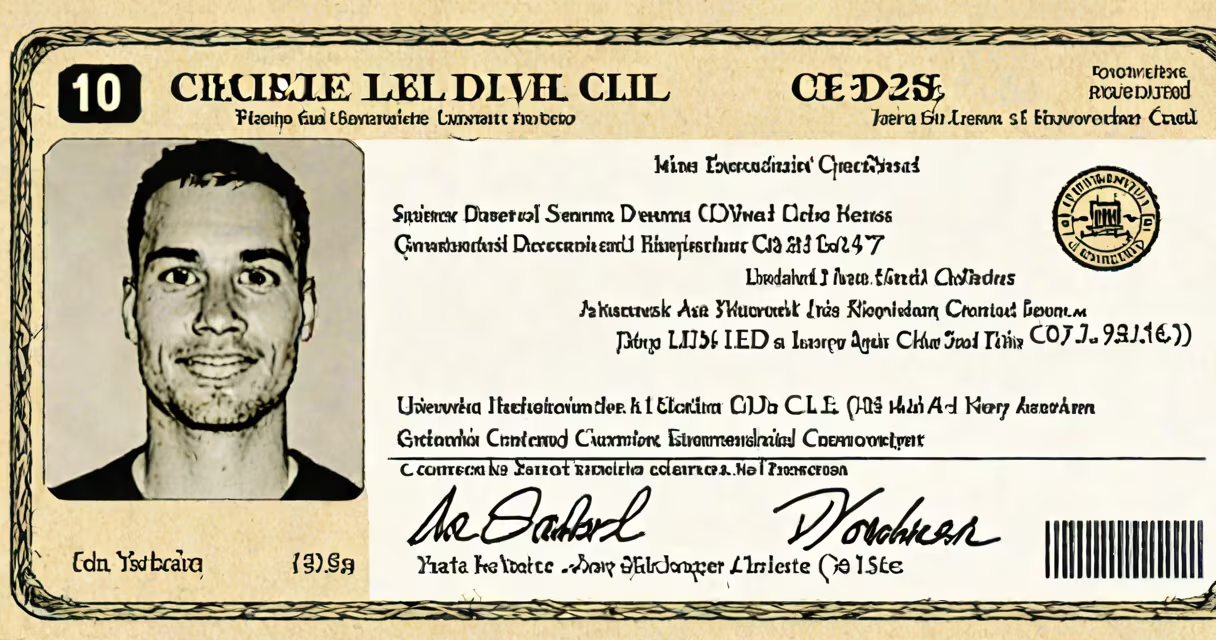
The meaning of CDL refers to a Commercial Driver's License, a federal requirement for operating heavy vehicles such as tractor-trailers, buses, and hazardous material transport trucks. It is issued by state departments of motor vehicles and validates a driver's ability to safely operate commercial vehicles under specific conditions.
CDLs are not optional for anyone who drives large vehicles commercially. The U.S. Department of Transportation mandates them under the Motor Carrier Safety Act of 1984. A CDL ensures drivers meet minimum standards for physical fitness, knowledge, and skills through written exams, road tests, and background checks.
Each CDL class corresponds to vehicle type and weight. Class A permits driving any combination vehicle over 26,001 pounds GVWR, including tractor-trailers. Class B covers single vehicles over 26,001 pounds, like delivery trucks or city buses. Class C applies to vehicles carrying 16 or more passengers or hazardous materials in specific quantities.
To earn a CDL, applicants must pass a series of tests administered by their state's DMV. These include a written knowledge exam covering traffic laws, vehicle inspection procedures, and safe driving practices. The test varies by class and endorsement type.
After passing the written portion, candidates must complete a skills test. This includes a pre-trip inspection, basic control skills, and a road test in real traffic. The road test evaluates braking, turning, backing, and lane positioning. Failure in any segment disqualifies the applicant until retaking the entire test.
States require a medical examiner's certificate confirming vision, hearing, and physical capability. Drivers must renew this every two years. The FMCSA requires all CDL holders to undergo drug and alcohol testing before and after shifts.
CDLs are not one-size-fits-all. Drivers may apply for endorsements based on the cargo they transport or the vehicle type. Common endorsements include:
| Endorsement | Vehicle Type | Required Training | Use Case Example |
|---|---|---|---|
| HAZMAT | Transport of dangerous goods | Federal background check, security threat assessment | Trucking fuel or chemicals across state lines |
| Passenger (P) | Buses, shuttles | Additional training in passenger safety and emergency evacuation | Driving school buses or airport shuttles |
| Double/Triple Trailers (T) | Multiple trailers | Advanced maneuvering practice | Operating long-haul freight trains with multiple containers |
| Tank Vehicles (N) | Flatbeds with liquid cargo | Stability and spill prevention training | Transporting milk or gasoline in bulk |
Endorsements are added via separate written and practical exams. They are not automatically granted with the base CDL. For example, a Class A CDL holder transporting propane must pass the HAZMAT test and submit to a fingerprint-based security screening.
Many assume a CDL is simply a higher-level version of a standard driver's license. That's incorrect. A CDL is a distinct credential with different legal responsibilities and restrictions. Unlike a regular license, a CDL cannot be suspended for minor traffic violations like speeding in a residential zone.
Another misconception is that CDL training takes weeks. In reality, most accredited programs last between 4 and 12 weeks. Full-time students typically complete training in 6 to 8 weeks. Part-time or evening programs may extend to 12 weeks. The duration depends on course structure, state requirements, and student availability.
A lesser-known fact: CDL holders must maintain a logbook of hours driven. The Federal Motor Carrier Safety Administration (FMCSA) enforces the Hours of Service rule, limiting drivers to 11 hours of driving within a 14-hour window. Violations result in fines or suspension. Some states now require electronic logging devices (ELDs) to track compliance.
Consider James, a 28-year-old former warehouse worker from Ohio. He wanted to become a long-haul trucker. He enrolled in a 10-week CDL program at a local community college. The course included 30 hours of classroom instruction on federal regulations, 40 hours of simulator training, and 60 hours of behind-the-wheel practice.
James passed the written exam on his second attempt. He scored 87% on the pre-trip inspection and 92% on the road test. After completing the training, he applied for a Class A CDL with a Passenger endorsement. He submitted his medical exam form and passed the background check.
Within six months, James secured a job with a regional freight company. His starting pay was $32,000 annually, with bonuses for on-time deliveries. He now logs 80 hours of driving per month, averaging 3,500 miles per week.
CDL is not synonymous with "commercial driving." Not all commercial vehicle operators need a CDL. For example, someone operating a forklift in a warehouse doesn't require a CDL. Similarly, a delivery driver using a small van under 26,001 pounds isn't subject to CDL rules.
Also, CDL does not automatically grant international travel rights. A U.S.-issued CDL is valid only within the United States and its territories. To drive in Canada or Mexico, drivers must obtain additional documentation, such as a Canadian Commercial Vehicle Operator's Registration (CVOR) or Mexican import permit.
Finally, CDL is not a career path in itself. It's a credential enabling access to jobs. The actual career involves ongoing training, adherence to safety protocols, and frequent equipment maintenance. According to the Bureau of Labor Statistics, the median annual wage for truck drivers in 2023 was $50,530, with growth projected at 6% through 2032.
Understanding the meaning of CDL begins with recognizing it as a regulated qualification, not a casual title. It represents formal validation of skill, responsibility, and compliance with national safety standards. For those considering a career in transportation, the CDL is the foundational step toward employment in logistics, freight, and public transit.