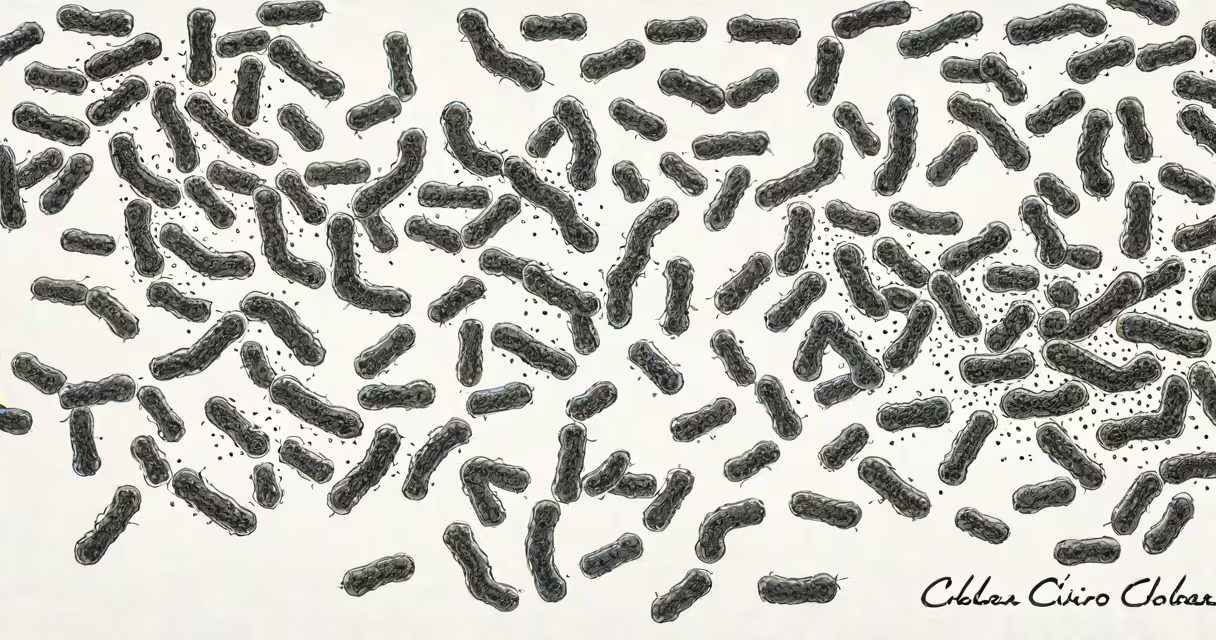
The scientific name for cholera is Vibrio cholerae. It is a Gram-negative, curved rod-shaped bacterium that causes acute diarrheal infection in humans. The disease spreads through ingestion of water or food contaminated with feces containing the pathogen.
Vibrio cholerae belongs to the family Vibrionaceae and is classified under the genus Vibrio. It was first isolated in 1883 by Italian physician Filippo Pacini, though his findings were overlooked until later confirmed by Robert Koch in 1884. The bacterium thrives in brackish coastal waters and is often associated with seasonal outbreaks during monsoon rains or in areas with poor sanitation.
Cholera remains a global public health concern. According to the World Health Organization (WHO), there are approximately 1.3 million to 4 million cases annually, resulting in 21,000 to 143,000 deaths worldwide. Most cases occur in regions with inadequate access to clean water and proper sewage systems.
The bacterium produces a toxin called cholera toxin (CT), which binds to receptors on intestinal cells. This triggers a massive outflow of chloride ions and water into the gut, leading to profuse, watery diarrhea-often described as "rice-water stool." Without treatment, dehydration can progress rapidly, leading to shock and death within hours.
Transmission occurs primarily through the fecal-oral route. A single gram of feces from an infected person can contain up to 1 billion organisms. Contaminated water sources such as wells, rivers, or untreated municipal supplies serve as common vectors. Outbreaks frequently follow natural disasters, conflict zones, or large gatherings where hygiene infrastructure fails.
A 2010 outbreak in Haiti following the earthquake led to over 820,000 cases and nearly 10,000 deaths. Genetic analysis traced the strain to South Asia, highlighting how human movement can spread pathogens across continents.
There are over 200 serogroups of Vibrio cholerae, but only two cause epidemic disease: O1 and O139. Serogroup O1 is responsible for most pandemics and is further divided into two biotypes: classical and El Tor. The El Tor biotype, first identified in 1905, is more resilient and capable of prolonged environmental survival.
| Strain | Biotype | Outbreak Pattern | Geographic Prevalence |
|---|---|---|---|
| O1 | Classical | Shorter duration, higher mortality | Historical pandemics (19th century) |
| O1 | El Tor | Prolonged shedding, lower fatality rate | Current global outbreaks (since 1961) |
| O139 | None (distinct lineage) | Emergent, limited geographic spread | South Asia (first detected in 1992) |
Strain O139 emerged in 1992 near Kolkata, India, and caused a major outbreak in Bangladesh and Myanmar. Unlike O1, it lacks the O-specific antigen and thus evades detection by standard serological tests. This strain demonstrated that new variants can arise and challenge existing surveillance systems.
Diagnosis relies on stool culture on selective media such as thiosulfate-citrate-bile salts-sucrose (TCBS) agar, which turns yellow due to sucrose fermentation. Molecular methods like PCR are increasingly used for rapid detection, especially in outbreak settings.
Treatment focuses on rehydration. Oral rehydration solution (ORS) reduces mortality from over 50% to less than 1%. For severe cases, intravenous fluids are required. Antibiotics such as doxycycline or azithromycin shorten symptom duration and reduce bacterial shedding.
In 2016, the WHO approved the use of Shanchol™, a whole-cell killed oral vaccine effective against both O1 and O139 strains. It requires two doses and provides protection for at least five years. Mass vaccination campaigns have reduced incidence by up to 60% in high-risk areas.
Many assume cholera is a disease of the past. While rare in developed nations, it persists in low-resource settings. In 2022, Yemen reported over 1.2 million suspected cases-the largest outbreak in decades. This underscores that cholera is not obsolete but endemic in vulnerable populations.
Another misconception is that cholera spreads through direct contact. It does not. Transmission is exclusively via contaminated water or food. The bacterium cannot survive long outside aquatic environments or in dry conditions.
Some confuse Vibrio cholerae with other Vibrio species like Vibrio parahaemolyticus, which causes seafood-related gastroenteritis. These are distinct pathogens with different transmission routes and clinical presentations.
I once observed a cholera clinic in rural Bangladesh during a monsoon season outbreak. Patients arrived within hours of symptom onset. Stool samples collected at the site were processed using rapid antigen tests and confirmed positive for Vibrio cholerae O1 El Tor. Within 48 hours, 12 patients had recovered after receiving ORS and antibiotics. The speed of diagnosis and treatment prevented fatalities, demonstrating how accessible interventions save lives.
Like all living organisms, Vibrio cholerae follows binomial nomenclature established by Carl Linnaeus. Its full scientific name is Vibrio cholerae (Ogden 1854) Winslow & Winslow 1935. The species was originally described as Bacillus cholerae by Filippo Pacini, reflecting early understanding of microbial causation.
Understanding the taxonomy of pathogens helps in tracking evolution and resistance. For example, the emergence of multidrug-resistant strains in Southeast Asia has prompted updated guidelines from the Centers for Disease Control and Prevention (CDC).
Understanding the scientific name for cholera-Vibrio cholerae-is critical for accurate diagnosis, treatment, and prevention. It identifies a specific pathogen responsible for a preventable disease affecting millions globally. Awareness of its biology, transmission, and control measures remains important in reducing morbidity and mortality.