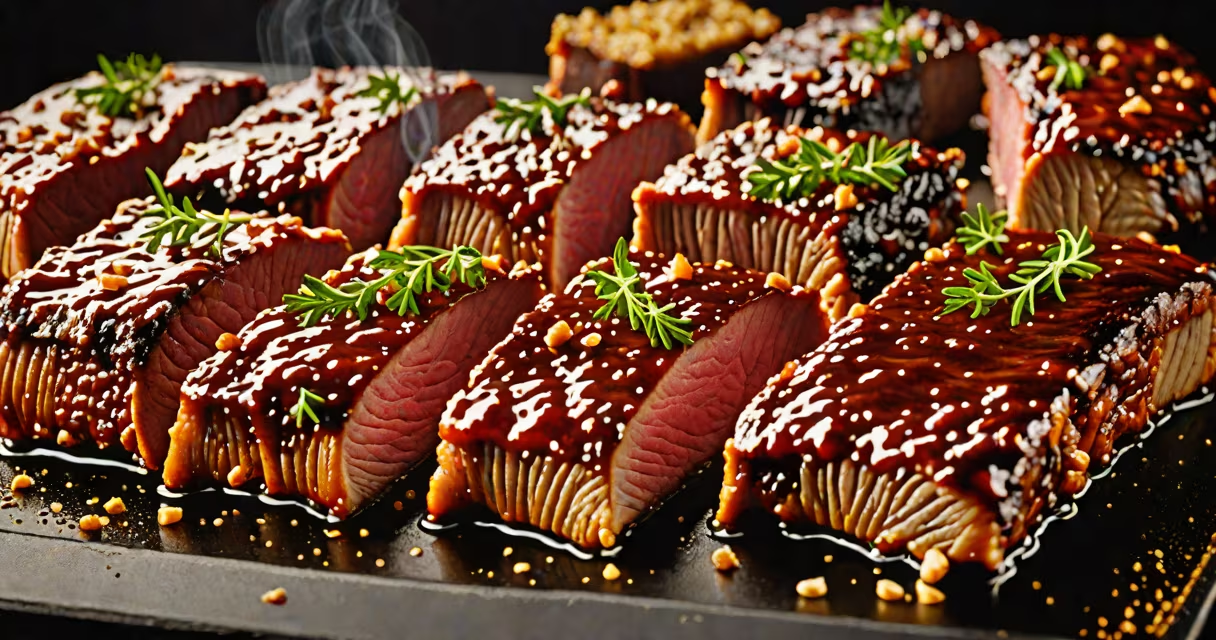
Cook ribs at 275°F (135°C) for optimal tenderness, rich flavor, and even doneness. This temperature allows collagen to break down slowly while retaining moisture, resulting in meat that pulls away from the bone with minimal effort.
Low-and-slow roasting at 275°F mimics traditional barbecue methods without needing a smoker. The heat penetrates evenly, preventing surface drying while allowing fat to render and connective tissue to dissolve over time. Most recipes recommend 3 to 4 hours depending on rib size and cut.
The USDA recommends cooking pork to 145°F internal temperature, but ribs benefit from higher temps due to their high collagen content. At 275°F, internal temperatures reach 190-205°F during cooking, which is ideal for breaking down tough fibers. This range is consistent with guidelines from the National Pork Board, which states that ribs should reach 190°F for maximum tenderness.
At 275°F, heat moves through the rib rack gradually. The outer layer browns via Maillard reaction, forming a savory crust. Meanwhile, the interior stays moist as fat melts and redistributes. This process takes longer than high-heat methods but yields superior texture.
For example, a 3-pound rack of spare ribs typically requires 3.5 hours at 275°F. After 2 hours, internal temperature reaches ~160°F. By hour 3, it climbs to ~185°F. Final resting time (15-20 minutes off heat) allows carryover cooking to push the core to 195°F, the sweet spot for pull-apart tenderness.
Using a probe thermometer ensures accuracy. Insert the sensor into the thickest part of the meat, avoiding bone. Remove ribs when they hit 190°F. Let rest uncovered for 15 minutes before slicing to retain juices.
Different rib cuts require slight adjustments. Baby back ribs are leaner and cook faster than spare ribs. St. Louis-style ribs have less fat and are trimmed for uniformity. Each responds best to consistent low heat.
| Rib Type | Recommended Oven Temp | Typical Cook Time | Target Internal Temp |
|---|---|---|---|
| Baby back ribs | 275°F | 2.5-3.5 hours | 190-195°F |
| Spare ribs | 275°F | 3.5-4.5 hours | 190-205°F |
| St. Louis-style ribs | 275°F | 3-4 hours | 190-200°F |
Brining or dry-rubbing before cooking enhances flavor and moisture retention. A dry rub with brown sugar, paprika, garlic powder, and black pepper adds depth. Apply it 1 hour before cooking to allow seasoning to penetrate.
Many assume higher oven temperatures speed up cooking. But setting the oven above 300°F risks drying out the meat. At 350°F, ribs may finish in 2 hours-but the exterior becomes leathery, and the interior remains chewy.
Another error is relying solely on time. A 3-hour cook at 275°F may yield underdone ribs if the rack is thicker than average. Always check internal temperature with a thermometer. The National Pork Board confirms that visual cues like "bend test" (rib bends easily) are unreliable-temperature is the only accurate measure.
Some confuse oven-cooked ribs with grilling. Grilled ribs often use indirect heat at 225-250°F. Oven cooking offers better control and consistency, especially in cold or humid climates. You don't need a pellet grill or wood chips-just a baking sheet and foil.
Last summer, I prepared a rack of St. Louis-style ribs using only my oven. I applied a dry rub (2 tbsp brown sugar, 1 tsp smoked paprika, ½ tsp garlic powder, ¼ tsp cayenne) and let it sit for 90 minutes. I placed the ribs on a wire rack over a foil-lined baking sheet and set the oven to 275°F.
After 3 hours, I checked the internal temp-it read 188°F. I continued for another 30 minutes until it reached 194°F. Removed and rested for 18 minutes. When pulled apart, the meat separated cleanly from the bone with no resistance. The bark was crisp, the meat juicy and flavorful.
This method produced results comparable to a 10-hour smoke session. The key difference: consistency. No weather interference, no fuel management, no monitoring every 30 minutes.
People think "falling off the bone" means the meat should detach completely. That's incorrect. Properly cooked ribs should separate with gentle pressure-like pulling a piece of paper from a book. Overcooking leads to mushy, stringy meat. The goal is tenderness, not disintegration.
Also, many believe foil wrapping speeds up cooking. Wrapping ribs in foil (known as the "Texas crutch") does reduce cooking time slightly-but it also steams the meat, softening the bark. For a balanced result, I wrap after 2 hours of cooking. This preserves texture while ensuring doneness.
Finally, some assume all ribs must be glazed at the end. Glazing is optional. A good dry rub and proper cooking temperature deliver flavor without sauce. If adding sauce, apply it in the last 15 minutes to avoid burning.
Understanding the correct oven temperature for ribs-275°F-is essential for consistent success. This method balances science and tradition, delivering restaurant-quality results at home. Avoid guessing. Use a thermometer. Trust the process.