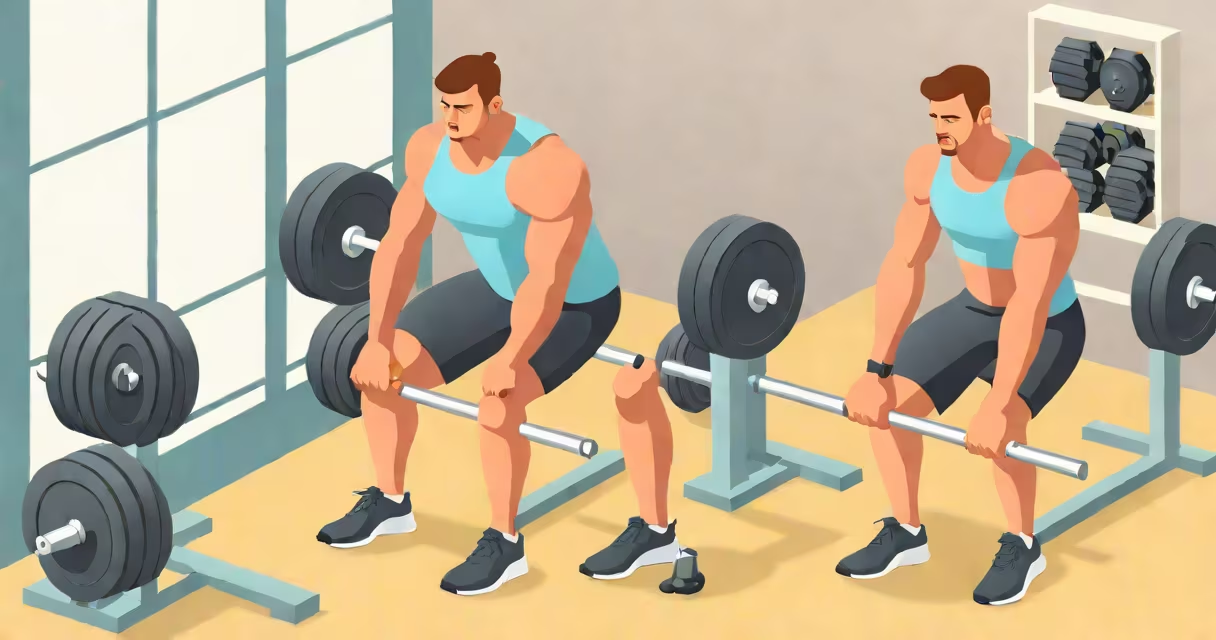
Gaining weight healthily means increasing lean muscle mass through resistance training and consuming more calories than your body burns daily. This process requires consistent effort and proper nutrition, not just eating more food.
Weight gain begins with a calorie surplus-consuming more energy than you expend. The body uses excess calories to build new tissue, primarily muscle when resistance training is involved. Without exercise, most added weight becomes fat. A surplus of 250-500 kcal above maintenance supports steady, mostly muscular gains.
According to the American Council on Exercise (ACE), individuals who combine strength training with a moderate calorie surplus gain 0.5-1 kg (1-2 lbs) of lean mass per month. This rate is sustainable and avoids excessive fat accumulation. Gaining weight without direction often leads to poor body composition and long-term metabolic strain.
When you consume more calories than you burn, your body stores the extra energy. If you're not active, this storage happens mainly in fat cells. But when you lift weights regularly, your muscles signal for repair and growth. Hormones like testosterone and insulin-like growth factor-1 (IGF-1) increase during resistance sessions, enhancing protein synthesis.
For every 1,000 kcal surplus, the body can store about 0.2-0.3 kg of new tissue. Of that, roughly 60% is lean mass if training is consistent. A study published in the Journal of the International Society of Sports Nutrition found that participants who trained three times weekly gained more lean mass than those who only ate more without exercising.
Without resistance training, even a large calorie surplus results in minimal muscle gain. One 12-week trial showed that untrained men gaining 1 kg per week through diet alone added 80% fat to their bodies. This underscores that weight gain isn't just about eating more-it's about directing energy toward muscle.
Nutrition forms the foundation. To gain weight, you must consistently exceed your daily energy needs. Track intake using apps like MyFitnessPal or Cronometer. Aim for 1.6-2.2 grams of protein per kilogram of body weight daily-this range supports muscle repair and growth.
Training should focus on compound lifts: squats, deadlifts, bench presses, pull-ups, and overhead presses. These movements engage multiple muscle groups and stimulate greater hormonal responses. Perform 3-4 sets of 6-10 reps per exercise, 3-4 days per week. Progressively increase weight or reps over time-this is called progressive overload.
Recovery matters. Muscles grow during rest, not during workouts. Sleep 7-9 hours nightly. Train with intensity, not volume. Overtraining increases cortisol levels, which can hinder muscle growth and promote fat storage. One lifter reported gaining 12 kg over 10 months by training four days weekly and sleeping 8 hours nightly-his gains were nearly all lean mass.
Not all weight gain is equal. There are three primary types:
| Type | Primary Cause | Typical Rate | Health Impact |
|---|---|---|---|
| Lean Mass (Muscle) | Resistance training + protein-rich diet | 0.5-1 kg/month | Positive: improves strength, metabolism, posture |
| Fat | Excess calories without training | 1-2 kg/month (if surplus is high) | Negative: increases disease risk, reduces mobility |
| Water & Glycogen | Increased carbohydrate intake or new training phase | 1-2 kg in first 1-2 weeks | Temporary: resolves as body adapts |
Water weight typically appears early in a new routine or diet. It's not fat, but it can mislead progress tracking. For example, a 70 kg man starting a strength program may see a 2 kg jump in the first week due to glycogen storage. This is normal and temporary.
Many assume "adding weight" means eating more snacks or fast food. That leads to fat gain. Real weight gain-especially for those underweight or aiming to build strength-requires intentionality. A 2021 review in Frontiers in Nutrition confirmed that structured programs combining resistance training and targeted nutrition led to 90% of weight gain being lean mass, compared to 30% in unstructured approaches.
One widespread error is believing that eating more food automatically leads to muscle gain. This is false. A person can eat 4,000 kcal/day and still lose muscle if they don't train. The body prioritizes survival, not aesthetics. Without mechanical stress on muscles, excess calories go to fat storage.
Another myth is that supplements like creatine or whey protein are essential. They help-but aren't required. Creatine increases strength and water retention in muscles, improving performance. Studies show it boosts lean mass gains by 10-15% over 8-12 weeks. But you can gain weight without them.
A third misconception is that weight gain must happen quickly. Slow, consistent progress is safer and more sustainable. Rapid gain (over 1 kg/week) often means fat accumulation. The ideal pace is 0.5-1 kg per month. This allows the body to adapt, maintain hormone balance, and avoid joint strain.
Consider a 25-year-old male, 175 cm tall, weighing 60 kg. His maintenance calorie level is ~2,400 kcal/day. He wants to gain 10 kg of muscle over 12 months (about 0.8 kg/month).
Step 1: Increase daily intake to 2,900 kcal (500 kcal surplus). Protein: 130 g (2.2 g/kg). Carbs: 350 g. Fats: 80 g.
Step 2: Train 4 days/week. Focus on compound lifts: barbell squats (3x8), deadlifts (3x5), bench press (3x6), pull-ups (3x max), rows (3x8). Progressively increase load every 1-2 weeks.
Step 3: Sleep 8 hours nightly. Track progress monthly via body measurements and strength logs. After 6 months, he gains 5 kg-mostly lean mass. His waist remains stable. His strength increases by 20% on key lifts.
This plan aligns with guidelines from the National Strength and Conditioning Association (NSCA), which recommends gradual progression and consistency over speed.