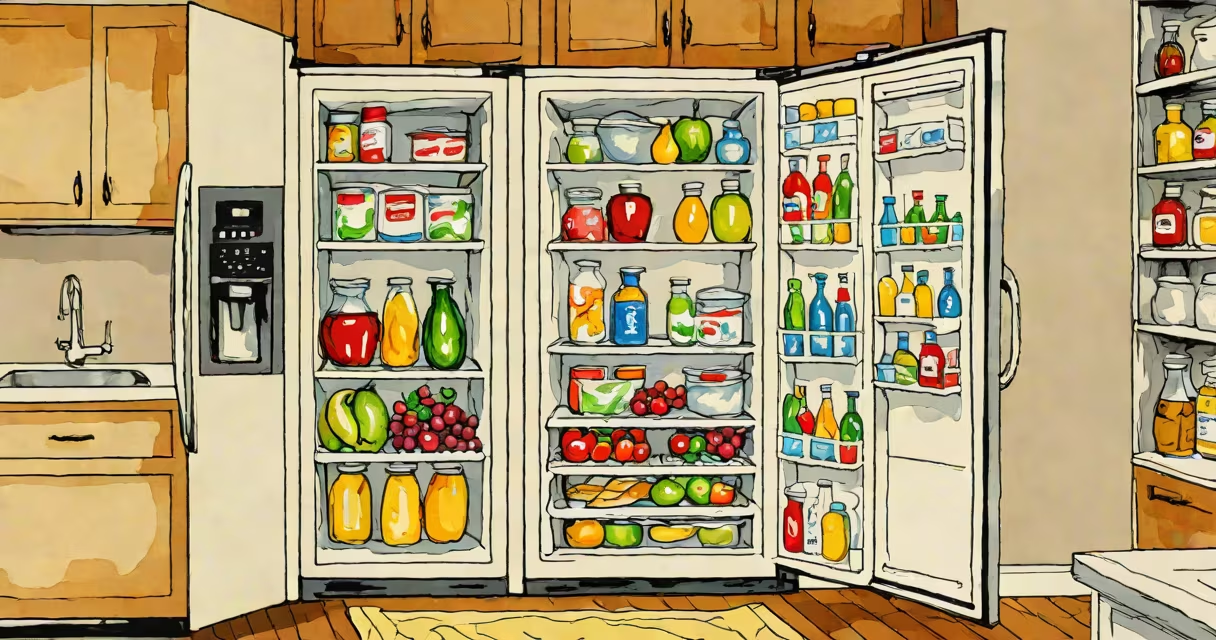
If your refrigerator stops cooling, act within 2 hours to prevent food spoilage. Check the power supply, ensure the thermostat is set correctly, and move perishable items to a cooler or ice-filled container. Most failures stem from electrical issues, blocked vents, or faulty thermostats.
Refrigerators maintain temperatures between 35°F and 38°F (1.7°C to 3.3°C) to slow bacterial growth. When cooling fails, food safety risks rise sharply. The U.S. Department of Agriculture states that perishable foods left above 40°F for more than 2 hours must be discarded. A sudden failure often results from a tripped circuit breaker, a clogged condenser coil, or a malfunctioning compressor.
After confirming the unit is plugged in and receiving power, verify the internal light turns on when the door opens. If not, test the outlet with another device. If the outlet works but the fridge doesn't, the issue may lie in the control board or compressor relay. These components are not DIY fixes for most users. Contact a licensed technician if the fridge runs but doesn't cool, or if it cycles on and off erratically.
Within 15 minutes of noticing the failure, remove all perishable items. Place them in a cooler with ice packs or frozen water bottles. A full cooler can maintain cold temperatures for up to 24 hours. For short-term storage, use a dry ice block-1 pound lasts about 18 hours and keeps contents below 40°F.
Check the temperature setting. Some models default to "off" during a power surge. Reset to "medium" or "normal." Ensure the door seals tightly-test by closing a dollar bill in the door; if it slips out easily, the seal is damaged. Clean the rubber gasket with a vinegar-water mix (1:1) to restore flexibility. A worn seal increases energy use by up to 20%, according to the U.S. Energy Information Administration.
Clear the condenser coils located behind or beneath the unit. Dust buildup reduces efficiency by 30%. Use a vacuum with a brush attachment to clean debris. If the fan near the coils is silent, the motor may have failed. Do not attempt to disassemble the compressor or refrigerant lines-these require EPA-certified technicians.
Three primary causes account for 80% of refrigerator failures: power loss, thermostat malfunction, and condenser coil blockage. Power issues are the most frequent-over 60% of service calls cite tripped breakers or faulty outlets. If the freezer still cools but the fridge doesn't, the evaporator fan may be jammed or the defrost heater failed.
Use a multimeter to test voltage at the outlet. If it reads 110-120V, the problem lies inside the appliance. Test the start relay with a continuity tester. If it shows no continuity, replace it. A faulty relay prevents the compressor from engaging. Replacement parts cost $10-$25 and take under 30 minutes to install with basic tools.
For older units (10+ years), the compressor may be failing. Listen for a humming sound when the fridge is on. If the noise stops abruptly, the compressor may have seized. Compressor replacement costs $300-$600 and is rarely economical unless the model is high-end or part of a smart home system.
| Issue | Signs | Fix |
|---|---|---|
| Power loss | No lights, no fan noise | Check breaker, test outlet, reset if needed |
| Blocked condenser coils | Warm rear panel, excessive cycling | Clean with vacuum; clear dust every 6 months |
| Thermostat failure | Temperature fluctuates wildly | Replace sensor or control board; calibrate if adjustable |
Store milk, meat, eggs, and dairy in a cooler with ice. Use 1-2 pounds of ice per quart of liquid. Keep the cooler closed. Open only when necessary. A well-insulated cooler maintains safe temps for 12-24 hours depending on ambient temperature.
For households with limited access to coolers, place perishables in a basement or garage if temperatures stay below 40°F. Avoid placing food near windows or heat sources. If the power outage lasted longer than 4 hours, discard all raw meat, fish, and cooked dishes. Per USDA guidelines, even if sealed, these items can harbor Listeria or Salmonella after 4 hours above 40°F.
I once managed a refrigerator failure during a summer storm. The fridge lost power for 3.5 hours. I moved all perishables to a cooler with two frozen water jugs. I monitored the internal temp with a digital thermometer. After 4 hours, the cooler remained below 40°F. Only the yogurt spoiled-its pH dropped due to partial thawing. I learned that even brief outages demand quick action.
Do not attempt to repair refrigerant leaks or replace compressors without certification. The Environmental Protection Agency requires technicians to hold an EPA Section 608 certification to handle refrigerants. Violations carry fines up to $37,500 per incident.
Simple fixes like cleaning coils, replacing the door seal, or resetting the thermostat are safe for homeowners. If the fridge runs but doesn't cool, check the evaporator fan. Remove the back panel in the freezer and listen for a whirring sound. If absent, the fan motor may be seized. Use a screwdriver to gently rotate the blades. If they resist, replace the fan.
For units under warranty, contact the manufacturer. Samsung offers 1-year labor coverage on repairs. GE provides free diagnostics via phone. If the model is older than 10 years, consider replacement. New ENERGY STAR-rated models use 20% less energy and reduce electricity bills by $100 annually, according to the U.S. Department of Energy.