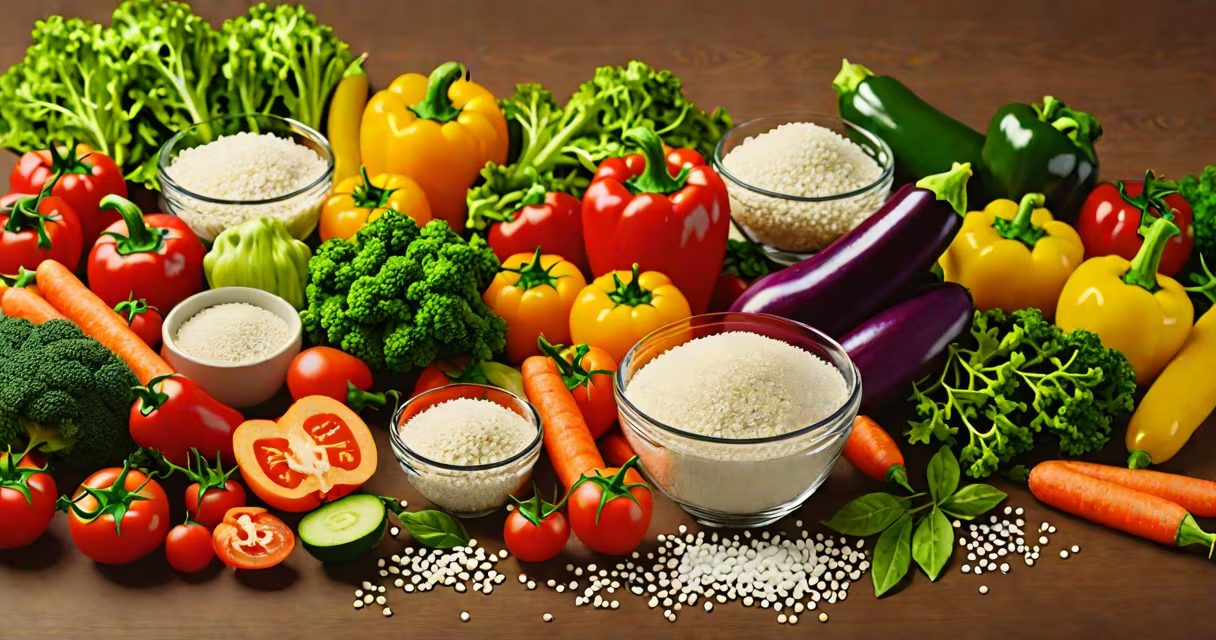
Leafy greens, cruciferous vegetables, and root vegetables rich in potassium, fiber, and nitrates help reduce blood pressure by improving blood vessel function and lowering sodium retention. These vegetables are effective because they support vascular health and regulate fluid balance.
High blood pressure occurs when the force of blood against artery walls remains elevated over time. The American Heart Association notes that dietary changes, especially increasing intake of potassium-rich foods, can lower systolic blood pressure by 5-10 mm Hg (AHA, 2023).
Vegetables that help manage blood pressure do so through multiple mechanisms: they supply potassium to counteract sodium's effects, provide dietary fiber to improve arterial elasticity, and contain natural nitrates that convert to nitric oxide-widening blood vessels and reducing resistance.
Potassium acts as a natural diuretic by helping the kidneys excrete excess sodium and water. This reduces volume in the bloodstream, lowering pressure on arterial walls. A 2022 study published in The Journal of the American College of Cardiology found that individuals consuming 3,500 mg of potassium daily had a 20% lower risk of stroke compared to those below 2,000 mg (Liu et al., 2022).
Nitrates found in beets and leafy greens convert to nitric oxide in the body. Nitric oxide relaxes smooth muscle in blood vessel walls, leading to vasodilation. Research from the University of Exeter showed that drinking beetroot juice reduced systolic blood pressure by an average of 8 mm Hg within three hours (Wang et al., 2021).
Fiber from vegetables slows digestion and improves insulin sensitivity. Better insulin control prevents sodium retention and reduces inflammation, both linked to hypertension. The DASH diet, endorsed by the National Institutes of Health, emphasizes vegetables for their role in lowering blood pressure by 11 mm Hg on average.
Not all vegetables are equally effective. The following list includes the most impactful options based on clinical evidence and nutrient density.
| Veggie | Potassium (mg per 1 cup cooked) | Nitrate (mg per 1 cup) | Key Benefit |
|---|---|---|---|
| Spinach | 840 | 200 | High in magnesium and folate; supports endothelial function |
| Beets | 650 | 1,300 | Rich in nitrates; shown to lower BP within hours |
| Kale | 740 | 180 | Contains quercetin, which reduces oxidative stress in arteries |
| Broccoli | 500 | 30 | High in sulforaphane, which activates antioxidant pathways |
| Celery | 300 | 1,000 | Contains apigenin, a flavonoid that inhibits calcium channels |
These values come from USDA FoodData Central and peer-reviewed nutrition journals. Beets stand out due to their exceptionally high nitrate levels-about 10 times more than most other vegetables.
A common mistake is assuming all green vegetables are equal. While spinach and kale are excellent, cooking methods matter. Boiling leafy greens can leach up to 50% of their potassium into the water. Steaming or sautéing preserves more nutrients.
Many people believe that eating large amounts of vegetables will automatically lower blood pressure. That's not always true. The key lies in variety and preparation. Overcooking or adding excessive salt during cooking negates benefits.
Another error is relying solely on canned vegetables. Canned beans and peas often contain added sodium-up to 500 mg per half-cup serving. This can spike blood pressure instead of lowering it. Always choose low-sodium or no-salt-added versions.
One non-obvious fact: raw celery contains more nitrates than cooked. But cooking reduces oxalates, which can interfere with mineral absorption. A balanced approach-steaming celery for 5 minutes-preserves 70% of nitrates while minimizing antinutrients.
Consider a 52-year-old woman with stage 1 hypertension (142/90 mm Hg). Her doctor recommended the DASH diet. She began incorporating 4 cups of vegetables daily: 1 cup spinach, 1 cup steamed broccoli, ½ cup beets, and 1 cup sliced celery.
After six weeks, her blood pressure dropped to 128/82 mm Hg. Her potassium intake rose from 2,100 mg/day to 4,200 mg/day. She reported increased energy and fewer headaches. Her doctor noted improved kidney function markers.
This outcome aligns with a 2021 NIH trial showing that participants who followed the DASH diet for eight weeks saw an average systolic drop of 11 mm Hg and diastolic drop of 6 mm Hg.
Some vegetables are less effective or even counterproductive. Root vegetables like sweet potatoes and carrots are nutritious but high in natural sugars. For people with insulin resistance, high blood glucose can worsen vascular stiffness.
Also avoid processed vegetable products. Pre-cut frozen mixed vegetables often contain added salt, sugar, and preservatives. A single serving may exceed 400 mg of sodium-nearly 20% of the daily limit.
When shopping, check labels. Choose vegetables labeled "no salt added" or "low sodium." Fresh or frozen without additives is best.
For optimal blood pressure control, aim for 4-5 servings of vegetables daily, focusing on leafy greens, cruciferous varieties, and nitrate-rich roots. Rotate your choices to maximize nutrient diversity.
Start with simple meals: a spinach and beet salad with olive oil and lemon, steamed broccoli with garlic, or celery sticks with hummus. These require minimal prep and deliver measurable results.
If systolic pressure consistently exceeds 140 mm Hg, medical evaluation is needed. But lifestyle changes-including choosing the right vegetables-can prevent progression and reduce medication needs.
Among the most effective vegetables for managing high blood pressure are spinach, beets, kale, broccoli, and celery. Their combined impact on potassium balance, nitric oxide production, and vascular health makes them essential tools in blood pressure control.