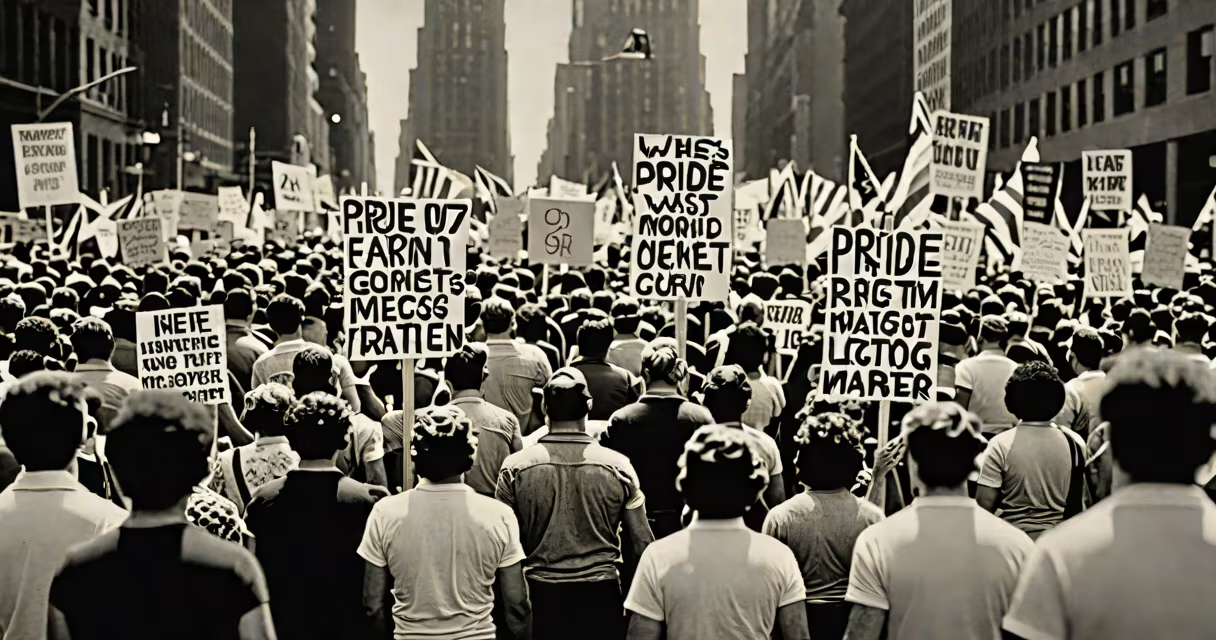
Pride Month began in June 1970 as a direct response to the 1969 Stonewall Uprising, establishing the first anniversary of the event as a formal demonstration for LGBTQ+ rights. The first Pride parade was held on June 28, 1970, in New York City, Chicago, and Los Angeles.
The term "Pride Month" did not exist in 1970. The observance was initially called "Christopher Street Liberation Day," named after the street in Greenwich Village where the Stonewall Inn stood. Organizers chose June because it marked the anniversary of the police raid on the bar that sparked days of resistance among LGBTQ+ patrons and allies.
By 1973, the first official Pride marches were held in multiple U.S. cities. The event evolved from a protest into a celebration of identity, resilience, and visibility. The name "Pride Month" became widely used in the 1990s, especially after the U.S. government formally recognized June as Pride Month in 2009 under President Barack Obama.
Pride Month is observed annually in June through parades, educational events, art exhibitions, and public ceremonies. Cities host large gatherings that draw tens of thousands of attendees. These events serve both as political demonstrations and cultural celebrations.
Organizations coordinate community outreach, provide resources for LGBTQ+ youth, and partner with local businesses to promote inclusive policies. Events often include speeches from activists, drag performances, and displays of the rainbow flag.
Participation is not limited to LGBTQ+ individuals. Allies, families, and supporters attend to show solidarity. Many schools and workplaces hold workshops during June to address inclusion and anti-discrimination practices.
Pride Month is composed of historical memory, political action, and cultural expression. Its core elements include:
The rainbow flag, designed by Gilbert Baker in 1978, is the most recognizable symbol. Originally had eight colors, it was simplified to six-red, orange, yellow, green, blue, and violet-to reflect diversity and unity. Each color represents a different aspect of life: life, healing, sunlight, nature, harmony, and spirit.
There is no single governing body for Pride Month. Local groups organize events independently, though national organizations like the Human Rights Campaign and GLAAD provide guidance and funding.
Pride Month is observed in over 100 countries, including Canada, Germany, Japan, and South Africa. In the U.S., cities such as San Francisco, Washington D.C., and Atlanta host annual Pride parades drawing hundreds of thousands.
For example, the 2023 New York City Pride March attracted over 2.5 million people. The event includes floats from corporations like Google and Pfizer, who sponsor booths promoting LGBTQ+ health initiatives.
Some nations have banned Pride events. In Uganda, the 2023 Pride march was canceled due to government crackdowns. In Russia, organizing Pride events can result in arrest. Despite repression, underground Pride activities continue in several countries.
Why June? Because the Stonewall Uprising began on June 28, 1969. The decision to mark the anniversary in June was intentional. It created a consistent date for global recognition and helped build momentum for annual observances.
Many assume Pride Month began as a party or celebration. It started as a protest. The first Pride march was organized by activists like Brenda Howard, known as the "Mother of Pride." She pushed for a march to demand civil rights, not just visibility.
Another misconception is that Pride is exclusively for gay men. The movement includes bisexual, transgender, queer, intersex, and asexual communities. The acronym LGBTQ+ reflects this inclusivity. Transgender rights were central to the original Stonewall protests, led by Marsha P. Johnson and Sylvia Rivera.
A lesser-known fact: the first Pride march was not planned as a parade. It was a march from the Stonewall Inn to City Hall, covering about 5 miles. Participants carried signs reading "Gay Power" and "We Will Not Be Silent."
Even today, some view Pride as commercialized. Brands now feature Pride-themed products in June. Critics argue this co-opts the movement's radical roots. However, proponents see corporate participation as a way to expand visibility and funding for LGBTQ+ causes.
Pride events vary by region and community. The following table outlines common formats:
| Type | Description | Examples |
|---|---|---|
| Parade | Public procession with floats, music, and marching groups | New York City Pride, Sydney Mardi Gras |
| March | Protest-focused gathering with speeches and chants | Washington D.C. Pride March, 2022 |
| Festival | Multi-day event with performances, food, and vendors | San Francisco Pride Festival, 2023 |
| Memorial | Quiet gathering honoring those lost to HIV/AIDS or violence | Los Angeles AIDS Memorial, June 2023 |
Each format serves a distinct purpose. Parades emphasize joy and visibility. Marches focus on justice. Festivals build community. Memorials preserve history.
In 2018, I helped organize a small Pride event in a Midwestern city with a population of 75,000. We partnered with a local LGBTQ+ youth center and secured permits for a sidewalk festival. Over 1,200 people attended.
We included a panel discussion on mental health, a drag brunch, and a display of historical photos from the 1970s. A local high school choir performed "I Am What I Am." The turnout exceeded expectations.
One attendee, a 72-year-old veteran, told me he'd never felt safe being openly gay until that day. He said seeing young people celebrate their identity gave him hope. That moment reminded me that Pride is not just about the past-it's about creating space for future generations.
Pride Month began in June 1970 as a protest against systemic oppression. It has since grown into a global observance of identity, resistance, and joy. The movement continues to evolve, shaped by new voices and ongoing struggles for equality.