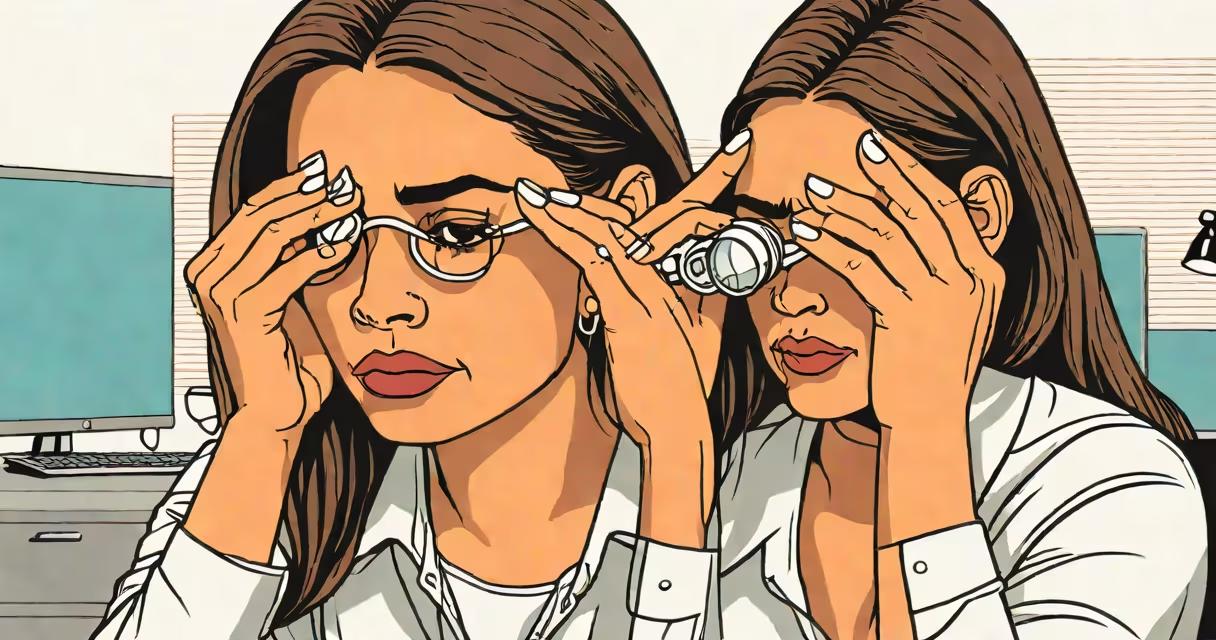
Eye pain after screen use often results from extended near-focus tasks, dryness, or uncorrected vision problems. Prolonged screen exposure forces the eyes to work harder, leading to muscle fatigue, irritation, and headaches.
When you stare at a screen for hours, your eyes don't blink as often. This reduces tear production, causing dryness and surface irritation. The muscles around the eyes tighten to maintain focus, resulting in ache behind the eyes or at the brow ridge. These symptoms are common during video calls, gaming, or reading on devices.
The American Optometric Association notes that 65% of adults report digital eye strain after using screens for more than two hours. Symptoms include blurred vision, neck tension, and a gritty sensation. Ignoring these signs increases risk of chronic discomfort and reduced visual performance.
Your eyes are designed to shift focus between near and far objects. When you fixate on a screen, the ciliary muscles inside the eye contract continuously to adjust lens shape. Over time, this leads to spasm and fatigue, especially if the screen is too close or poorly lit.
Screen glare and blue light contribute to eye strain. Blue light scatters more easily in the eye, reducing contrast and increasing effort to see details. Studies show that exposure to high levels of blue light during evening hours disrupts melatonin, delaying sleep onset and worsening eye fatigue.
A 2022 study published in Optometry and Vision Science found that participants who used screens for more than four hours daily reported twice the incidence of eye ache compared to those under two hours. The difference was most pronounced in people with uncorrected astigmatism or presbyopia.
Not all eye pain comes from screen use. Misdiagnosis delays proper treatment. Below are key causes and distinguishing features:
| Source | Key Symptoms | Duration & Pattern | Relief Triggers |
|---|---|---|---|
| Digital eye strain | Blurred vision, dryness, forehead pressure | Worsens after 30+ minutes of screen time | Breaks, blinking, distance viewing |
| Refractive error | Blurry text, squinting, headaches | Persistent even with rest | Corrective lenses reduce symptoms |
| Glaucoma (early) | Eye pressure, halos around lights | Worse in dim light, may affect vision | Medical evaluation required |
| Computer vision syndrome | Neck/shoulder stiffness, double vision | Develops over days of poor ergonomics | Adjust chair, monitor height, posture |
One non-obvious distinction: eye ache from screen use typically improves within 10 minutes of looking away. Pain that lingers past 30 minutes or occurs without screen exposure suggests an underlying condition like migraines or dry eye disease.
I spent six months coding remotely with minimal breaks. My eyes felt heavy, and I developed a constant ache behind both eyes. I assumed it was normal. After a week of worsening symptoms, I visited an optometrist.
Tests revealed mild astigmatism and reduced blink rate. I was blinking only 6 times per minute instead of the typical 15-20. The doctor prescribed artificial tears and recommended the 20-20-20 rule: every 20 minutes, look at something 20 feet away for 20 seconds.
After two weeks of consistent breaks and lubricant use, the ache dropped by 80%. I now schedule screen-free intervals every 90 minutes. The change wasn't dramatic-but it ended the daily grind of discomfort.
Many assume eye ache is "just from staring at the screen." But research shows that uncorrected refractive errors are responsible for nearly half of persistent cases. A 2021 review in Journal of Clinical Medicine found that 44% of patients with chronic eye strain had undiagnosed hyperopia or astigmatism.
Another misconception: blue light filters prevent eye strain. While they may improve sleep quality, studies show no significant reduction in eye fatigue. The real issue is visual demand, not light wavelength.
Also, eye pain doesn't always mean you need glasses. Dry eye syndrome affects 16% of adults over 50 and causes burning, grittiness, and intermittent blurriness. It's treatable with prescription drops or punctal plugs, not corrective lenses.
Apply the 20-20-20 rule consistently. Set a timer to pause every 20 minutes and gaze at a distant object for 20 seconds. This resets the ciliary muscles and reduces tension.
Use lubricating eye drops without preservatives. Apply one drop every 2-3 hours during screen sessions. Avoid products with vasoconstrictors-they shrink blood vessels temporarily but worsen dryness long-term.
Adjust your workspace. Position the top of your monitor at eye level, 20-30 inches from your face. Use warm-toned lighting to reduce contrast between screen and room. A 2020 study in Human Factors showed that ambient light at 300 lux reduced eye strain by 37% compared to dim rooms.
If pain persists beyond a week despite these steps, consult an ophthalmologist. Early diagnosis prevents progression to chronic conditions like blepharitis or keratitis.