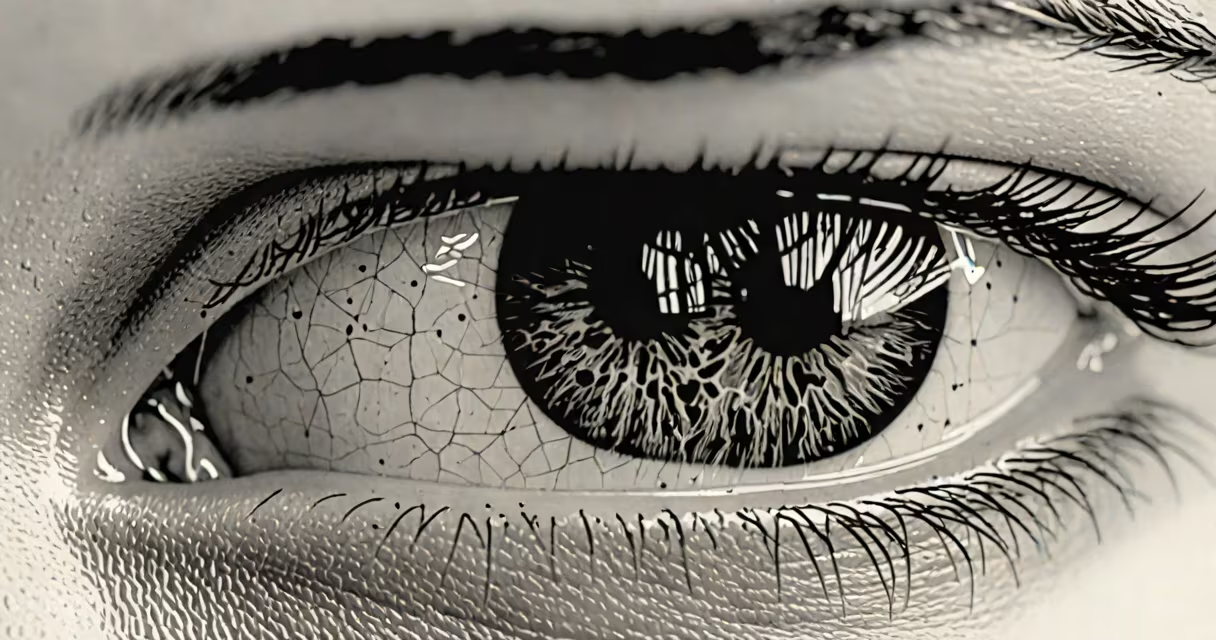
Black dots in your vision are usually caused by tiny clumps of gel or cells in the vitreous humor-the jelly-like substance inside your eye. These shadows cast on the retina appear as moving specks, especially when looking at bright backgrounds.
The vitreous humor begins to liquefy and shrink with age. As it pulls away from the retina, it can form clumps or strands that cast shadows. These are known as floaters. Most people experience occasional floaters, especially in bright light or while staring at a white wall. They're typically harmless and fade over time.
Floaters often appear as small black dots, threads, or rings. They move when your eyes move and may seem to dart away when you try to look at them directly. The brain learns to ignore them over time, making them less noticeable.
Floaters result from changes in the vitreous humor, a clear gel that fills the space between the lens and retina. By age 60, about 70% of people have experienced floaters due to natural aging processes.
As the vitreous gel ages, it loses viscosity and collapses. This process, called posterior vitreous detachment (PVD), occurs in most adults over 50. During PVD, the gel detaches from the retina, sometimes pulling on it and creating flashes of light. Clumps within the gel cast shadows on the retina, which your brain interprets as black dots or shapes.
A 2020 study published in Retina found that 12% of patients reporting new floaters had retinal tears upon examination. This shows that while floaters are common, they can signal underlying issues requiring prompt attention.
Not all black dots in vision come from floaters. Several distinct conditions produce similar symptoms, but differ in cause and urgency.
| Condition | Appearance | Common Triggers | Urgency |
|---|---|---|---|
| Floaters (vitreous opacities) | Small black dots, threads, or cobwebs | Aging, nearsightedness, eye surgery | Low unless sudden onset with flashes |
| Ocular migraines | Shimmering zigzags, blind spots, temporary black dots | Stress, dehydration, bright lights, hormonal shifts | Low-symptoms resolve in 20-30 minutes |
| Retinal detachment | Sudden increase in floaters, curtain-like shadow, flashing lights | Eye trauma, severe nearsightedness, prior cataract surgery | High-requires emergency treatment |
| Diabetic retinopathy | Dark spots, blurred vision, distortion | Uncontrolled blood sugar, long-term diabetes | High-can lead to blindness if untreated |
Floaters are the most common cause of black dots. But if you notice a sudden flood of new floaters, especially with flashes of light or a shadow spreading across your vision, this could indicate retinal detachment-a medical emergency.
Ocular migraines, also called retinal migraines, involve temporary visual disturbances. They're not related to brain migraines but stem from reduced blood flow to the retina. Symptoms last 10-30 minutes and resolve completely. They're more common in people under 50 and often occur with or without headache.
Most floaters are benign. But certain warning signs demand immediate evaluation by an ophthalmologist.
Sudden onset of dozens of new floaters within hours or days is a red flag. So is the presence of flashes-especially if they resemble lightning streaks. These symptoms suggest the vitreous is pulling hard on the retina, possibly causing a tear.
I experienced this firsthand during a routine eye exam. A patient reported seeing "a swarm of black dots" after a minor head bump. On dilated exam, we found a small retinal tear. Prompt laser treatment prevented detachment. This case illustrates that even mild trauma can trigger serious complications.
According to the American Academy of Ophthalmology, 1 in 10 people with sudden floaters develops a retinal tear within a month. Early diagnosis reduces the risk of permanent vision loss by over 90%.
Many assume floaters are always harmless. That's incorrect. While most are benign, new floaters in someone over 50, especially with flashes, require urgent assessment.
Another myth: floaters are caused by eye strain or screen use. There's no evidence linking prolonged screen exposure to floater formation. Floaters are structural, not functional. They don't result from fatigue or dry eyes.
Some confuse floaters with "eye floaters" seen in movies or online videos. These are often exaggerated. Real floaters are subtle, move slowly, and don't block vision entirely. They're rarely large enough to obscure a whole scene.
Also, floaters don't disappear completely. They settle below the line of sight and become less noticeable over weeks to months. Some persist indefinitely but remain unobtrusive.
If you're concerned about black dots in your vision, consult an ophthalmologist. Diagnosis begins with a dilated eye exam. The doctor uses special lenses to examine the retina and vitreous.
For persistent or disruptive floaters, a procedure called vitrectomy may be recommended. Surgeons remove the vitreous gel and replace it with saline. This eliminates floaters but carries risks, including cataracts and retinal detachment.
Less invasive options exist. Laser vitreolysis uses focused laser energy to break up large floaters. A 2021 clinical trial showed 70% of patients reported significant improvement after treatment. However, it's not suitable for everyone and requires specialized equipment.
Most cases don't need treatment. The brain adapts to floaters over time. Patients learn to ignore them through neuroplasticity-the brain's ability to filter out irrelevant visual input.
Why do my eyes see black dots? Because the vitreous inside your eye changes with age, forming clumps that cast shadows on the retina. Most cases are harmless and fade over time. But sudden onset, flashes, or vision loss demands immediate care.
Don't wait. If you see a new wave of black dots, especially with light flashes or a dark curtain, contact an eye doctor within 24 hours. Early detection prevents irreversible damage.
More on managing visual disturbances and when to seek care.