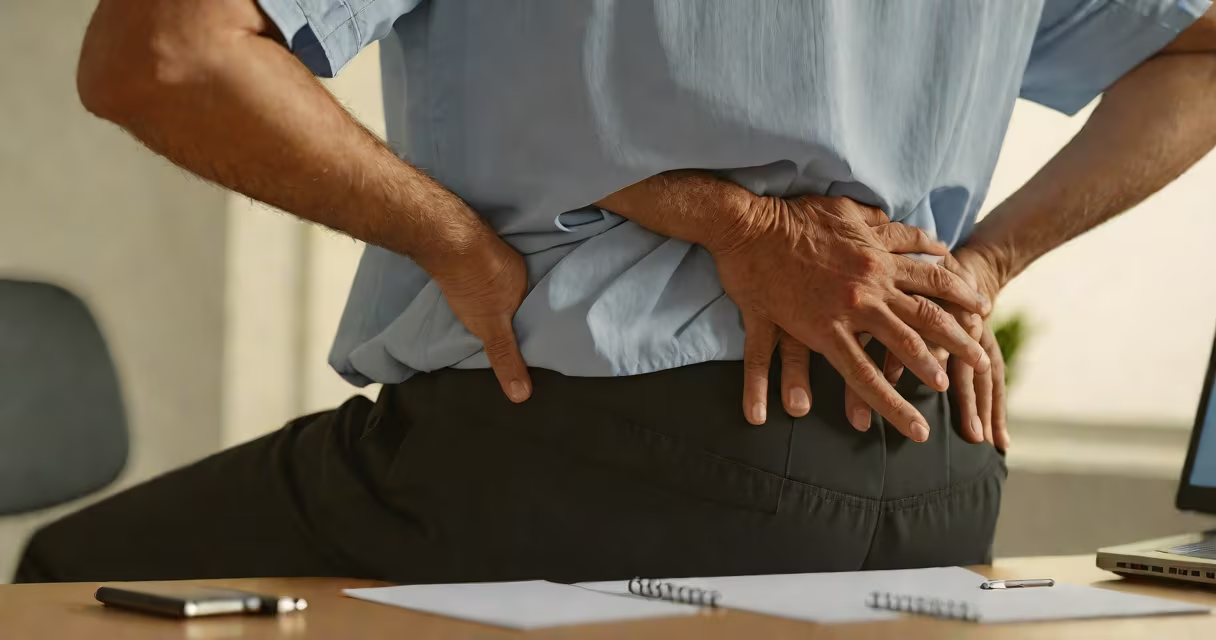
Lower back soreness arises when muscles, ligaments, or nerves in the lumbar region experience strain, irritation, or injury. Common triggers include prolonged sitting, sudden movements, poor lifting technique, or underlying spinal conditions. The sensation may range from dull ache to sharp, localized pain.
Back pain affects about 80% of adults at some point in life, according to the American College of Occupational and Environmental Medicine. Most cases resolve within a few weeks with rest and self-care. However, persistent soreness signals a need to identify root causes rather than treat symptoms alone.
The lower back supports most of the body's weight during standing, walking, and bending. When posture is compromised-such as slouching at a desk-the erector spinae and multifidus muscles work overtime to stabilize the spine. Over time, this leads to microtears, inflammation, and tenderness.
Nerve involvement increases complexity. For example, a herniated disc in the L4-L5 segment can compress the sciatic nerve, causing radiating pain down the leg. This condition, known as sciatica, often presents as a burning or tingling sensation in the buttock and calf.
A 2021 study published in Spine Journal found that sedentary behavior contributes to 60% of non-specific lower back pain cases. Sitting for more than 8 hours daily increases intradiscal pressure by up to 40%, accelerating disc degeneration.
Lower back soreness isn't one issue-it results from multiple mechanical, neurological, or systemic factors. The most frequent categories include:
| Type | Primary Cause | Typical Symptoms | Duration |
|---|---|---|---|
| Muscle strain | Sudden twist, heavy lift, poor posture | Dull ache, stiffness, localized tenderness | 3-7 days |
| Disc herniation | Age-related wear, trauma | Burning pain, numbness in leg, weakness | Weeks to months |
| Poor ergonomics | Extended sitting, improper chair setup | Constant dull ache, worsens after 30 minutes seated | Chronic if unaddressed |
| Arthritis (facet joint) | Cartilage breakdown, inflammation | Stiffness in morning, pain with extension | Progressive |
One overlooked cause is pelvic misalignment. A slight tilt in the pelvis due to leg length discrepancy or weak glutes forces the lower back to compensate. This creates uneven stress on the lumbar vertebrae and surrounding soft tissues.
Many assume lower back soreness equals "bad back" or "weak core." But research shows that core strength doesn't predict pain incidence. A 2019 study in British Journal of Sports Medicine found no significant difference in back pain rates between individuals with high vs. low core endurance.
Another misconception is that heat therapy always helps. While heat relaxes tight muscles, applying it too soon after acute injury can increase swelling. Cold therapy is preferred within the first 48 hours to reduce inflammation.
People also mistake referred pain from internal organs for musculoskeletal issues. For example, kidney stones can cause sharp, unilateral lower back pain that worsens with movement. Unlike mechanical back pain, this type often includes fever, nausea, or blood in urine.
Consider Sarah, a 34-year-old software developer who reports daily lower back soreness after 2-hour coding sessions. She sits for 10 hours/day with her monitor 18 inches above eye level. Her chair lacks lumbar support, and she rarely stands.
After a physical exam, her doctor diagnosed postural myofascial pain. Imaging showed no disc herniation or arthritis. The solution wasn't medication-it was ergonomic adjustment. She raised her monitor, added a lumbar cushion, and set a timer to stand every 30 minutes.
Within two weeks, her soreness reduced by 70%. She later incorporated gentle cat-cow stretches and bird-dog exercises. These improved spinal mobility and activated dormant stabilizing muscles.
Most lower back soreness resolves without medical intervention. But red flags demand prompt evaluation. See a provider if pain persists beyond four weeks, spreads down the leg, or accompanies numbness, weakness, or loss of bladder control.
These signs may indicate cauda equina syndrome-a rare but serious condition requiring emergency surgery. Delaying care risks permanent neurological damage.
Preventing recurrence involves consistent habits. Maintain a neutral spine while sitting: hips slightly higher than knees, feet flat. Use a standing desk for 15-30 minutes per hour.
Exercises targeting the posterior chain-like deadlifts (light weight), bridges, and planks-build resilience. A 2020 randomized trial in JAMA Internal Medicine showed that patients doing 20 minutes of daily back-strengthening exercises had 50% fewer relapses over 12 months.
One personal observation: I once ignored mild lower back soreness during a long road trip. After two days of driving, the pain became sharp and limited mobility. Rest and targeted stretching helped-but it took seven days to return to normal. That experience taught me that early attention prevents escalation.
Understanding why lower back sore occurs isn't about diagnosing instantly. It's about recognizing patterns, adjusting behavior, and acting before pain becomes chronic. Addressing posture, movement, and daily habits reduces risk far more effectively than relying on painkillers.