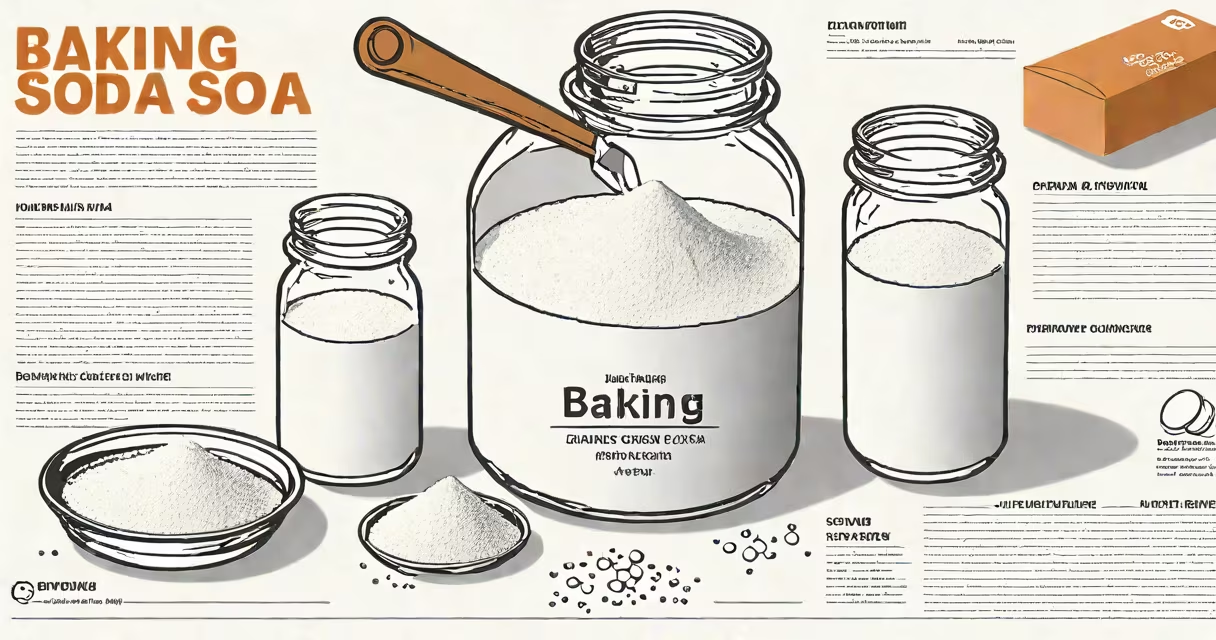
The chemical name for baking soda is sodium bicarbonate, with the formula NaHCO₃. It's a white, crystalline powder that acts as a weak base and releases carbon dioxide when heated or mixed with acids.
Sodium bicarbonate forms when sodium ions bond with bicarbonate ions. It occurs naturally in mineral deposits and is produced industrially via the Solvay process. The compound is stable at room temperature but decomposes above 50°C (122°F), releasing CO₂ gas.
It's used widely in food preparation, cleaning, and personal care. Its ability to neutralize acids makes it effective in treating heartburn and balancing pH levels in solutions. The U.S. Food and Drug Administration classifies it as Generally Recognized As Safe (GRAS) for internal use in limited amounts.
When baking soda reacts with an acid-like vinegar (acetic acid), lemon juice (citric acid), or buttermilk-it produces carbon dioxide gas. This gas creates bubbles that leaven baked goods, making them rise. The reaction is rapid and visible: fizzing occurs within seconds.
For example, a recipe calling for 1 teaspoon of baking soda and ½ cup of buttermilk generates about 1.5 liters of CO₂ per gram of baking soda. That volume expansion causes dough to expand during baking, resulting in light, airy texture in pancakes or quick breads.
Outside of cooking, sodium bicarbonate neutralizes acidic odors. It binds with volatile organic acids in sweat, urine, or spoiled food, reducing their smell. This property explains why it's used in refrigerators, laundry detergents, and deodorants.
Baking soda is available in several forms, though all share the same chemical identity:
| Type | Use Case | Key Difference |
|---|---|---|
| Food-grade | Cooking, baking | Meets FDA purity standards; safe for ingestion |
| Industrial-grade | Water treatment, fire extinguishers | Higher impurity levels; not for consumption |
| Pharmaceutical-grade | Antacid tablets, mouth rinses | Strictly controlled for consistency and sterility |
Despite different grades, all contain NaHCO₃ as the primary component. The label "baking soda" typically refers to food-grade sodium bicarbonate unless otherwise specified.
Many people confuse baking soda with baking powder. Baking powder contains sodium bicarbonate plus an acid (like cream of tartar) and a moisture-absorbing agent (like cornstarch). It activates only when wet, whereas baking soda requires both acid and heat.
Another error is assuming that baking soda can alkalize the entire body. While it can raise pH in localized areas-such as the mouth or stomach-it cannot alter systemic pH. The human body tightly regulates blood pH between 7.35 and 7.45 through kidney and lung function. Consuming baking soda won't "detox" or "alkalize" your bloodstream.
A 2018 study published in Frontiers in Physiology confirmed that oral sodium bicarbonate supplementation increases urinary pH but has minimal effect on blood pH. Excessive intake can cause metabolic alkalosis, leading to nausea, muscle cramps, or arrhythmias.
In kitchens, 1 teaspoon of baking soda (about 5 grams) neutralizes the acidity in 100 ml of tomato sauce. This reduces sourness and enhances sweetness without adding sugar. Chefs use this trick to balance sauces and soups.
For cleaning, a paste of baking soda and water removes stains from sinks and bathtubs. The abrasive particles scratch away grime while the alkalinity dissolves grease. A 2020 study in Journal of Environmental Health Science & Engineering showed that a 10% baking soda solution removed 92% of oil residue from kitchen surfaces after 10 minutes of scrubbing.
I once used baking soda to clean a burnt pan. After soaking it overnight in a mixture of water and 2 tablespoons of baking soda, the charred residue lifted off with a sponge. The surface regained its shine without scratching.
While baking soda and sodium bicarbonate refer to the same substance, the term "bicarbonate" is preferred in scientific contexts. "Baking soda" is common in everyday language.
Compare its structure to other compounds like aspirin, whose chemical name is acetylsalicylic acid. Both are salts, but aspirin targets inflammation pathways while baking soda modulates pH. Their molecular formulas differ: aspirin is C₉H₈O₄, baking soda is NaHCO₃.
Sodium bicarbonate is not a miracle cure. It's a versatile compound grounded in basic chemistry. Knowing its true identity-sodium bicarbonate-helps avoid confusion and supports informed use in daily life.
Understanding the baking soda chemical name clarifies its behavior and limits. It's not a substitute for medical treatment, nor a universal cleanser. But in the right context, it remains a useful tool.