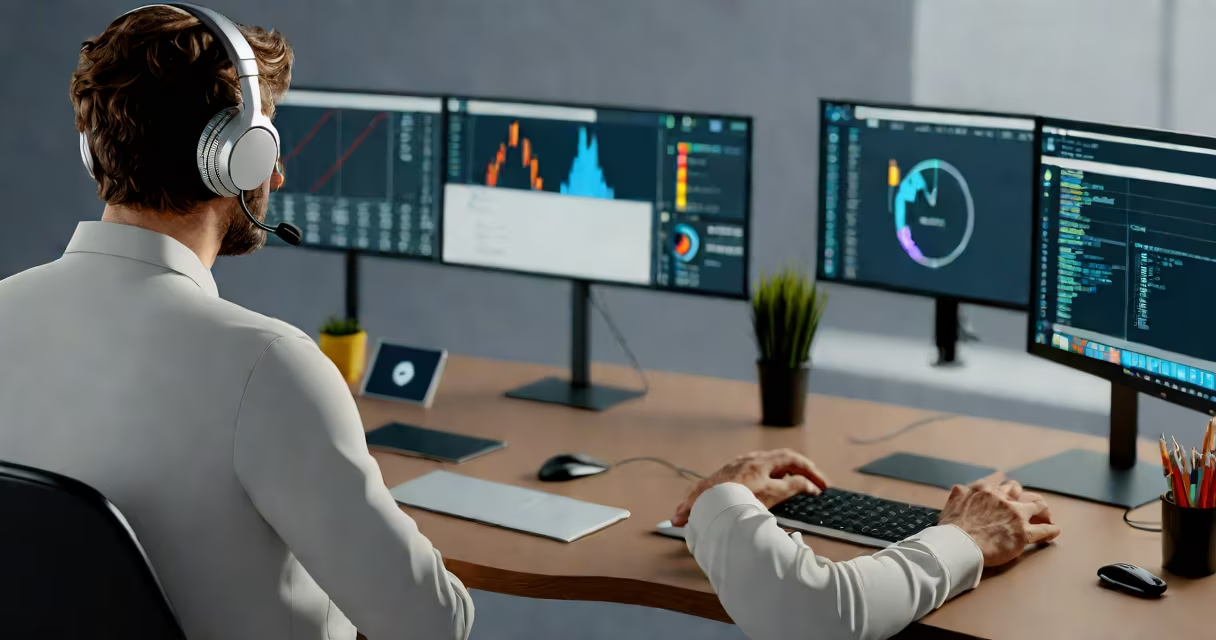
Simple computer courses are structured learning programs designed for beginners with little or no prior experience. They cover foundational digital skills such as using a mouse and keyboard, going through operating systems, managing files, sending emails, and browsing the web safely. These courses typically last between 4 and 12 hours and are offered online or in person through community centers, libraries, schools, and nonprofit organizations.
They focus on practical tasks rather than technical theory. For example, a typical lesson might walk learners through creating a document in word processing software, saving it to a folder, and printing it. The goal is immediate usability: by the end of the course, participants can perform everyday computing tasks independently.
According to the National Center for Education Statistics, over 60% of adults in the U.S. who lack basic digital skills report difficulty completing job applications or accessing healthcare services online. Simple computer courses directly address this gap by teaching essential functions that enable participation in modern life.
These courses follow a step-by-step format. Each session introduces one skill, demonstrates it visually, then gives hands-on practice. Lessons are short-usually 10 to 20 minutes-and often include quizzes or checklists to confirm understanding.
Most programs use guided tutorials with clear instructions. A learner might watch a video showing how to attach a file to an email, then replicate the steps on their own device. Immediate feedback reinforces correct actions and corrects mistakes in real time.
Some courses include live instructors or peer support. For instance, the Digital Learn program by the Public Library Association offers virtual classes led by trained librarians. Participants join via Zoom, ask questions, and receive personalized help during sessions.
Every simple computer course includes five key elements: clear objectives, visual demonstrations, interactive exercises, progress tracking, and accessible materials. All content is written in plain language, avoiding jargon unless defined immediately.
Course formats vary. Online platforms like Coursera and Khan Academy offer free modules titled "Introduction to Computers" or "Using Windows 10." In-person options are common in public libraries and adult education centers. Some programs combine both-offering online lessons with weekly in-person review sessions.
| Format | Duration | Best for | Example |
|---|---|---|---|
| Self-paced online | 4-8 hours | People with flexible schedules | Khan Academy's Computer Basics |
| In-person group | 6-12 weeks | Those needing hands-on support | Local library workshops in New York City |
| Hybrid (online + live) | 4-6 weeks | Adults returning to education | Digital Learn by Public Library Association |
Many courses now include accessibility features such as closed captions, screen-reader compatibility, and adjustable font sizes. The World Wide Web Consortium (W3C) reports that 85% of major educational websites now meet WCAG 2.1 Level AA standards, ensuring usability for people with vision or motor impairments.
Simple computer courses are widely used in community education, workforce development, and senior outreach. Libraries across the U.S. host them monthly. In 2023, the American Library Association reported that 78% of public libraries offered at least one computer literacy program.
Employers increasingly require basic digital skills. A 2022 study by Burning Glass Technologies found that 63% of entry-level jobs in retail, food service, and administrative support now require proficiency in email, spreadsheets, and file management. Simple computer courses prepare individuals for these roles.
A real-world example: Maria, a 54-year-old woman in Phoenix, enrolled in a six-week course at her local library. She had never used a computer before. By week four, she was sending emails to her daughter, organizing photos into folders, and applying for jobs online. She secured a part-time office assistant position within two months.
One frequent error is assuming that simple computer courses only teach how to turn on a device. That's not accurate. While power-on procedures may be covered, the curriculum focuses on functional use: opening apps, saving documents, connecting to Wi-Fi, and protecting personal data.
Another misconception is that these courses are only for older adults. In reality, they serve diverse groups. Teenagers from low-income families use them to complete school assignments. Immigrants learn English and digital skills simultaneously. People with disabilities access tailored versions of the material.
Simple computer courses do not replace formal IT certification paths. They are not meant to train someone to become a network administrator or programmer. Their purpose is functional literacy-not career preparation in advanced tech fields.
As a former volunteer instructor at a community center in Detroit, I observed that learners often underestimate their ability to progress. After just three sessions, most participants could go through their devices confidently. The biggest barrier wasn't technical-it was fear of failure. Once they completed a single task successfully, motivation increased dramatically.
Simple computer courses differ from general computer science education, coding bootcamps, and advanced software training. The table below highlights the distinctions:
| Program Type | Focus | Time Commitment | Prerequisites |
|---|---|---|---|
| Simple computer courses | Basic operations and daily tasks | 4-12 hours | None |
| Coding bootcamps | Programming languages and software development | 8-24 weeks | High school math level |
| Computer science degrees | Theory, algorithms, system design | 3-4 years | Advanced math and science background |
| Software-specific training | Mastering tools like Photoshop or Excel | 10-40 hours | Basic familiarity with computers |
While all involve learning, only simple computer courses assume no prior knowledge and prioritize immediate, practical application. They are not about building complex systems-they are about building confidence.
Simple computer courses are not a luxury. They are a necessity in a world where digital access determines opportunity. With consistent, low-barrier entry points, millions of people can begin their process toward greater independence, employment, and connection.