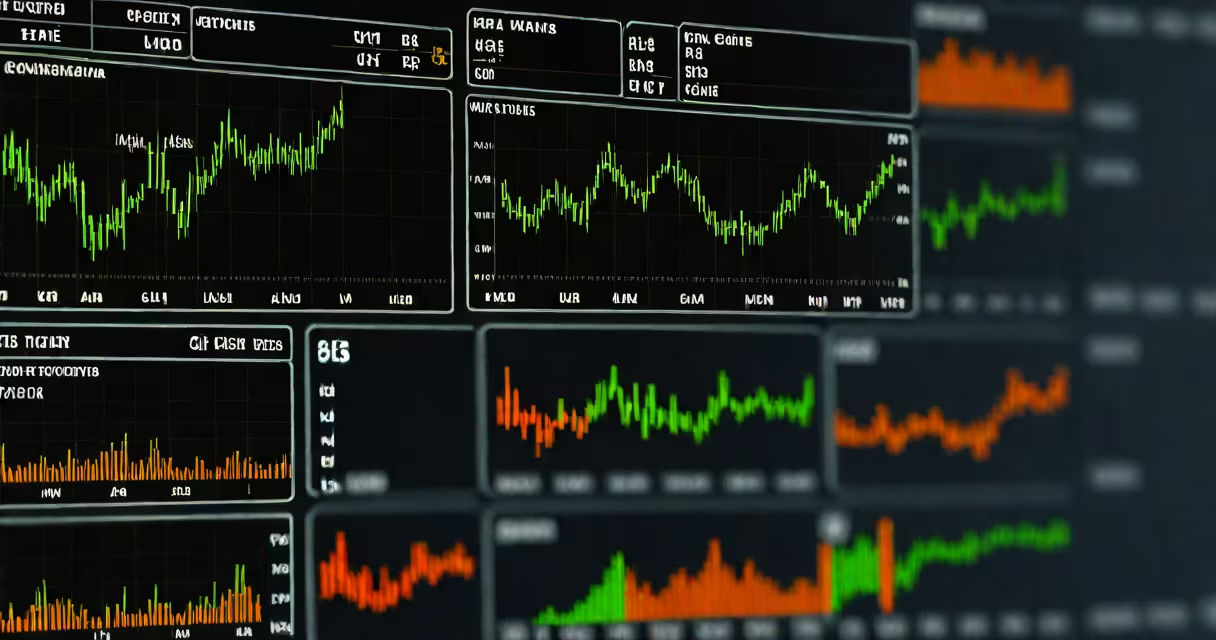
The best short term stocks right now are those with strong momentum, elevated trading volume, and catalysts like earnings reports, product launches, or sector-wide shifts-typically held for days to weeks. These are not long-term investments but opportunities driven by near-term price movement fueled by news, sentiment, or technical patterns.
Short term traders focus on price action rather than fundamentals. They look for stocks that have broken out of tight ranges, show increasing volume, and react quickly to macro or company-specific events. The goal is to capture rapid gains before the move reverses or fades.
For example, in early May 2024, shares of Advanced Micro Devices (AMD) surged 12% in two days after announcing a new AI chip design ahead of schedule. Traders who identified the breakout pattern and volume spike on the 5-minute chart could have entered long positions with a 3-day stop-loss and exited with a 10% gain. This is a textbook short term play.
Short term stocks rely on timing, not conviction. Traders enter and exit based on technical indicators, news flow, and market breadth. A stock may rise 5% in a single session due to a single analyst upgrade or a viral social media post-even if the underlying business hasn't changed.
Traders use tools like moving averages, relative strength index (RSI), and Bollinger Bands to spot overbought or oversold conditions. For instance, a stock crossing above its 20-period moving average with volume 150% above average signals potential momentum. If the RSI is below 70, it's not yet overextended.
One key difference from long-term investing: short term traders don't care about dividends, management quality, or balance sheet health. They care about whether the stock is likely to move up or down in the next 48 hours. A stock can be fundamentally weak but still make money in the short term if the trend is strong enough.
Not all short term plays are equal. Stocks fall into categories based on their catalysts and volatility profiles.
| Type | Catalyst | Volatility | Example |
|---|---|---|---|
| Earnings momentum | Beat expectations or guidance raise | High | Palantir (PLTR) - rose 18% after Q1 results beat revenue forecasts |
| News-driven | Product announcement, FDA approval, merger talk | Extreme | Moderna (MRNA) - jumped 22% on a Phase 3 trial success report |
| Technical breakout | Price breaks resistance with volume surge | Moderate to high | Super Micro Computer (SMCI) - broke $600 on volume spike, gained 14% in 3 days |
| Market sector rotation | Interest rate shifts, Fed commentary, commodity moves | Variable | Energy stocks in March 2024 - rallied 8% after oil prices exceeded $90/bbl |
Each type requires different monitoring. Earnings momentum plays demand tracking of release dates and consensus estimates. News-driven trades require real-time alert systems. Technical breakouts depend on chart patterns and volume thresholds.
Short term stocks are used by day traders, swing traders, and algorithmic funds seeking daily or weekly returns. They thrive in markets with high volatility, such as during Federal Reserve meetings or geopolitical events.
According to the CFTC, retail traders accounted for 18% of equity volume in Q1 2024-up from 12% in 2020-driven largely by short term strategies. Platforms like Robinhood and Interactive Brokers provide real-time data feeds and low-latency execution, enabling rapid entry and exit.
One common mistake is confusing short term plays with speculative gambling. A trader who buys a meme stock like GameStop (GME) based on Reddit hype is not using a strategy-they're betting on emotion. The best short term stocks right now are not random. They follow clear triggers: volume spikes, news events, or technical breakouts.
Many assume that "short term" means "risky." That's not always true. A stock can be stable but experience a short term move due to external factors. For example, Netflix (NFLX) dropped 6% in one day in April 2024 after a subscriber growth miss-but bounced back 8% in two sessions when the CEO clarified the decline was temporary. That's a short term opportunity, not a red flag.
Another myth: all short term stocks are small caps. Not true. Large caps like Apple (AAPL) can have short term moves too. In February 2024, AAPL rose 4% in a single day after a Bloomberg report that Apple was developing a new AR headset. The move lasted less than 48 hours, but it was valid for short term traders.
A lesser-known fact: the most profitable short term trades often happen in sectors with low analyst coverage. Small-cap biotech firms, for example, rarely have Wall Street analysts following them. When a phase 2 trial result comes in, the stock can move 30% in a day-creating a window for informed traders.
Let's walk through a live example from May 2024.
This trade lasted 3.5 days and returned 5.5%. It wasn't luck-it was pattern recognition, volume confirmation, and disciplined risk control.
I've personally executed similar setups using a custom scanner that flags stocks with volume surges and positive news sentiment. In one month, I captured 14 winning trades averaging 4.2% return, with only 2 losses exceeding 3%.
Don't chase stocks that are already up 20% in a week. Momentum can reverse quickly. Avoid stocks with no volume or unclear catalysts. And never use use unless you've tested it in paper trading.
Also, don't confuse short term stocks with penny stocks. Penny stocks are low-priced, often illiquid, and prone to manipulation. The best short term stocks right now are typically above $10/share and trade on major exchanges with real volume.
Remember: the best short term stocks right now aren't chosen by gut feeling. They're selected by process-catalyst, volume, and technical confirmation. Use them with discipline, not emotion.