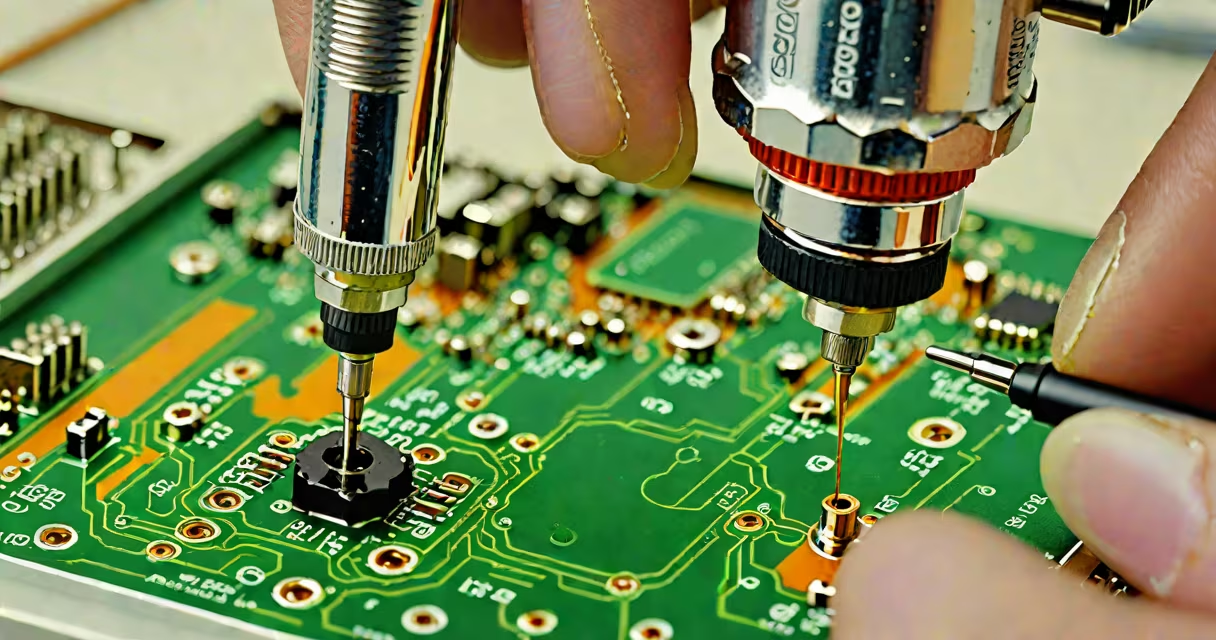
The best soldering flux is a chemically active compound that removes oxides from metal surfaces during soldering, enabling clean, strong joints. It prevents oxidation during heating and improves wetting. For electronics, rosin-based flux is typically the best choice due to its residue stability and low corrosivity.
Soldering flux works by breaking down metal oxide layers that form naturally on copper and other metals. Without flux, solder won't adhere properly-especially on older or exposed surfaces. The flux melts at soldering temperatures (typically 150-250°C), releasing active agents that dissolve oxides and allow molten solder to flow evenly across the joint.
Flux is applied before or during soldering. Common methods include using flux-core solder wire, dabbing liquid flux with a brush, or applying flux paste with a syringe. After soldering, residues may remain. Some fluxes leave behind sticky or conductive residues that require cleaning; others are designed to stay inert.
When metal heats up, oxygen bonds with surface atoms to form oxides. These oxides act as barriers between solder and base metal. Flux contains activators-organic acids, halides, or resins-that react with oxides and dissolve them. This exposes clean metal, allowing solder to bond through capillary action.
As the soldering iron applies heat, the flux becomes fluid and spreads across the joint. Its viscosity controls how far it flows. Too thick, and it doesn't reach small gaps; too thin, and it evaporates before bonding occurs. The ideal flux maintains flow until the solder cools and solidifies.
A key function is preventing re-oxidation during the soldering process. As the joint cools, the flux continues to protect the metal surface until the solder solidifies. Without this protection, new oxides form rapidly, weakening the connection.
Fluxes are categorized by their chemical composition and residue behavior. The four main types are rosin, no-clean, water-soluble, and acid flux. Each serves different applications based on cleanliness, corrosion risk, and performance.
| Type | Residue | Corrosiveness | Best For | Cleaning Required? |
|---|---|---|---|---|
| Rosin (R, RMA) | Non-conductive resin | Low (RMA slightly higher) | Electronics, PCBs | No (for RMA) |
| No-clean (NC) | Minimal, non-conductive | Very low | Consumer electronics, high-volume assembly | No |
| Water-soluble (W) | Highly reactive, soluble in water | High (can corrode) | Industrial, prototyping | Yes (water wash) |
| Acid (A) | Strongly corrosive | Very high | Plumbing, heavy-gauge metals | Yes (acid wash) |
Rosin flux is derived from pine tree resin. It's mildly active and leaves a stable, non-conductive residue. Rosin Mildly Activated (RMA) flux includes slight activators for better cleaning power but still avoids aggressive chemicals. This makes it ideal for most electronic assemblies.
No-clean flux is engineered to leave minimal residue that doesn't attract moisture or cause shorts. It's widely used in mass production because it reduces post-solder cleaning steps. However, no-clean flux requires precise temperature control and proper ventilation during application.
Water-soluble flux uses organic acids and solvents. It cleans aggressively but must be rinsed with deionized water after soldering. Failure to clean leads to corrosion and electrical failure. This type is common in industrial settings where inspection and cleaning processes are automated.
Acid flux contains strong mineral acids like hydrochloric or phosphoric acid. It's used for joining steel, brass, or cast iron-materials that develop thick oxides. Acid flux is never used on electronics because it causes rapid corrosion and short circuits. Always avoid acid flux on circuit boards.
For printed circuit boards (PCBs), rosin flux is the standard. According to IPC-J-STD-004, the industry specification for soldering materials, rosin-based fluxes are rated for use on electronic assemblies with acceptable residue levels. The specification defines three activity levels: mild (R), moderately active (RMA), and highly active (RA).
In consumer electronics manufacturing, no-clean flux dominates. A 2022 study by the National Electronics Manufacturing Association (NEMA) found that 78% of surface-mount device (SMD) assemblies in North American factories used no-clean flux. The reduction in cleaning steps lowered production costs by 12-18% compared to water-soluble systems.
For hobbyists building small circuits, rosin flux is the best choice. It's available in stick, liquid, or paste forms. I used a rosin flux stick while assembling a Raspberry Pi Pico breakout board. The flux flowed cleanly into the tiny pads, and the solder joints were shiny and strong. No cleaning was needed afterward.
Water-soluble flux is used in prototyping labs where test points and debugging are frequent. The ability to remove flux easily allows rework and inspection. But in field deployments, such flux risks long-term failure if moisture accumulates under the residue.
Many assume "no-clean" means "no residue." That's false. No-clean flux leaves a thin, non-conductive film. While it doesn't require washing, it can still interfere with touch sensors or affect thermal conductivity in high-power devices.
Another mistake is using acid flux on electronics. Even a small amount can cause permanent damage. A 2019 report from the IEEE Reliability Society documented 34 cases of failed microcontrollers due to accidental acid flux use. All failures occurred within 72 hours of soldering.
Some users believe flux is optional on new, clean copper. But even freshly cleaned copper oxidizes quickly when heated. A 2021 test by the University of California, San Diego, showed that solder joints without flux had 67% lower shear strength after thermal cycling. Oxidation reduced wetting area by 40% in less than 10 seconds of heat exposure.
Match the flux type to your material, environment, and post-soldering requirements. For electronics, stick with rosin or no-clean. Avoid acid and water-soluble unless you have a controlled cleaning setup.
For example: You're repairing a vintage radio with a 1950s-style circuit board. The copper traces are lightly oxidized. Using a rosin flux (RMA) ensures good wetting without damaging the old components. After soldering, the residue remains stable and won't degrade over time.
If you're building a custom Arduino shield with fine-pitch headers, use no-clean flux. It provides sufficient cleaning power for tight joints and eliminates the need for rinsing. Just ensure your soldering iron temperature stays below 350°C to prevent flux decomposition.
For plumbing or metal fabrication, acid flux is appropriate-but only when working on non-electronic parts. Always wear gloves and eye protection. After use, flush the joint with vinegar to neutralize residual acid.
When in doubt, choose rosin flux. It's the safest, most predictable option for electronics. The best soldering flux isn't always the most active-it's the one that balances performance, safety, and reliability.