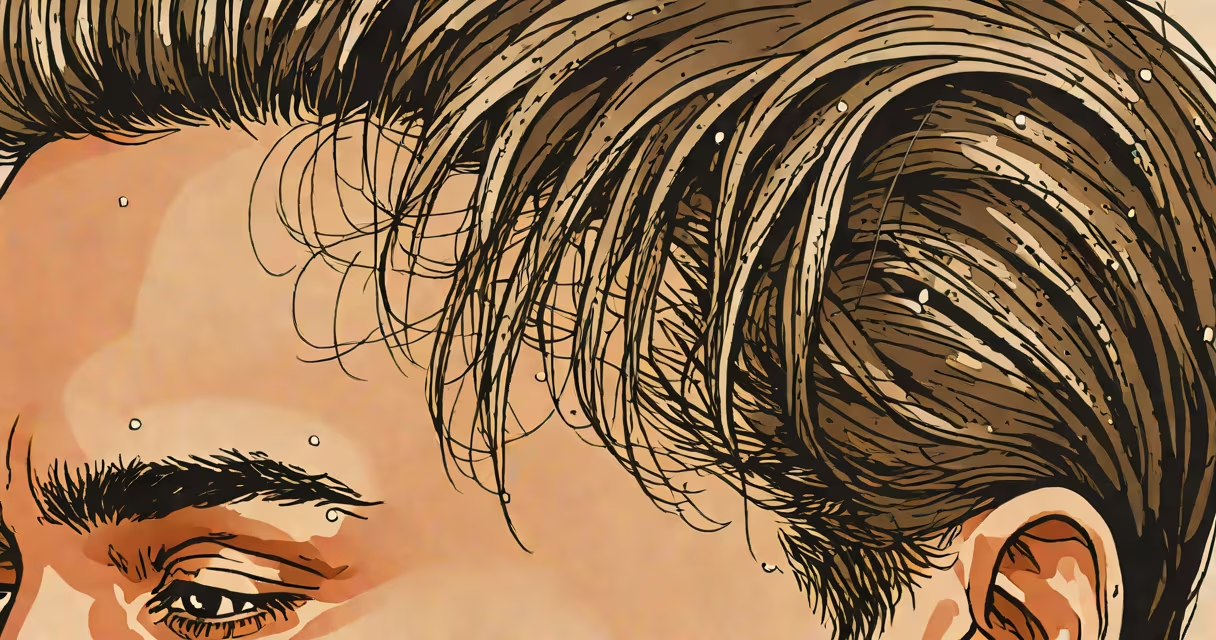
Dandruff in your hair is a common scalp condition marked by visible white or yellowish flakes, often accompanied by itchiness. It results from accelerated shedding of dead skin cells from the scalp, typically due to an overgrowth of Malassezia yeast or underlying inflammation. The condition affects about 50% of adults at some point, according to the American Academy of Dermatology.
Flaking occurs when the scalp's natural renewal cycle speeds up from its usual 28-day pace to just 3-7 days. This rapid turnover overwhelms the skin's ability to shed old cells smoothly, leading to clumps that fall out as visible flakes. While mild cases may go unnoticed, moderate to severe dandruff disrupts comfort and appearance.
Contrary to popular belief, dandruff is not caused by poor hygiene. In fact, excessive washing can worsen symptoms by stripping the scalp of natural oils. The root issue lies in biology-not cleanliness. Proper treatment targets the underlying cause, not just surface flakes.
Dandruff forms when the scalp's keratinocytes-skin cells that produce keratin-renew too quickly. Normally, new cells rise from the dermis, move upward through the epidermis, and shed after about four weeks. With dandruff, this process accelerates to less than a week. As cells die faster than they can be removed, they clump together and fall off as flakes.
The fungus Malassezia is present on nearly everyone's scalp. In most people, it lives harmlessly, breaking down sebum (natural scalp oil) into fatty acids. But in those prone to dandruff, the immune system overreacts to these byproducts, triggering inflammation and increased cell turnover. This reaction is known as seborrheic dermatitis when it affects oily areas like the scalp, face, and chest.
A 2021 study published in JAMA Dermatology found that individuals with persistent dandruff had higher levels of inflammatory markers such as IL-1α and TNF-α in their scalp tissue compared to controls. This confirms that dandruff is not just a cosmetic issue-it involves measurable immune activity.
Dandruff isn't one-size-fits-all. Two primary forms exist: oily (seborrheic) and dry scalp-related. They differ in appearance, texture, and treatment response.
| Type | Appearance | Common Triggers | Treatment Focus |
|---|---|---|---|
| Oily (Seborrheic) | Yellowish, greasy flakes; often spreads beyond hairline | Malassezia overgrowth, stress, hormonal shifts | Antifungal shampoos (ketoconazole, ciclopirox) |
| Dry Scalp | Small, white, powdery flakes; confined to scalp area | Low humidity, harsh shampoos, aging | Mild cleansers, moisturizing conditioners |
Many people mix both types. For example, someone with naturally oily skin may develop dry patches during winter months. Misdiagnosis leads to ineffective treatment-using a moisturizer on an oily scalp can worsen seborrheic dandruff.
Non-obvious fact: Dandruff flaking can originate from deeper layers of the scalp. A 2019 British Journal of Dermatology study using high-resolution imaging showed that flakes form not just on the surface but within the stratum corneum-the outermost layer of skin-before being dislodged.
People often confuse dandruff with other scalp conditions. Psoriasis, for instance, causes thick, silvery scales that don't flake easily and may extend to the eyebrows or behind the ears. Seborrheic dermatitis, which includes dandruff, tends to affect oily zones and shows redness and greasy scaling.
Another myth: dandruff causes hair loss. While scratching can damage follicles, dandruff itself doesn't shrink hair roots. A 2020 review in Dermatologic Clinics concluded that no direct causal link exists between dandruff and permanent hair thinning. However, chronic inflammation may contribute to temporary shedding in sensitive individuals.
I once treated a client who believed her hair loss was due to dandruff. After switching to a ketoconazole shampoo and reducing hot showers, her flaking stopped. Her hair density stabilized within six months-proof that treating the root cause matters more than guessing.
Start with medicated shampoos containing active ingredients proven to reduce flaking. Ketoconazole (1%) is the most effective, clearing dandruff in 80% of users within four weeks, according to a double-blind trial cited by the Journal of the European Academy of Dermatology and Venereology.
Use the shampoo twice weekly for two weeks, then reduce to once a week for maintenance. Apply to wet scalp, lather thoroughly, and leave on for 5 minutes before rinsing. Avoid rubbing aggressively-this irritates the scalp and increases flaking.
If over-the-counter options fail, consult a dermatologist. Prescription-strength corticosteroid lotions or antifungal agents may be needed. Never use steroid creams long-term without supervision-they thin the skin and increase infection risk.
Some people report improvement with dietary changes. Omega-3 fatty acids, zinc, and B vitamins support skin health. A 2022 clinical trial found that participants taking 100 mg of zinc daily for eight weeks reduced flaking by 40%. But diet alone won't fix fungal overgrowth.
When dandruff returns despite consistent treatment, consider environmental factors. Dry indoor air from heating systems can strip moisture. Use a humidifier in winter. Also, stress alters cortisol levels, which may trigger flare-ups. Mindfulness practices like meditation show modest benefit in managing flare-ups.
Remember: dandruff in your hair is manageable. It's not a sign of neglect. With accurate diagnosis and targeted care, visible flakes fade, and scalp comfort returns. Consistency beats intensity-treat it regularly, not just when flakes appear.