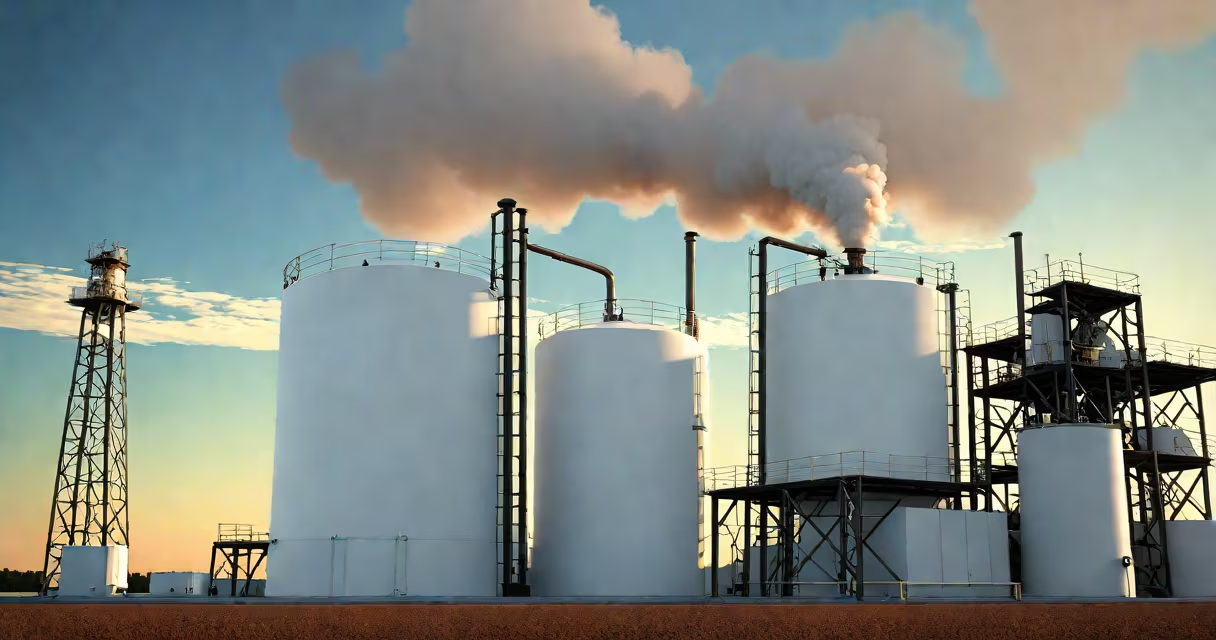
NH3, or ammonia, is a colorless gas with a sharp odor used primarily in fertilizer production, industrial refrigeration, and chemical synthesis. It forms the foundation of nitrogen-based fertilizers that feed billions and enables cooling systems in food processing and cold storage.
Ammonia is produced through the Haber-Bosch process, which combines nitrogen from the air with hydrogen derived from natural gas. This reaction occurs at high pressure (150-300 atm) and temperature (400-500°C) using an iron catalyst. The resulting NH3 is then liquefied and stored under pressure for transport and use.
Global ammonia production exceeds 180 million metric tons annually, according to the International Fertilizer Development Center (IFDC). Over 80% of this output goes toward nitrogen fertilizers, making it essential to modern crop yields. Without NH3-derived fertilizers, global food production would drop by nearly 50%, per a 2021 study published in Nature.
The largest application of NH3 is in agriculture. When applied to soil, it provides nitrogen in a form plants can absorb quickly. Urea-ammonium nitrate (UAN) solutions, which contain dissolved NH3, are sprayed onto fields at rates between 100-300 kg/ha depending on crop and soil type.
Refrigeration is the second major use. Ammonia's thermodynamic properties make it highly efficient as a coolant. It has a high latent heat of vaporization and low environmental impact compared to synthetic refrigerants. Large-scale cold storage facilities, such as those in meatpacking plants and seafood processing centers, rely on NH3-based systems.
Chemical manufacturing accounts for about 10% of global NH3 consumption. It serves as a precursor to nitric acid, which is used in explosives and plastics. It also reacts with formaldehyde to produce melamine, a compound used in kitchenware and flame-retardant materials.
Ammonia is used in several physical states and formulations:
| Form | Use Case | Concentration | Example Application |
|---|---|---|---|
| Gaseous NH3 | Direct injection into soil | 100% | Field application via tank trucks |
| Aqueous solution (ammonium hydroxide) | Industrial cleaning, pH adjustment | 20-30% | Water treatment plants, semiconductor cleaning |
| Liquid NH3 under pressure | Refrigeration systems | ~99% | Commercial cold storage warehouses |
| UAN (urea-ammonium nitrate) | Fertilizer | 18-32% N | Corn and wheat fields in the U.S. Midwest |
One common misconception is that NH3 is only used in farming. While agriculture dominates consumption, its role in refrigeration is critical. A single refrigeration system in a large supermarket chain may use over 1,000 kg of NH3 annually. These systems are designed with safety interlocks and leak detection to prevent exposure.
Many assume NH3 is toxic because it's corrosive and volatile. While it is hazardous in high concentrations-exposure above 50 ppm causes respiratory irritation-its safe handling protocols are well established. The American Society of Heating, Refrigerating and Air-Conditioning Engineers (ASHRAE) sets standards for NH3 use in refrigeration, including ventilation requirements and emergency shutoff procedures.
Another misunderstanding is that NH3 is a greenhouse gas. It is not classified as a direct greenhouse gas by the Intergovernmental Panel on Climate Change (IPCC). However, when released into the atmosphere, it contributes to secondary particulate formation, which affects air quality and climate indirectly.
There's also confusion between NH3 and other nitrogen compounds like NOx or N2O. Unlike NOx (nitrogen oxides), which are emitted during combustion and contribute to smog, NH3 is a stable molecule that doesn't break down into reactive nitrogen species unless oxidized in the atmosphere.
In central Iowa, a 1,200-acre corn farm applies 200 kg/ha of nitrogen annually. The farmer uses a liquid UAN solution containing 26% nitrogen by weight. To meet this requirement, he applies approximately 770 liters of UAN per hectare. This translates to 192,500 liters for the entire farm.
The nitrogen in the UAN comes from ammonia synthesized at a nearby facility using the Haber-Bosch process. That facility produces 1.2 million tons of NH3 per year, enough to supply over 100,000 farms across the Midwest. The ammonia is transported via pipeline and converted on-site into urea and ammonium nitrate before being blended into the UAN solution.
I've observed this system firsthand during a visit to a cooperative fertilizer distributor in Des Moines. The tanks were labeled with hazard symbols, and workers wore full PPE. A leak alarm triggered during a routine transfer, but the system shut down automatically within 12 seconds. No release occurred.
Despite its benefits, NH3 poses risks. Accidental releases can cause severe health effects. The 2007 incident at a fertilizer plant in Texas resulted in 15 deaths and over 100 injuries due to a massive NH3 cloud. Regulatory bodies now require risk assessment plans and emergency response drills for facilities handling more than 10,000 pounds of NH3.
Efforts to reduce emissions focus on improving application efficiency. Precision agriculture tools now allow farmers to apply NH3 only where needed, reducing runoff and volatilization. Research from the University of Illinois shows that injecting NH3 below the soil surface reduces nitrogen loss by up to 40% compared to surface broadcasting.
For refrigeration, newer systems integrate ammonia with heat recovery loops. Waste heat from compressors is reused to warm buildings or preheat water, improving energy efficiency. Some installations achieve a coefficient of performance (COP) exceeding 5.0, meaning they deliver five units of cooling for every unit of electrical input.
NH3 is used in fertilizer production, refrigeration, and chemical manufacturing. Its role in feeding the global population and enabling cold chains makes it indispensable. While it requires careful handling, modern safety standards and technological advances minimize risks. Understanding its actual applications separates myth from reality.