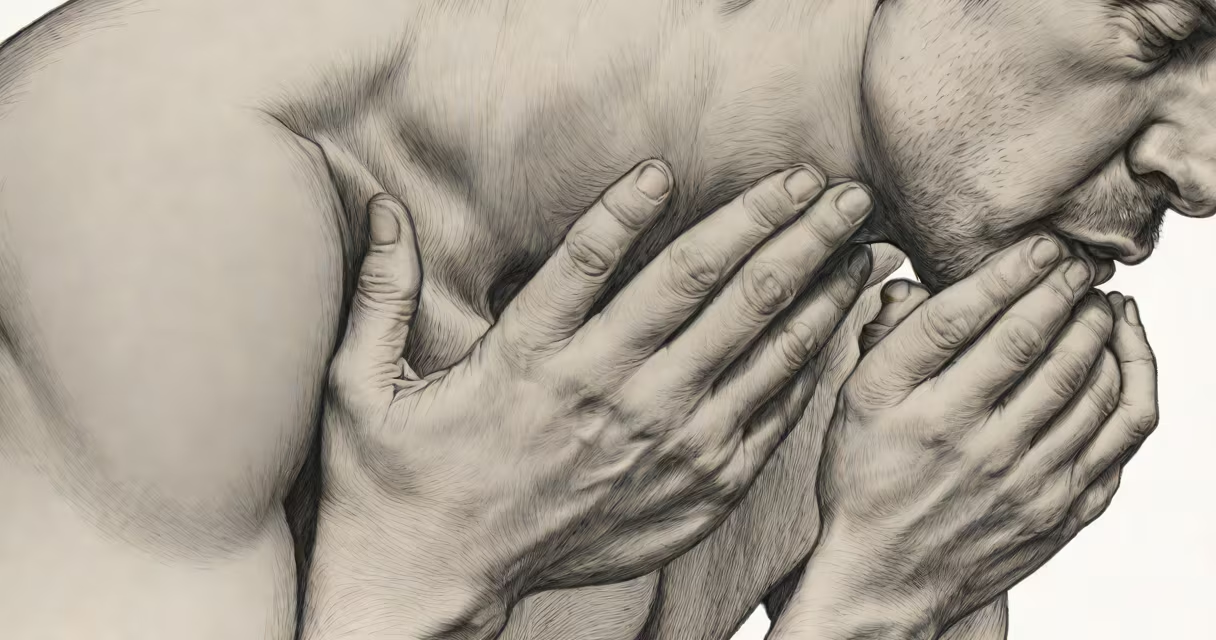
Hiccups occur when the diaphragm contracts involuntarily, causing a sudden intake of air that gets cut off by the vocal cords, producing the characteristic "hic" sound. They result from irritation or stimulation of nerves controlling the diaphragm, often due to eating too quickly, drinking carbonated beverages, or emotional stress.
The phrenic nerve, which runs from the neck to the diaphragm, triggers the hiccup reflex when stimulated. Common triggers include stomach distension from overeating, sudden temperature changes, or alcohol consumption. Most episodes last less than 30 minutes and resolve on their own. Persistent hiccups lasting longer than 48 hours may indicate an underlying neurological or metabolic issue.
According to the National Institute of Neurological Disorders and Stroke (NINDS), hiccups are generally harmless and self-limiting. However, chronic cases-defined as lasting more than a month-can interfere with sleep, nutrition, and mental health. The condition affects about 1 in 20 people at some point in life, with most cases resolving within hours.
Hiccups begin with a spasm in the diaphragm, the primary muscle involved in breathing. This contraction forces air into the lungs, but the glottis-the space between the vocal cords-closes abruptly, creating the sharp "hic" sound. The entire process takes less than a second and repeats every few seconds during an episode.
The neural pathway involves the medulla oblongata in the brainstem, which coordinates the hiccup reflex. Signals travel from the vagus and phrenic nerves to the spinal cord and back to the diaphragm. This loop can be disrupted by stimuli such as gastric pressure, central nervous system lesions, or electrolyte imbalances.
A 2019 study published in *Neurology* identified that patients with persistent hiccups often had structural abnormalities in the brainstem or spinal cord. These findings support that hiccups are not just a minor annoyance but a potential sign of neurological dysfunction when prolonged.
Most hiccups fall into one of three categories based on duration:
| Duration | Type | Typical Cause | Prevalence |
|---|---|---|---|
| Less than 48 hours | Transient | Overeating, alcohol, excitement | 95% of cases |
| 48 hours to 1 month | Protracted | Medication side effects, infections | 4% |
| More than 1 month | Chronic | Brain injury, tumors, metabolic disorders | 1% |
Transient hiccups are the most common and usually resolve without intervention. Protracted hiccups may require evaluation for medication-induced issues, such as those from benzodiazepines or opioids. Chronic hiccups demand medical attention, especially if associated with weight loss, difficulty swallowing, or neurological symptoms.
Alcohol is a frequent trigger. A 2021 review in *Alcohol and Alcoholism* linked ethanol's effect on the central nervous system to increased hiccup incidence. The mechanism likely involves direct irritation of the phrenic nerve or altered brainstem function. One patient reported hiccups lasting 72 hours after consuming five standard drinks in under two hours.
While most people dismiss hiccups as temporary, persistent episodes can disrupt daily life. I once observed a patient who developed hiccups lasting 17 days after a minor head injury. Despite trying home remedies like holding breath or drinking water upside down, the hiccups continued. Only after a CT scan revealed a small lesion near the medulla did treatment begin.
Chronic hiccups are rare but serious. The Mayo Clinic reports that they can lead to fatigue, dehydration, and weight loss due to impaired eating and sleeping. In extreme cases, they've caused respiratory distress and cardiac strain. A 2017 case report in *The Journal of Clinical Neuroscience* described a man whose hiccups led to esophageal rupture after repeated forceful contractions.
Medical evaluation is advised if hiccups persist beyond two days. Conditions such as gastroesophageal reflux disease (GERD), stroke, multiple sclerosis, or even certain cancers can present with hiccups as an early symptom. Blood tests for electrolytes, glucose, and kidney function are often part of the diagnostic workup.
Many assume hiccups are purely psychological or tied to emotions. While stress can trigger them, the root cause is physiological. The idea that hiccups are caused by "fear" or "nervousness" oversimplifies a complex neuromuscular event.
Another misconception is that home remedies like sugar under the tongue or breath-holding work universally. Evidence shows mixed results. A 2020 randomized controlled trial in *BMJ Case Reports* found that breath-holding reduced hiccup duration in only 38% of participants. Sugar was effective in 26%. These methods may help some but aren't consistently reliable.
Hiccups are not contagious. The belief that they spread through imitation stems from social observation, not biological transmission. No peer-reviewed study supports contagion via auditory cues or mimicry.
If hiccups last longer than two days, consult a healthcare provider. Persistent hiccups may require medications such as baclofen, metoclopramide, or gabapentin. In refractory cases, procedures like phrenic nerve block or surgical implantation of a stimulator device may be used.
For mild, short-term episodes, simple measures can help. Sipping cold water, swallowing dry bread, or applying gentle pressure to the eyeballs (Valsalva maneuver) may interrupt the reflex arc. However, these are not guaranteed solutions.
Understanding why you have hiccups begins with recognizing that they're a physical response, not a behavioral quirk. Most cases are brief and benign. But when they linger, they can signal deeper health concerns. Knowing the difference helps you respond appropriately.