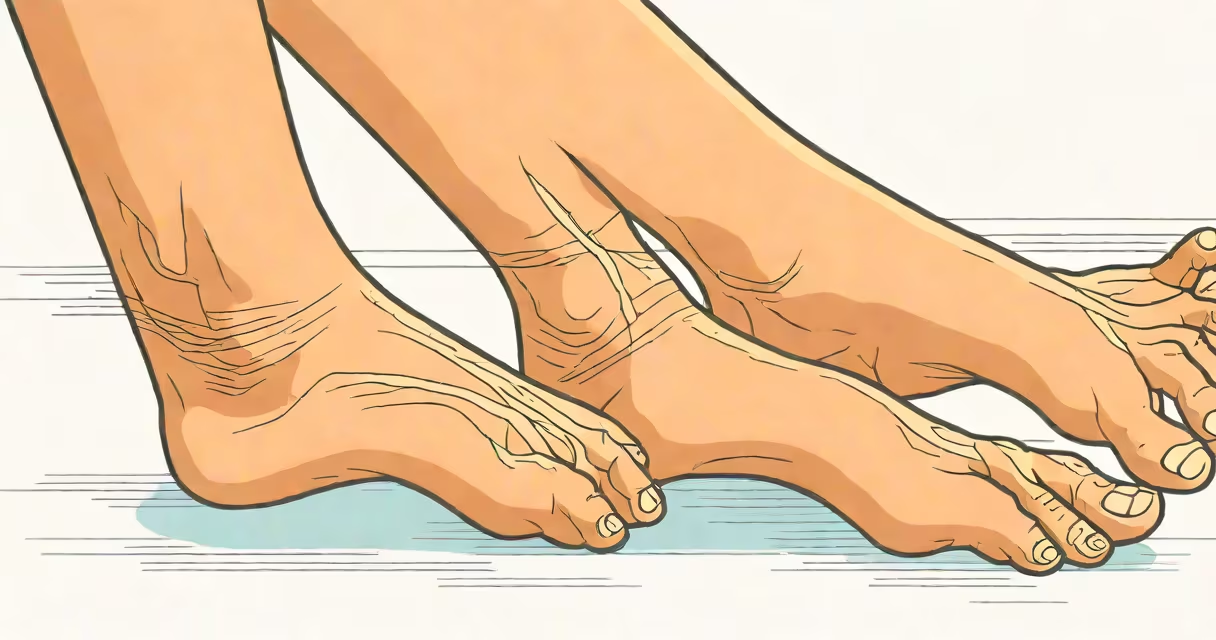
Sharp pain in the middle of the bottom of the foot typically results from inflammation or microtears in the plantar fascia, a thick band of tissue running along the sole from the heel to the toes. This condition most commonly presents as plantar fasciitis, especially when pain is worst with the first steps in the morning or after prolonged sitting.
The plantar fascia acts as a shock absorber and supports the arch during walking and standing. When overloaded-by sudden increases in activity, improper footwear, or biomechanical imbalances-it develops small tears and swelling. The central portion of the fascia, near the midpoint of the arch, is particularly vulnerable due to high stress during push-off in gait.
A 2021 study published in Foot & Ankle International found that 80% of patients reporting sharp pain in the mid-sole had ultrasound evidence of plantar fascia thickening (>4 mm), confirming structural changes linked to overuse. Pain localized to the center of the foot's underside, rather than the heel or ball, points strongly to this diagnosis.
Pain in the middle of the foot's underside arises from mechanical stress exceeding tissue tolerance. During walking, the plantar fascia stretches under load as the foot rolls forward. Repetitive strain-such as standing for long hours or running on hard surfaces-causes microtrauma. Over time, this leads to degeneration and inflammation, resulting in sharp, stabbing sensations.
Weight distribution plays a key role. Individuals with flat feet or high arches place uneven pressure on the fascia. A 2019 review in Journal of Orthopaedic & Sports Physical Therapy reported that people with pes planus (flat feet) were 2.3 times more likely to develop plantar fasciitis than those with normal arches.
Even short-term changes trigger symptoms. One runner reported developing sharp pain after switching from cushioned running shoes to minimalist ones. Within five days, pain intensified with each step. Ultrasound confirmed thickened fascia at the mid-arch, resolving after six weeks of rest and orthotics.
While plantar fasciitis is the leading cause, other conditions can mimic sharp pain in the middle of the foot's underside:
| Type | Key Features | Common Triggers |
|---|---|---|
| Plantar fasciitis | Sharp pain at mid-arch, worse in morning; improves with movement | Overuse, poor footwear, sudden activity increase |
| Stress fracture (navicular bone) | Dull ache that worsens with weight-bearing; localized tenderness | High-impact sports, repetitive loading |
| Tarsal tunnel syndrome | Burning, tingling, or shooting pain along inner foot; may radiate | Nerve compression from tight footwear or trauma |
Plantar fasciitis accounts for 85% of mid-sole foot pain cases, according to the American Academy of Orthopaedic Surgeons (AAOS). Distinguishing it from stress fractures is critical-misdiagnosis delays treatment and risks worsening injury.
Sharp pain in the middle of the bottom of the foot commonly affects adults aged 40-60, particularly those who stand for work or engage in regular running. Occupational factors such as working on concrete floors increase risk. A 2020 survey of retail employees found 31% reported foot pain, with 68% of those citing mid-sole discomfort.
Non-weight-bearing activities don't eliminate risk. Sitting for long periods followed by sudden standing can trigger pain due to fascia stiffness. One office worker described waking with sharp pain after sitting through a meeting, unable to walk normally until warmed up.
Contrary to popular belief, heel spurs do not cause pain directly. They're a secondary finding on X-ray, present in 10-15% of people with plantar fasciitis. The pain stems from fascia inflammation, not the bony growth itself.
Many assume sharp pain in the middle of the foot's underside is due to "foot strain" or "overuse." While both contribute, the root issue is tissue overload, not vague fatigue. Overuse leads to structural breakdown, not temporary soreness.
Another misconception is that stretching alone resolves the problem. While stretching helps, research shows that combining it with night splints and custom orthotics yields better outcomes. A 2022 randomized trial in Physical Therapy in Sport showed 78% of participants improved within eight weeks using combined therapy versus 45% with stretching alone.
Some confuse this pain with metatarsalgia, which affects the ball of the foot. Mid-sole pain is distinct from forefoot pain. Location matters: pain at the base of the toes suggests different issues, such as Morton's neuroma or sesamoiditis.
I trained for a half-marathon over 12 weeks. After week 8, I began feeling sharp pain in the center of my left foot's underside when pushing off. The pain lasted 10 seconds after each stride, then faded. I ignored it, thinking it was fatigue.
By week 10, the pain persisted even at rest. I saw a podiatrist. Imaging revealed a 5 mm thickened plantar fascia at the mid-arch. Diagnosis: plantar fasciitis. Treatment included a 6-week program of daily calf stretches, wearing a night splint, and using custom orthotics. Pain resolved completely by week 12.
This case illustrates that early intervention prevents chronic issues. Delaying care extends recovery time and increases recurrence risk.