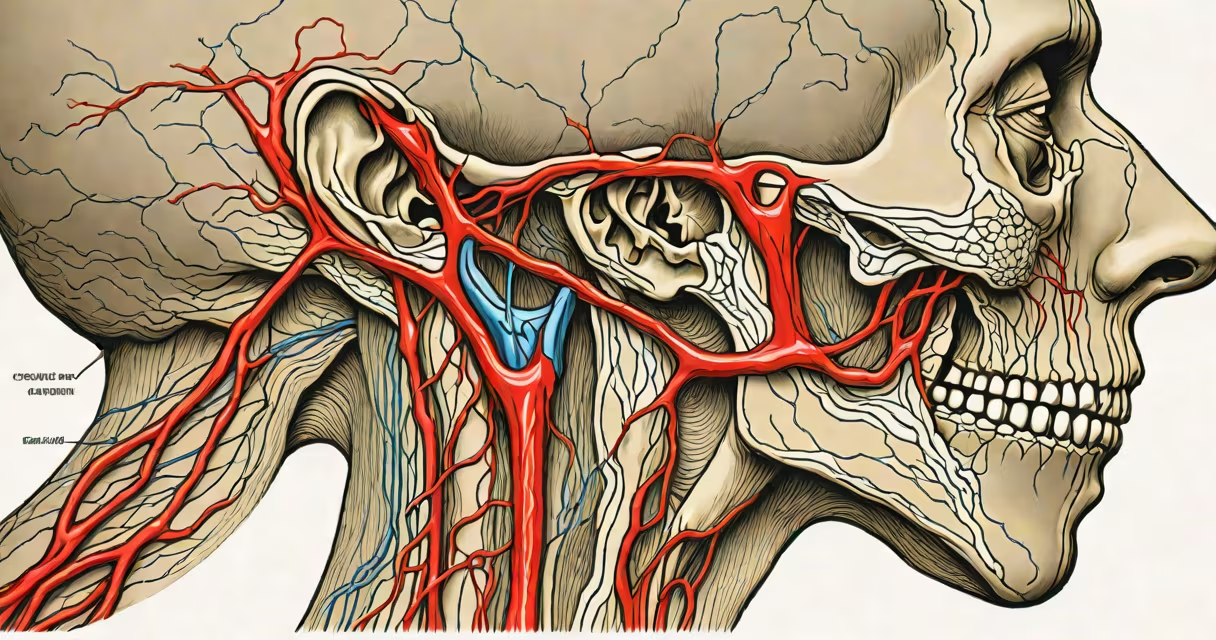
Bilateral carotid artery stenosis is a condition where both internal carotid arteries-the primary blood vessels supplying oxygenated blood to the brain-become narrowed, typically due to atherosclerotic plaque buildup. This narrowing reduces cerebral perfusion and raises the risk of ischemic stroke.
The narrowing occurs gradually over years, often without symptoms until a critical threshold is reached. When both arteries are affected, the risk of stroke rises sharply because the brain loses redundancy in blood supply. A 2021 study published in Stroke found that patients with bilateral stenosis greater than 70% had a five-year stroke rate of 16%, compared to 3% in those with unilateral stenosis.
Diagnosis relies on non-invasive imaging. Carotid duplex ultrasound is the first-line test, combining B-mode imaging and Doppler flow analysis to assess vessel wall thickness and blood velocity. A peak systolic velocity above 230 cm/s in either internal carotid artery indicates moderate to severe stenosis. If findings are inconclusive, CT angiography (CTA) or MR angiography (MRA) provides higher-resolution images.
Atherosclerosis forms when low-density lipoprotein (LDL) cholesterol accumulates in the arterial intima, triggering inflammation and fibrous plaque formation. Over time, these plaques harden and narrow the lumen. In bilateral cases, the process affects both sides symmetrically or asymmetrically, depending on risk factors like hypertension, diabetes, smoking, and hyperlipidemia.
Plaque instability increases risk further. Ultrasound can detect high-risk features such as ulceration, intraplaque hemorrhage, or irregular surface morphology. These traits correlate with increased stroke likelihood even at moderate stenosis levels.
For example, a 68-year-old male with a history of type 2 diabetes and smoking presented with transient monocular blindness lasting 15 minutes. Carotid duplex ultrasound revealed 75% stenosis in the left internal carotid artery and 80% in the right. The patient underwent carotid endarterectomy within 14 days, reducing his stroke risk by 60% over five years, according to the CREST trial data.
Stenosis severity is measured using the NASCET (North American Symptomatic Carotid Endarterectomy Trial) method, which compares the diameter of the narrowest segment to the normal distal internal carotid artery. The classification is:
| Stenosis Level | NASCET Percentage | Clinical Implication |
|---|---|---|
| Mild | <50% | Monitor with lifestyle changes and statins |
| Moderate | 50-69% | Consider medical therapy; surgery if symptomatic |
| Severe | 70-99% | High surgical benefit; recommended intervention if symptomatic |
When both arteries show severe stenosis (>70%), the decision to intervene becomes complex. Bilateral symptomatic stenosis increases perioperative stroke risk during endarterectomy. Guidelines from the American Heart Association recommend staged procedures or alternative treatments like carotid artery stenting, especially in high-risk surgical candidates.
Many assume that bilateral stenosis always causes symptoms. That's false. Up to 60% of individuals with bilateral severe stenosis remain asymptomatic until a transient ischemic attack (TIA) or stroke occurs. This underscores the importance of screening in high-risk populations.
Another misconception is equating carotid stenosis with carotid dissection. Dissection involves a tear in the arterial wall, often from trauma, and presents acutely with sudden neck pain and Horner's syndrome. It's rare, accounts for less than 2% of strokes, and requires different management-anticoagulation rather than surgery.
Some confuse stenosis with occlusion. Occlusion means complete blockage. While occlusion is a terminal stage of stenosis, it's not synonymous. A patient with bilateral occlusions may still have collateral circulation through the vertebral arteries and circle of Willis, delaying symptom onset.
Medical management focuses on risk factor control. High-intensity statins (e.g., atorvastatin 80 mg daily) reduce LDL below 70 mg/dL and stabilize plaques. Antiplatelets like aspirin 81 mg daily prevent thrombus formation. Blood pressure should be maintained below 130/80 mmHg per ACC/AHA guidelines.
Surgical intervention is indicated for symptomatic patients with stenosis ≥70%. The CREST trial showed that endarterectomy reduced stroke risk by 5.8% over five years compared to medical therapy alone. For bilateral disease, procedures are often staged-first one side, then the other after 2-4 weeks-to minimize stroke risk during recovery.
Asymptomatic bilateral stenosis ≥70% remains controversial. The CREST-2 trial is currently evaluating whether endarterectomy offers benefit beyond medical therapy in this group. Preliminary results suggest no significant difference in stroke rates, though quality of life improvements were noted in the surgical arm.
One non-obvious fact: bilateral stenosis can progress unevenly. A patient may have 70% stenosis on the left and 50% on the right at baseline. After two years, the right side may worsen to 80% while the left stabilizes. Regular follow-up imaging every 12-18 months is essential to catch shifts early.
During a routine screening at a community health fair, I reviewed a 72-year-old woman's carotid duplex scan. She was asymptomatic but had a family history of stroke. The scan showed 72% stenosis on the left and 68% on the right. She was referred for MRA confirmation and later underwent endarterectomy on the left side. Five years later, she remains stroke-free.
Early detection of bilateral carotid artery stenosis prevents disabling neurological events. Screening with carotid duplex ultrasound is cost-effective, with a sensitivity of 95% and specificity of 93% for detecting ≥70% stenosis, according to the American College of Radiology.
Recognizing bilateral carotid artery stenosis early allows timely intervention. Without action, the risk of permanent disability or death from stroke increases dramatically. Regular screening in high-risk groups-those over 65, with diabetes, or prior cardiovascular events-is essential for preserving long-term brain health.