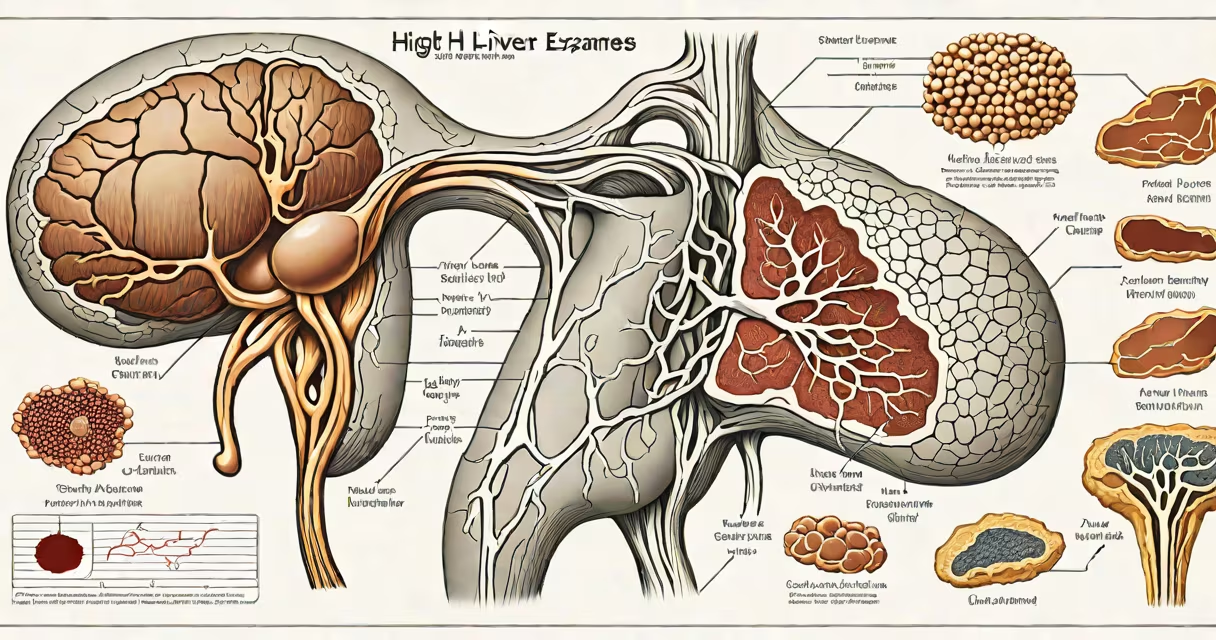
No, high liver enzymes do not directly cause diarrhea. Elevated liver enzymes indicate liver cell damage or inflammation, not gastrointestinal dysfunction. Diarrhea arises from intestinal or systemic issues, not from enzyme levels themselves.
Liver enzymes such as alanine aminotransferase (ALT) and aspartate aminotransferase (AST) leak into the bloodstream when liver cells are injured. This leakage signals liver stress but doesn't affect bowel motility or fluid absorption in the intestines-the primary drivers of diarrhea. The confusion often stems from overlapping symptoms in chronic liver diseases, where both elevated enzymes and digestive disturbances occur simultaneously.
For example, a person with non-alcoholic fatty liver disease (NAFLD) may have ALT levels above 40 U/L and report frequent loose stools. The elevated enzymes reflect fat accumulation and inflammation in the liver, while the diarrhea likely results from altered bile acid metabolism or gut microbiome changes. These are separate biological processes, not causally linked.
Liver enzymes are proteins produced by hepatocytes. When these cells are damaged-by alcohol, medications, viral infections, or metabolic stress-they release enzymes into the blood. Standard lab tests measure ALT, AST, alkaline phosphatase (ALP), and gamma-glutamyl transferase (GGT).
Normal ALT ranges from 7-56 U/L in adults. Levels above 100 U/L are considered elevated. A single reading above normal doesn't confirm disease-repeat testing over time is needed. The American Association for the Study of Liver Diseases (AASLD) notes that mild elevations (up to 2× upper limit of normal) are common and often benign, especially in overweight individuals.
When enzymes rise, the focus shifts to identifying the root cause. Common triggers include obesity, insulin resistance, excessive alcohol intake, certain prescription drugs (like statins), and viral hepatitis B or C. The liver's role in processing fats, detoxifying substances, and producing bile makes it central to digestion-but enzyme elevation itself doesn't disrupt bowel movements.
While high enzymes don't cause diarrhea, several disorders feature both symptoms. In autoimmune hepatitis, immune cells attack liver tissue, raising ALT and AST. Patients may also develop malabsorption due to reduced bile production, leading to steatorrhea-fatty, foul-smelling stools. But this is due to impaired bile secretion, not the enzymes themselves.
Primary biliary cholangitis (PBC), a rare autoimmune condition targeting bile ducts, causes progressive liver damage. Early signs include fatigue and itching. As the disease advances, patients may experience diarrhea due to bile acid malabsorption. Lab tests show elevated ALP and GGT-not ALT or AST. Again, the diarrhea stems from disrupted bile flow, not enzyme levels.
A 2021 study published in Hepatology found that 34% of NAFLD patients reported gastrointestinal symptoms, including diarrhea, compared to 18% in controls. The researchers attributed this to altered gut microbiota and increased intestinal permeability, not enzyme values. This underscores that correlation does not imply causation.
| Condition | Common Enzyme Elevations | Diarrhea Mechanism | Source |
|---|---|---|---|
| Non-alcoholic fatty liver disease (NAFLD) | ALT, AST | Gut dysbiosis, insulin resistance | AASLD Clinical Practice Guidelines (2023) |
| Alcoholic hepatitis | AST > ALT (ratio > 2:1) | Nutrient malabsorption, portal hypertension | National Institute of Diabetes and Digestive and Kidney Diseases (NIDDK) |
| Primary biliary cholangitis (PBC) | ALP, GGT | Bile acid malabsorption | European Association for the Study of the Liver (EASL) guidelines |
Many assume that abnormal liver tests mean the liver is "not working," leading them to believe any symptom must be connected. This leads to misattributing diarrhea to liver problems. The liver does not regulate bowel frequency directly. Instead, it produces bile-essential for fat digestion-but only affects stool consistency indirectly.
A key distinction: elevated enzymes reflect cellular injury, not organ failure. A patient with ALT of 120 U/L may feel fine but still face long-term risks like fibrosis. Diarrhea, however, indicates active GI disruption. Confusing the two delays proper diagnosis. For example, a woman with persistent diarrhea and mildly elevated AST was initially referred to a gastroenterologist-after months of testing, she was diagnosed with celiac disease, not liver disease.
Another misconception is that "liver cleanse" supplements can lower enzymes and cure digestive issues. These products lack clinical evidence. The National Center for Complementary and Integrative Health states that no supplement has proven efficacy in reducing liver enzymes in controlled trials. Some even worsen liver function.
If you have consistently high liver enzymes and new-onset diarrhea, consult a healthcare provider. The combination suggests a systemic issue requiring investigation. Blood tests, imaging (ultrasound or FibroScan), and possibly a liver biopsy may be needed.
I observed this in a clinic setting: a 52-year-old man had ALT of 88 U/L and reported daily loose stools for six weeks. Initial workup revealed positive anti-tissue transglutaminase antibodies-diagnosing celiac disease. His liver enzymes normalized after starting a gluten-free diet. The diarrhea resolved, and his liver function improved-demonstrating that treating the root cause corrected both symptoms.
Do not self-diagnose based on symptom clusters. High enzymes and diarrhea may share a common origin-such as autoimmune disease or infection-but they are not causally linked. Testing is essential.
High liver enzymes do not cause diarrhea. They signal liver cell damage. Diarrhea results from intestinal or metabolic disruptions. When both occur, investigate the underlying condition-not the enzymes themselves.