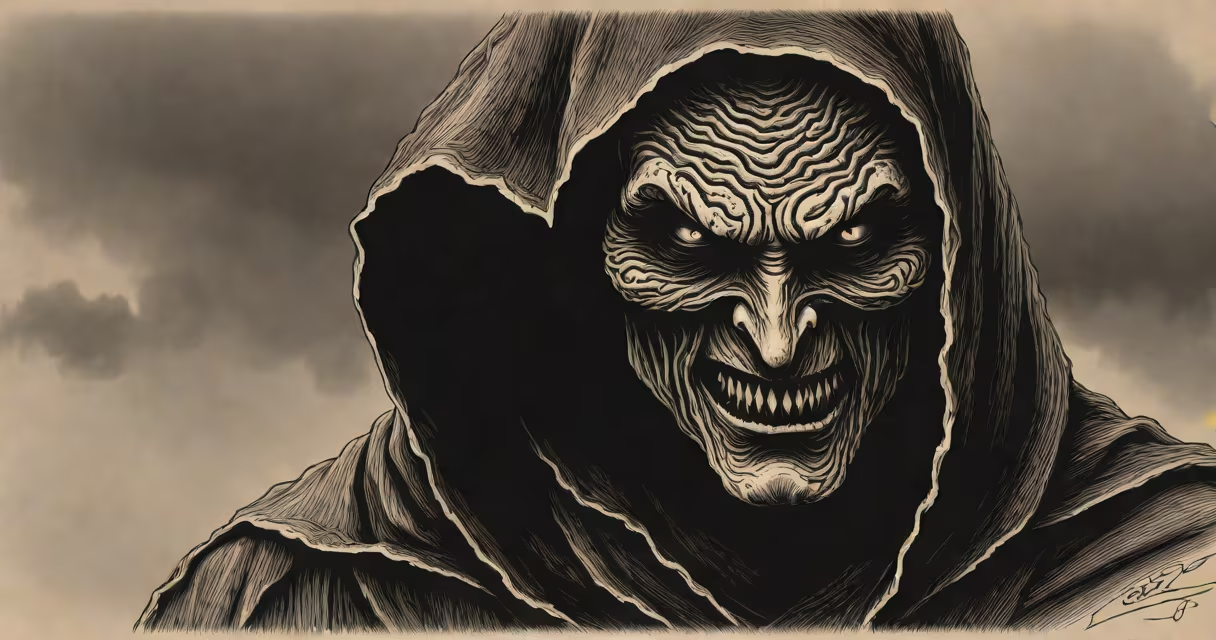
Evil is intentional harm caused by a conscious agent who acts out of malice, disregard for others' well-being, or a fundamental rejection of moral principles. It is not simply bad behavior-it requires awareness, intent, and a violation of shared ethical standards.
Evil differs from accidental harm or natural suffering. A person who causes injury through negligence is not necessarily evil. But someone who inflicts pain deliberately, knowing it violates basic human dignity, crosses into the domain of evil. This distinction is central to both religious doctrine and secular ethics.
Philosophers such as Hannah Arendt analyzed evil as banal-ordinary, bureaucratic, and rooted in thoughtlessness rather than monstrous intent. Her work on Adolf Eichmann during the Nuremberg trials challenged the idea that evil always stems from demonic motives. Yet even Arendt acknowledged that evil persists when individuals fail to question authority or act with moral responsibility.
In theology, evil often arises from a willful turning away from God. Christian doctrine identifies original sin as humanity's inherited tendency toward evil, while personal sins-such as lying, stealing, or murder-are deliberate violations of divine law. The Bible describes evil as a force that corrupts relationships and disrupts creation, as seen in Genesis 3, where disobedience leads to exile and suffering.
In secular philosophy, evil is grounded in human agency and consequences. Immanuel Kant argued that evil lies in choosing to act against duty, especially when one knows better. For Kant, evil is not about emotional intensity but about rational choice-knowing what is right and doing the wrong thing anyway. This view separates evil from passion or impulse.
Legal systems treat evil differently. While courts do not use the term "evil" in verdicts, they punish actions deemed morally reprehensible. Murder, torture, and genocide are prosecuted not just for their physical impact but because they reflect a breakdown in moral accountability. The International Criminal Court defines crimes against humanity as acts that show "extreme depravity," a legal threshold close to the concept of evil.
Evil manifests in different forms, ranging from individual acts to systemic patterns. The following table outlines common categories:
| Type | Description | Example |
|---|---|---|
| Personal evil | Intentional harm by an individual | A parent who abuses a child |
| Systemic evil | Structural harm embedded in institutions | Racial segregation enforced by law |
| Existential evil | Suffering that defies moral explanation | A child dying from cancer despite care |
| Banal evil | Ordinary actions carried out without reflection | A bureaucrat processing death warrants without questioning |
Not all harm counts as evil. A traffic accident caused by a distracted driver is harmful but not evil-there was no intent to cause suffering. However, if the driver intentionally ran over a pedestrian, the act becomes evil under most ethical frameworks.
One non-obvious distinction: evil is not synonymous with suffering. Suffering may result from evil, but not all suffering is caused by evil. Natural disasters, illness, and accidents produce pain without moral blame. Theologians call this "natural evil"-a category that complicates religious explanations of a good God allowing suffering.
People often confuse evil with violence, cruelty, or psychological disturbance. But violence alone doesn't make an act evil. A soldier killing in war may act violently but not evilly if following lawful orders. Similarly, a mentally ill person causing harm due to delusions is not acting out of moral choice-and thus not evil.
Another misconception is that evil is always dramatic or extreme. In reality, small, repeated choices-like ignoring a colleague's distress, spreading rumors, or tolerating injustice-can accumulate into systemic evil. As philosopher Simone Weil wrote, "The evil that is done in the world is not usually done by monsters."
I once observed a group of coworkers quietly excluding a new hire during meetings. No one said anything harsh. No one raised their voice. But over time, the person withdrew, lost confidence, and left the company. The exclusion wasn't violent or overt-but it was sustained, intentional, and destructive. That pattern fits the definition of evil: a consistent refusal to recognize another's humanity.
Evil is often contrasted with good, but the two are not binary opposites. Good is not merely the absence of evil. In many traditions, good requires action-compassion, justice, generosity. Evil, by contrast, is a failure of moral imagination and responsibility.
The definition of the word evil centers on deliberate, morally culpable harm. It requires intention, awareness, and a breach of shared ethical norms. Whether in religion, law, or philosophy, evil is not a vague feeling-it is a specific kind of human action that denies the value of other people.