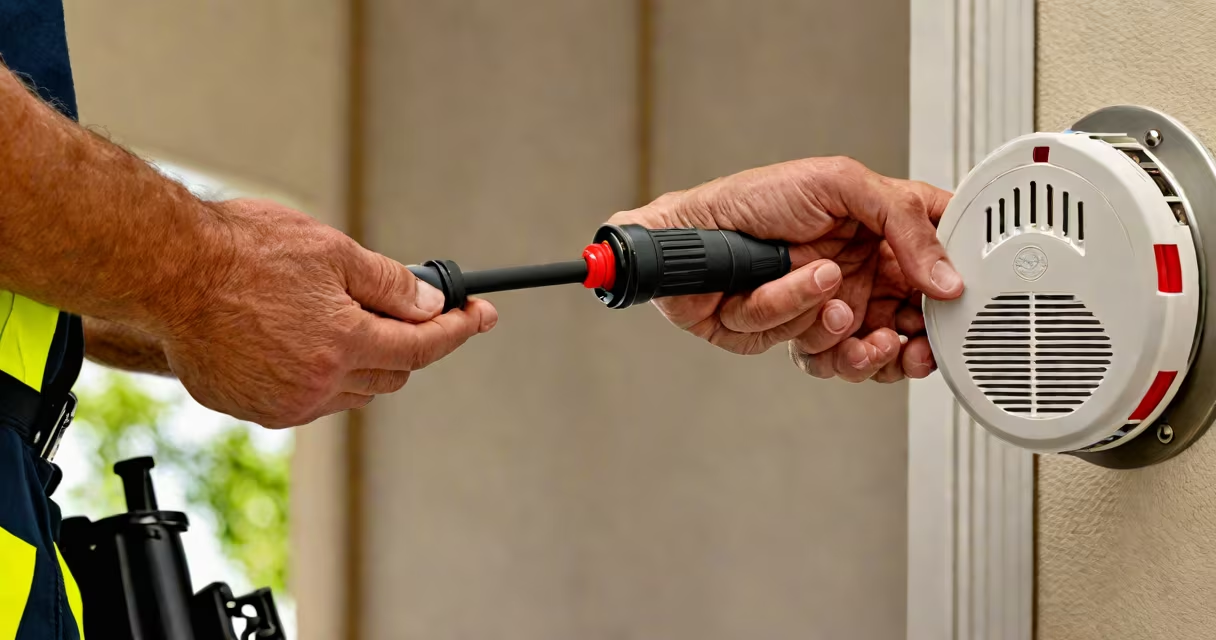
Yes, most fire departments in the United States offer free smoke detectors to residents, particularly during community safety events or through targeted outreach programs. These devices are distributed at no cost to promote early fire detection and reduce home fire fatalities.
Smoke detectors save lives. According to the National Fire Protection Association (NFPA), three out of five home fire deaths occur in homes without working smoke alarms. Fire departments distribute detectors to close this gap, especially in neighborhoods with higher fire risk due to aging infrastructure or lower household income.
Many departments partner with local utilities, housing authorities, or nonprofits to expand access. For example, the City of Los Angeles Fire Department provides free detectors to low-income households through its "Safe & Sound" program. Residents apply online or call a dedicated hotline, and a firefighter visits the home to install the device.
Fire departments typically distribute smoke detectors through three channels: public safety fairs, home visits, and referrals from social services. At safety fairs, firefighters set up booths with demonstration units and hand out batteries and installation guides. These events often coincide with Fire Prevention Week (October 6-12).
Home visit programs are more intensive. A firefighter or community safety officer schedules a home inspection, installs the detector, tests it, and explains maintenance procedures. This model ensures proper placement-on ceilings near bedrooms-and reduces the chance of improper installation, which can render the device ineffective.
Some departments use a "buy one, give one" model. When a resident purchases a detector at a discounted rate, the department donates another to a family in need. The Chicago Fire Department runs such a program through local retailers, offering $10 detectors with a $5 donation to fund free installations.
Most free detectors are ionization or photoelectric models. Ionization detectors respond faster to flaming fires, while photoelectric types detect smoldering fires earlier. The NFPA recommends using dual-sensor detectors-those combining both technologies-for maximum protection.
Detectors are made with polycarbonate plastic casings, lithium-ion batteries (lasting 10 years), and sensors calibrated to detect particles above 0.3 microns. They include a test button, a low-battery chirp, and a hush feature to silence false alarms. All U.S.-sold detectors must meet UL 217 standards, verified by Underwriters Laboratories.
| Type | Best For | Lifespan | Cost to Replace |
|---|---|---|---|
| Ionization | Fast-flaming fires (kitchen grease, paper) | 10 years | $10-$15 |
| Photoelectric | Smoldering fires (overheated wiring, cigarettes) | 10 years | $15-$20 |
| Dual-sensor | Full coverage (recommended) | 10 years | $25-$35 |
When receiving a free detector, always verify the date stamp on the unit. Units older than 10 years may not function reliably. Some departments replace outdated detectors during home inspections.
Free detectors are prioritized in communities with high rates of fire-related injury or death. Data from the Centers for Disease Control and Prevention (CDC) shows that people in poverty are twice as likely to die in home fires compared to those in higher income brackets. Fire departments target these populations to reduce disparities.
For example, the Houston Fire Department launched a citywide initiative in 2022 that installed 12,000 free smoke detectors in homes with children under 5. The program reduced child fire fatalities by 37% over two years, according to internal reports.
Fire departments also distribute detectors after major disasters. After Hurricane Harvey in 2017, the Texas State Fire Marshal's Office coordinated with local fire departments to deliver 50,000 free detectors to displaced families in flood zones. These were part of a broader recovery effort to restore safe living conditions.
One widespread myth is that fire departments only give detectors to people who've had a fire incident. This is false. Most departments distribute them proactively, regardless of prior incidents. The goal is prevention, not reaction.
Another misconception is that all free detectors are identical. In reality, departments often rotate brands based on supply contracts. Some use Kidde, others use First Alert or BRK. All meet federal safety standards, but performance varies slightly. Photoelectric models consistently outperform ionization in detecting slow-burning fires, a key factor in reducing fatalities.
A lesser-known fact: many free detectors come with a sticker showing the installation date and a QR code linking to a maintenance calendar. Scanning the code adds the device to a national registry, allowing fire departments to follow up if the battery fails.
Let's walk through a real request in Seattle. A resident named Maria, living in a rent-controlled apartment in South Seattle, wanted a free detector. She called the Seattle Fire Department's Community Safety Line (206-684-7777) and was told to complete a short form online. She selected "low-income household" and indicated she had children under 12.
Within three days, a firefighter arrived at her door with two photoelectric detectors. He installed one in the hallway and one outside the master bedroom. He demonstrated how to test the alarm and explained that batteries should be replaced every 10 years. He also left a laminated card with emergency contacts and a checklist for annual testing.
Maria later confirmed the device worked during a test. Her building manager later reported that the detector had prevented a small kitchen fire from spreading. The incident was logged in the city's fire prevention database.
If your local fire department doesn't have a free distribution program, contact your city's housing authority or nonprofit organizations like the Red Cross or Habitat for Humanity. Many of these groups receive grants to provide smoke detectors to vulnerable populations.
The Federal Emergency Management Agency (FEMA) funds state-level programs that support smoke detector distribution. You can find your state's program via the FEMA website or by calling 1-800-FEMA-123. Some states, like California, require landlords to install detectors in rental units-check your local housing code.
Even if no free option exists, affordable detectors are available at hardware stores for under $15. Look for models with a 10-year sealed battery and a hush feature. Install one in every bedroom and on each level of your home.
Fire departments give free smoke detectors to improve community safety and reduce preventable deaths. The process is straightforward: check your local department's website, call their community outreach line, or attend a public safety event. These devices are not a luxury-they are a necessity.