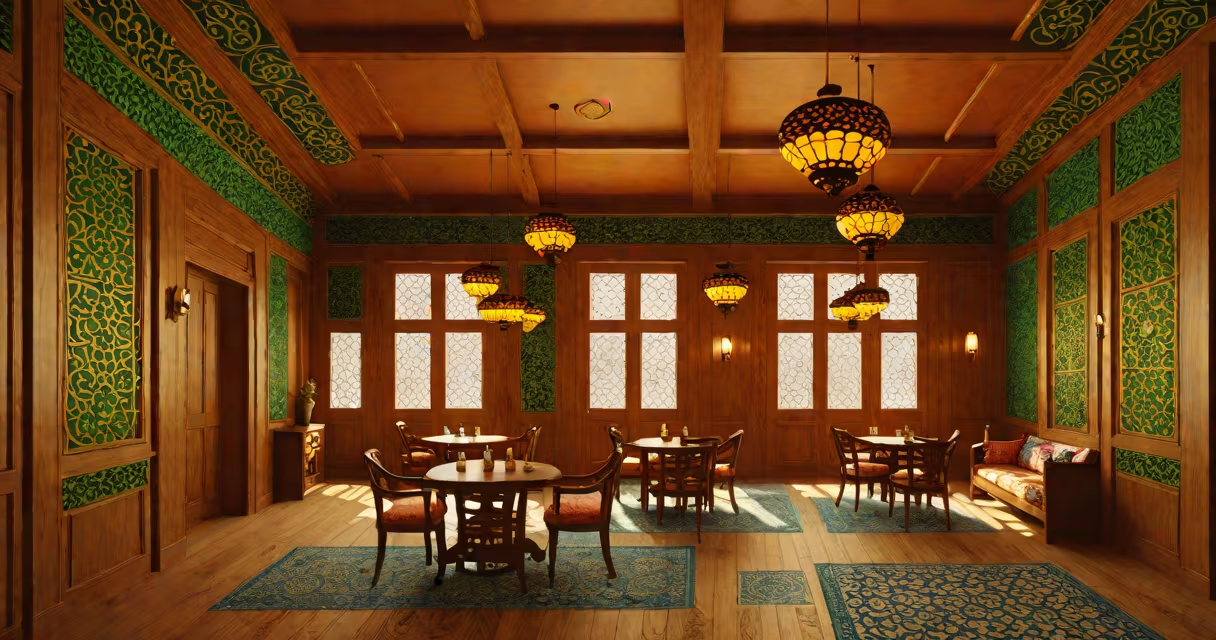
A dushanbe tea house is a social space in Tajikistan's capital where people gather to drink strong black tea, often sweetened with sugar and flavored with dried fruits or herbs. These spaces reflect centuries-old Central Asian customs centered on hospitality, conversation, and shared ritual.
Dushanbe tea houses operate on a simple model: a large metal kettle boils water continuously, and tea is brewed in a samovar or large pot. The tea is served in small, thick-walled glasses or ceramic cups. A typical serving includes a spoonful of sugar and a few pieces of dried apricot, rosehip, or apple. The atmosphere is relaxed, with low tables, floor cushions, and communal seating. Patrons may stay for hours, discussing politics, business, or family matters.
These establishments are not restaurants or cafes in the Western sense. They do not serve food, nor do they charge by the drink. Instead, they rely on informal tipping or a flat fee per person. Entry is often free, and the cost of tea is minimal-usually under $1 per cup. This reflects the deep cultural value placed on access to hospitality, even in public settings.
When you enter a dushanbe tea house, you're expected to sit on a cushion or low bench. A server brings a large metal pot filled with boiling water and a smaller container of concentrated tea. They pour hot water into the tea mixture, stir, and serve it in a small glass. The process is deliberate and visual-watching the tea brew is part of the experience.
Tea is consumed slowly, sipped from the rim of the glass. It's common to refill your cup multiple times during a visit. The host may offer a second round without asking, especially if guests are staying long. This gesture signals welcome and respect.
Some tea houses have a single staff member who manages everything-from boiling water to refilling glasses. Others are run by families, with children helping to clear tables and elders overseeing the flow of guests. The environment is quiet but alive with low conversation, laughter, and the clink of glass on wood.
Dushanbe tea houses differ in formality and location. Some are permanent buildings with tiled floors and carved wooden doors. Others are temporary setups in parks or near markets during summer months. The most common types are:
| Type | Location | Atmosphere | Typical Cost |
|---|---|---|---|
| Central Market Tea House | Inside Dushanbe's central bazaar | Busy, crowded, transient | $0.50 per cup |
| Residential Courtyard Tea House | Private homes or courtyard complexes | Intimate, invitation-only | Free, with optional donation |
| Public Park Tea House | Alleyways or green spaces around the city | Seasonal, informal | $0.75 per cup |
While all share core elements-tea, sugar, time-the experience varies. A market tea house may serve tea in plastic cups with a side of roasted chickpeas. A courtyard setup might include homemade jam and hand-stitched napkins. The variation reflects local availability and personal tradition.
Dushanbe tea houses are not just places to drink tea-they are social institutions. In a country where formal meeting spaces are limited, these venues function as de facto community centers. People meet here to discuss job opportunities, settle disputes, or simply pass time between errands.
According to the UNESCO Creative Cities Network, tea rituals in Central Asia are recognized as intangible cultural heritage. The practice of hosting guests with tea is seen as a living expression of solidarity and trust. In Dushanbe, this tradition remains visible and practiced daily.
One notable difference from Western cafés: there is no expectation to leave quickly. You can stay for four hours. There is no music, no screens, no clocks. Time moves differently here. The focus is on presence, not productivity.
Many assume a dushanbe tea house is a tourist attraction or a performance space. It is not. While some visitors do come to observe, the space is primarily for locals. Tourists are welcome-but they are expected to follow local norms: remove shoes, avoid loud talking, and accept tea without asking for alternatives.
Another misconception is that the tea is weak or lightly brewed. In reality, it is intensely strong-often described as "black as ink." The concentration is intentional. It's meant to be drunk slowly, not gulped. A single cup can last 20 minutes.
There's also confusion about the name. "Dushanbe tea house" does not refer to a specific building. It describes a category of place. Just as "New York diner" refers to a type of restaurant, "dushanbe tea house" refers to a cultural model. You'll find them throughout Tajikistan, though they are most densely concentrated in the capital.
I visited a tea house near the Ismaili Mosque in Dushanbe during a winter morning. The air was cold, and the sky gray. Inside, the room was warm with steam rising from a samovar. A man in a wool hat sat cross-legged, sipping tea while reading a newspaper. I sat beside him. He didn't speak at first. After five minutes, he nodded and offered me a glass. The tea tasted earthy, sweet, and slightly smoky. We didn't talk much. But we were together. That was enough.
The dushanbe tea house is more than a place to drink tea. It is a living practice of connection. It thrives because it requires nothing but time, attention, and a willingness to be present. In a world of constant motion, it offers stillness. In a society shaped by migration and change, it provides continuity. It is not a museum. It is not a show. It is a moment, repeated daily, in the heart of Tajikistan.