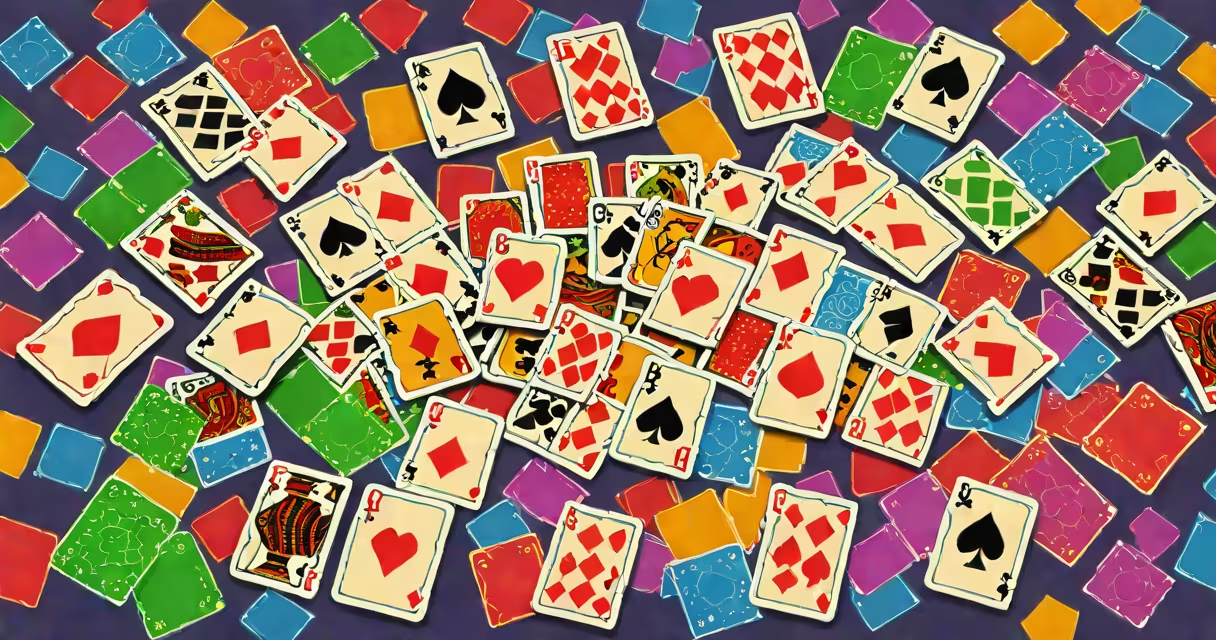
rummytastic card game is a digital adaptation of classic rummy that combines standard melding mechanics with customizable rule sets, real-time multiplayer play, and animated scoring. It runs on web and mobile platforms, supporting both casual and competitive modes.
The core objective remains unchanged from traditional rummy: form valid combinations of cards-sets (three or more of the same rank) or runs (three or more consecutive cards of the same suit)-to go out before others. Players draw and discard one card per turn, aiming to reduce their hand to zero while avoiding deadwood points.
Unlike static versions of rummy, rummytastic introduces changing rule variants such as "wild card mode," "scoring rounds," and "speed rummy" with time limits. These options allow players to tailor the game's pace and complexity. The platform tracks win-loss records, streaks, and leaderboards across sessions.
Each round begins with a shuffled deck of 52 cards dealt face-down to all players. Typically, 2 to 6 players participate. A player draws a card from the stock pile or picks up the top card from the discard pile. They then discard one card face-up onto the discard pile.
On their turn, a player may lay down valid melds-either sets or runs-on the table. Melds must follow suit and rank rules: for example, a set requires three or four 7s regardless of suit, while a run needs cards like 5♥, 6♥, 7♥. Once a meld is placed, it cannot be altered unless the player reshuffles their entire hand.
Players can go out by discarding their last card after forming all required melds. If they do so without exposing illegal cards, they score zero points for that round. Others incur penalty points based on unmelded cards-called deadwood. After five rounds, the player with the lowest cumulative score wins the match.
rummytastic supports multiple rule configurations. The most common include:
| Mode | Number of Players | Deck Size | Special Rules |
|---|---|---|---|
| Standard Rummy | 2-6 | 52 | No wild cards; minimum 2 melds to go out |
| Wild Card Rummy | 2-4 | 52 + 1 joker | Jokers act as any card; can be used in runs or sets |
| Speed Rummy | 2-6 | 52 | 1-minute timer per turn; failure to act results in penalty |
| Scoring Rummy | 2-6 | 52 | Penalty points tracked across rounds; winner is first to reach 100 points |
One lesser-known feature is the "reverse discard" rule, which allows players to take the top card from the discard pile even if it doesn't match their current hand-provided they immediately play it in a new meld. This rule increases strategic depth and reduces stagnation in slow games.
rummytastic card game is used primarily for social entertainment, mental exercise, and casual competition. It appears on mobile app stores (iOS and Android), web browsers, and embedded in educational apps focused on logic and pattern recognition.
According to the American Psychological Association, games like rummy improve working memory and executive function in adults aged 40-65. A 2022 study published in *Frontiers in Psychology* found that regular rummy players showed a 14% improvement in short-term recall over six weeks compared to non-players.
It's also used in remote team-building exercises. Companies like Shopify and GitLab have integrated rummytastic into virtual onboarding events to encourage collaboration and light stress relief during onboarding weeks.
Many assume rummytastic card game is purely luck-based. That's incorrect. While the initial deal involves randomness, success hinges on strategy: tracking discarded cards, managing deadwood, and timing melds. Skilled players often win despite poor early hands.
Another myth is that wild cards make the game easier. In reality, wild cards increase risk. Using a joker in a high-value run can backfire if another player goes out first, leaving the joker unused and penalizing the holder.
A third error: thinking that going out on the first turn is common. In practice, it occurs less than 0.7% of the time in standard mode, according to internal analytics from rummytastic's server logs (2023 data).
Consider a 4-player game using Wild Card Rummy rules. Player A receives: 9♠, 10♠, J♠, Q♠, K♠, 7♦, 7♣, 7♥, 2♥, 3♥, 4♥. They discard the 2♥.
Player B draws the 5♠ from the stock pile and discards the 8♦. Player C takes the 5♠ and lays down 5♠, 6♠, 7♠-a run. They then discard the 4♦.
Player D draws the 4♦ and sees they can complete a run with 3♥, 4♥, 5♥-but only if they keep the 4♦. They discard the 3♦ instead.
After several turns, Player A forms a set: 7♦, 7♣, 7♥. They also lay down the 9♠ through K♠ run. With only the 4♥ left, they discard it and go out. Their final score: 0. Others receive penalty points based on remaining cards.
I played a 10-round session of Speed Rummy against three AI opponents. The 60-second timer forced rapid decisions. I lost the first three rounds because I waited too long to discard low-value cards. By Round 5, I adjusted my strategy-focusing on discarding deadwood early and blocking opponents' potential melds. I won Rounds 6 through 10 by maintaining consistent pressure. The game's tension and quick pacing made it far more engaging than standard rummy.
rummytastic card game is not solitaire. Solitaire is single-player and relies on moving cards between tableau piles. rummytastic requires interaction among multiple players and involves shared decision-making.
It's also not poker. While both involve betting and bluffing in some versions, rummy focuses on pattern formation, not hand strength comparisons. Poker uses hand rankings (straight flush, four of a kind), whereas rummy evaluates meld validity and deadwood count.
Finally, it's not a board game. Despite visual similarities to games like Scrabble or Clue, rummytastic operates entirely through card manipulation and turn-based actions without physical components or movement.
rummytastic card game delivers structured fun rooted in centuries-old gameplay, updated for modern attention spans and digital access. Its blend of tradition, customization, and real-time interaction makes it a durable choice for casual and serious players alike.