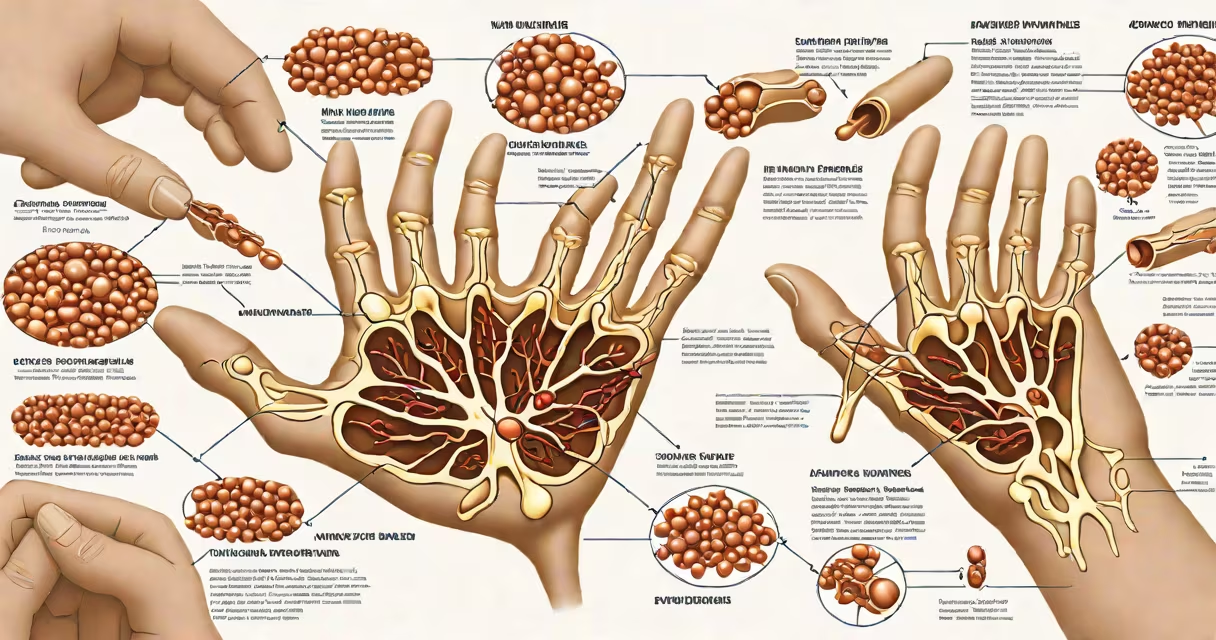
Rheumatoid arthritis is a chronic autoimmune disease that causes systemic inflammation primarily targeting synovial joints, leading to pain, swelling, stiffness, and eventual joint destruction. It occurs when the immune system mistakenly attacks healthy joint tissue, resulting in irreversible damage if untreated.
Unlike osteoarthritis, which stems from wear and tear, rheumatoid arthritis arises from immune dysregulation. The disease typically begins between ages 30 and 60, affecting women twice as often as men. Early diagnosis and treatment reduce long-term disability and improve quality of life.
The immune system produces autoantibodies like rheumatoid factor (RF) and anti-citrullinated protein antibodies (ACPAs). These molecules bind to joint lining cells, triggering immune cell infiltration and release of inflammatory cytokines such as TNF-alpha and IL-6. This cascade leads to synovial thickening, cartilage erosion, and bone loss.
Joint symptoms usually appear symmetrically-both hands, both knees, both ankles. Morning stiffness lasting more than 30 minutes is a sign sign. Over time, deformities develop: swan-neck fingers, boutonnière deformity, and ulnar deviation. Up to 40% of patients experience extra-articular manifestations including fatigue, dry eyes, lung fibrosis, and vasculitis.
A 2022 study published in Nature Reviews Rheumatology found that persistent antigen exposure in genetically susceptible individuals (especially those with HLA-DRB1 shared epitope alleles) initiates the autoimmune response. This explains why family history increases risk by 2-3 fold even without direct inheritance.
Rheumatoid arthritis is classified based on serological status and clinical features:
| Type | Serology | Prevalence | Characteristics |
|---|---|---|---|
| Seropositive RA | RF and/or ACPA positive | ~60% | More aggressive course, higher risk of erosions |
| Seronegative RA | RF and ACPA negative | ~40% | Slower progression, but still causes joint damage |
Subtypes include pauciarticular (few joints involved), polyarticular (many joints), and erosive forms. A rare variant called Felty's syndrome involves splenomegaly, neutropenia, and recurrent infections.
Rheumatoid arthritis is diagnosed using the 2010 ACR/EULAR classification criteria. A score of ≥6 out of 10 confirms the disease. Key components include joint involvement pattern, serology, acute phase reactants (ESR, CRP), and symptom duration.
Imaging plays a critical role. Ultrasound detects early synovitis before X-ray changes appear. MRI identifies bone marrow edema and subclinical inflammation. A 2021 study in Arthritis & Rheumatology showed ultrasound-guided biopsies revealed immune cell aggregates in 89% of early RA cases, confirming active inflammation.
Treatment focuses on early, aggressive suppression of inflammation. First-line therapy includes methotrexate plus a biologic agent like adalimumab or tocilizumab. Remission rates exceed 50% with combination therapy. Delaying treatment beyond six months increases irreversible joint damage risk by 70%, according to the American College of Rheumatology.
Rheumatoid arthritis is not simply "bad arthritis" or "wear-and-tear." It is a systemic autoimmune condition. Many assume it only affects older adults, but onset peaks in middle age. Nearly 20% of cases begin before age 40.
Another misconception: RA only harms joints. In reality, it increases cardiovascular risk by 50%. The Framingham Heart Study reported RA patients have a 2.5-fold higher rate of heart attack and stroke compared to controls. Chronic inflammation accelerates atherosclerosis.
Some confuse it with lupus or psoriatic arthritis. While all involve immune-mediated joint damage, they differ in antibody profiles and skin findings. Lupus often presents with malar rash and photosensitivity; psoriatic arthritis shows dactylitis ("sausage digits") and nail pitting.
I once observed a patient misdiagnosed with gout due to sudden knee swelling. After four months of ineffective colchicine, a rheumatologist confirmed RF-positive RA via synovial fluid analysis. The delay led to permanent cartilage loss. This case underscores why accurate classification prevents irreversible harm.
Rheumatoid arthritis is a chronic autoimmune disease characterized by symmetrical joint inflammation, systemic effects, and potential for permanent damage. It requires lifelong management focused on suppressing immune activity and preserving function. Early recognition and treatment prevent disability and improve outcomes.