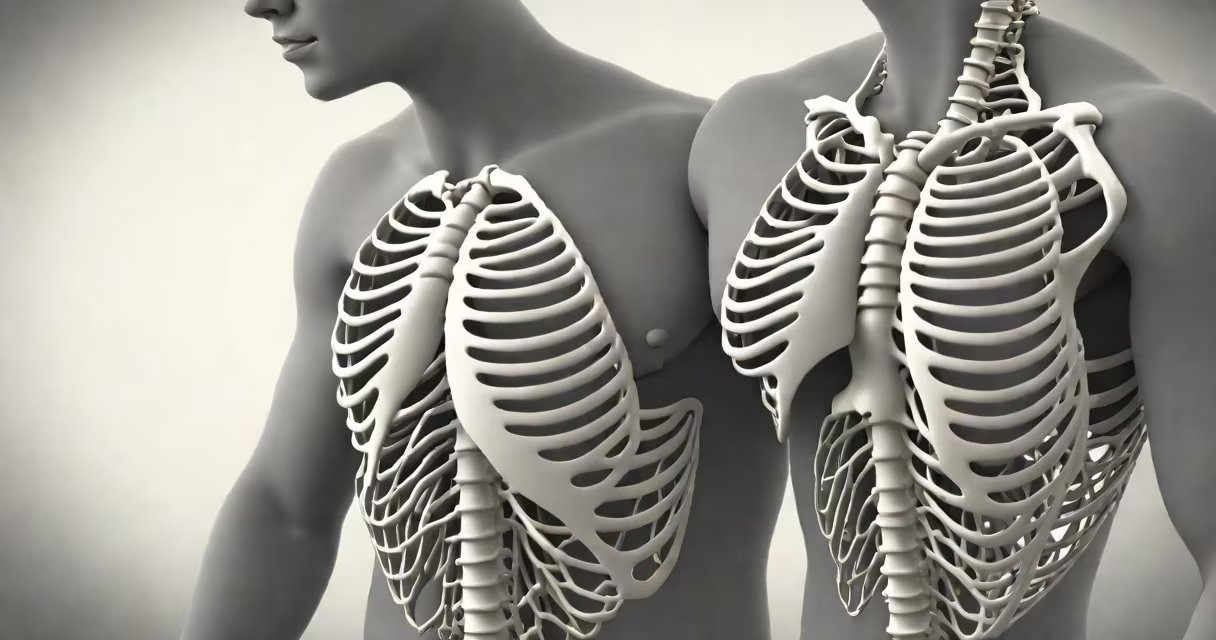
Chest pain on the right side is often caused by musculoskeletal strain, lung issues, or gastrointestinal problems-not heart disease. While left-sided chest pain raises immediate concern for cardiac events, right-sided pain rarely stems from a heart attack. Still, persistent or severe right-sided pain requires medical evaluation to rule out serious conditions.
Right-sided chest pain can arise from muscles, ribs, nerves, lungs, or organs like the liver and gallbladder. Unlike left-sided pain, which may indicate coronary artery disease, right-sided pain is more likely linked to trauma, inflammation, or referred pain from nearby structures. The location and quality of the pain-sharp, dull, burning, or pressure-like-helps narrow the diagnosis.
According to the American Heart Association, less than 10% of chest pain cases in adults are due to acute coronary syndromes. When pain occurs on the right side, especially in younger individuals or those without risk factors like smoking, high cholesterol, or family history of heart disease, cardiac causes are even rarer. However, ignoring symptoms can delay treatment for life-threatening conditions such as pulmonary embolism or pneumothorax.
Pain signals travel through nerves from the affected area to the spinal cord and then to the brain. The brain interprets these signals as pain in the region where the nerve originates. Because nerves from the right side of the chest converge in the spinal cord at specific levels, pain may feel localized even if the source is deeper-like the diaphragm or liver.
For example, a pulled intercostal muscle between the ribs can cause sharp, stabbing pain that worsens with breathing or twisting. This is common after lifting heavy objects or sudden movements. The pain typically stays in one spot and doesn't radiate to the arm or jaw, unlike cardiac pain.
Referred pain occurs when a problem in one organ causes discomfort in a different area. Gallbladder attacks, for instance, often cause pain under the right ribcage that may radiate to the right shoulder or back. A 2021 study in Frontiers in Medicine found that 68% of patients with acute cholecystitis reported right upper quadrant pain, with 43% experiencing referred pain to the right shoulder.
Conditions causing right-sided chest pain fall into several categories based on origin. The most frequent include musculoskeletal injuries, respiratory disorders, digestive issues, and rare cardiac or neurological causes.
| Type | Examples | Key Symptoms | Prevalence |
|---|---|---|---|
| Musculoskeletal | Intercostal strain, costochondritis | Sharp pain with movement, tenderness at rib joints | ~30% of non-cardiac chest pain cases |
| Lung/pleural | Pneumonia, pleurisy, pulmonary embolism | Breathlessness, fever, sharp pain worsening with breath | ~15% of emergency department chest pain visits |
| Digestive | Gallstones, acid reflux, hiatal hernia | Burning sensation, nausea, pain after eating | ~25% of functional chest pain cases |
| Cardiac (rare) | Right coronary artery disease, pericarditis | Pressure, dull ache, may radiate to neck or jaw | <1% of right-sided chest pain cases |
Costochondritis- inflammation of the cartilage connecting ribs to the breastbone-is a frequent cause of right-sided chest pain. It often follows minor trauma or viral infections. Pain is reproducible with pressure on the joint and may last weeks. A 2019 review in Journal of Clinical Rheumatology noted that 40% of patients with costochondritis report pain on the right side.
Pulmonary embolism-a blood clot in a lung artery-can mimic pneumonia. It presents with sudden onset of sharp, pleuritic pain (worsened by breathing), shortness of breath, and sometimes coughing up blood. The CDC reports that pulmonary embolism affects about 900,000 people annually in the U.S., with nearly half occurring in people under 65.
Many assume chest pain on the right side is harmless because it's not left-sided. That assumption can be dangerous. A 2020 study in Annals of Internal Medicine found that 12% of patients with pulmonary embolism initially presented with right-sided chest pain and were misdiagnosed as having anxiety or musculoskeletal strain.
Another common confusion is mistaking gallbladder pain for heartburn. Both can cause burning sensations under the right ribcage. But gallbladder pain often follows fatty meals and may radiate to the right shoulder blade. Acid reflux typically improves with antacids and worsens when lying down.
One non-obvious distinction: heart attacks can occasionally present with right-sided pain. A 2022 analysis in European Heart Journal showed that 3% of women experiencing myocardial infarction reported pain primarily on the right side. These cases are often delayed in diagnosis due to gender bias in symptom recognition.
In 2021, a 42-year-old woman visited her primary care doctor complaining of intermittent right-sided chest pain for three days. She described it as "stabbing" and "worse when I breathe deeply." She had no history of heart disease, smoked occasionally, and was otherwise healthy.
The doctor diagnosed musculoskeletal strain and prescribed ibuprofen. Two days later, she returned with worsening shortness of breath and dizziness. A CT scan revealed a large pulmonary embolism in her right pulmonary artery. She required hospitalization and anticoagulant therapy.
This case illustrates how right-sided chest pain can mask life-threatening conditions. The initial diagnosis failed to consider pulmonary embolism despite red flags: sudden onset, respiratory symptoms, and lack of improvement with anti-inflammatory medication.
Seek immediate medical attention if right-sided chest pain is accompanied by:
These signs may indicate pulmonary embolism, pneumothorax, or other emergencies. Even if pain is mild, consult a provider if it persists beyond a few days, recurs frequently, or interferes with daily activities.
I once observed a patient with chronic right-sided chest pain who had been told for years it was "just stress." After a referral to a pulmonologist, imaging revealed a small lung nodule. Biopsy confirmed early-stage lung cancer. Early detection changed his treatment plan and prognosis.
Doctors evaluate right-sided chest pain using history, physical exam, and targeted tests. Initial assessment includes important signs, auscultation of lungs and heart, and palpation of the chest wall.
If musculoskeletal injury is suspected, a positive Tinel's sign or localized tenderness confirms the diagnosis. For suspected lung issues, a chest X-ray or CT scan is standard. Abdominal ultrasound may be ordered if gallbladder disease is suspected.
For persistent or unexplained pain, further testing such as an echocardiogram or stress test may be needed-even if pain is on the right side. The American College of Cardiology notes that right coronary artery disease can present with atypical symptoms, especially in women and older adults.