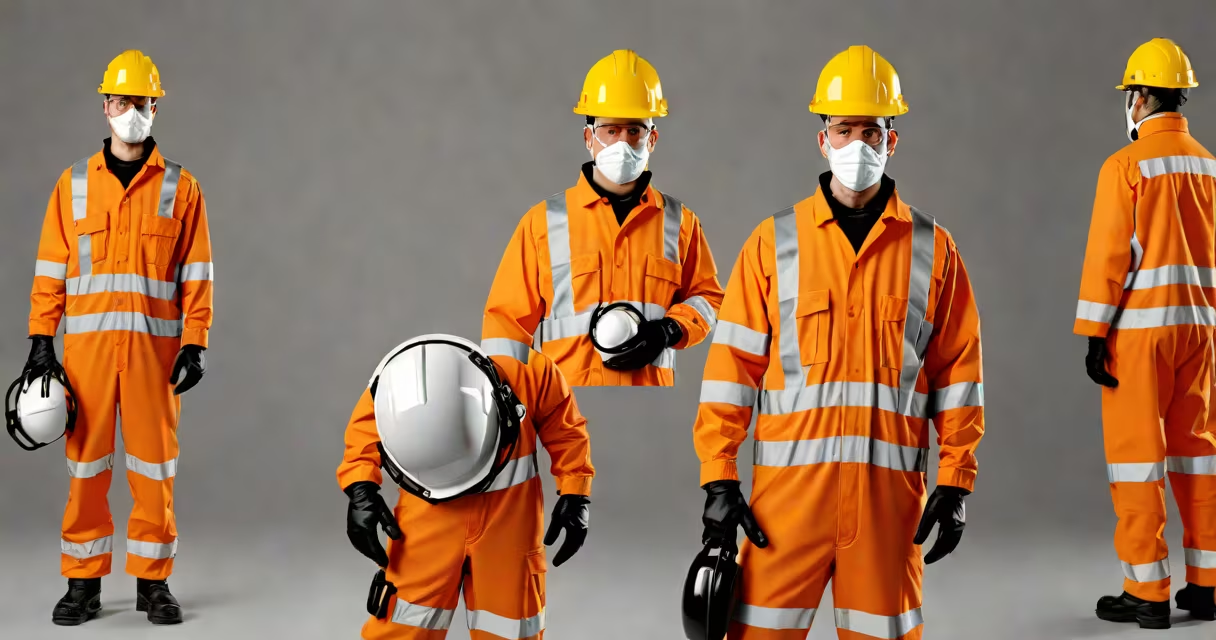
Types of PPE refer to specialized equipment worn to minimize exposure to hazards that can cause serious injuries or illnesses. These include gloves, goggles, helmets, respirators, and full-body suits used across industrial, medical, and laboratory settings.
PPE functions as a physical barrier between the worker and potential harm. It's required in workplaces where risks like chemical splashes, flying debris, sharp tools, or airborne pathogens exist. The U.S. Occupational Safety and Health Administration (OSHA) mandates PPE use when engineering controls cannot eliminate the hazard entirely.
Each type of PPE is designed for specific threats. For example, a hard hat protects against falling objects, while a N95 respirator filters out 95% of airborne particles. Proper selection depends on the nature of the hazard, duration of exposure, and environmental conditions.
Types of PPE reduce risk by intercepting or containing hazards before they contact the body. A glove stops cuts from sharp edges; goggles prevent chemicals from entering the eyes; a face shield covers the entire face during welding or grinding tasks.
Protection is not guaranteed by wearing PPE alone. Fit, maintenance, and correct usage are critical. A poorly fitted respirator allows contaminated air to bypass the seal. A torn glove offers no barrier. OSHA reports that improper PPE use contributes to nearly 30% of workplace injuries in manufacturing and construction sectors.
For example, during a chemical spill cleanup, workers must wear chemical-resistant gloves, goggles with side shields, a face shield, and a full-length apron. Without all layers, even brief skin contact can lead to burns or systemic absorption.
There are six primary categories of PPE, each targeting distinct hazards:
| Type | Hazard Type | Examples | Standards |
|---|---|---|---|
| Head Protection | Falling objects, impact | Hard hats (ANSI Z89.1) | ANSI Z89.1-2020 |
| Eye and Face Protection | Debris, chemicals, radiation | Goggles, face shields (ANSI Z87.1) | ANSI Z87.1-2020 |
| Respiratory Protection | Airborne particles, gases | N95, P100 masks, powered air-purifying respirators (PAPRs) | NIOSH 42 CFR Part 84 |
| Hand Protection | Cuts, chemicals, heat | Latex, nitrile, leather, cut-resistant gloves | ASTM F2992-19 |
| Body Protection | Chemicals, fire, impact | Lab coats, flame-resistant clothing, full-body suits | NFPA 2112, ASTM F1506 |
| Foot Protection | Heavy objects, punctures, slips | Steel-toe boots, slip-resistant shoes | ASTM F2413-2018 |
Each standard ensures performance under real-world conditions. For instance, ANSI Z87.1 requires that safety glasses withstand a 0.5-inch steel ball dropped from 50 inches at 15 feet per second. This simulates impact from flying debris in a workshop.
Some PPE types are multi-layered. A welder wears a helmet with a dark lens (face protection), flame-resistant jacket (body protection), gloves (hand protection), and steel-toe boots (foot protection). All components work together to manage multiple simultaneous risks.
People often mistake PPE for personal comfort gear. A baseball cap worn on a job site may look like head protection, but it doesn't meet ANSI Z89.1 requirements. It lacks impact resistance and fails to cover the sides of the head.
Another frequent error is assuming that any mask equals respiratory protection. A cloth face covering used during a pandemic does not filter airborne particles effectively. Only NIOSH-approved respirators like N95s provide the filtration efficiency needed in dusty or infectious environments.
Even among trained workers, confusion arises between disposable and reusable PPE. Disposable gloves are meant for single-use; reusing them increases contamination risk. Reusable goggles require cleaning and inspection between uses. Failure to follow this rule invalidates their protection.
One non-obvious fact: PPE effectiveness degrades over time due to material fatigue. A rubber glove left in sunlight for months loses elasticity and develops micro-tears. Even if it appears intact, it may allow liquid penetration. OSHA recommends replacing PPE every 6 to 12 months based on usage frequency and storage conditions.
In a hospital operating room, a surgical technician prepares instruments for sterilization. They handle sharp blades, hot autoclave trays, and chemical disinfectants. Their PPE includes:
Without this layered system, a single drop of glutaraldehyde solution could cause severe eye damage or skin burns. The team follows a strict donning and doffing protocol to avoid cross-contamination. Each item is inspected before use and discarded after a single procedure.
I observed this process firsthand during a clinical rotation. A technician accidentally touched a sharp instrument with a gloved hand. The outer glove split, but the inner layer held. The team immediately stopped, removed both gloves, and replaced them. No injury occurred because the PPE system functioned as intended.
Knowing the difference between PPE types prevents reliance on inadequate protection. Misclassification leads to exposure, fines, and long-term health effects. For example, using regular cotton gloves in a lab handling corrosive acids results in rapid degradation and skin contact.
Employers must conduct hazard assessments to determine which types of PPE are necessary. OSHA requires documentation of these evaluations. Workers must receive training on proper use, limitations, and maintenance of each item.
When selecting PPE, always check for compliance marks. Look for ANSI, ASTM, or NIOSH logos on the product. Avoid products sold without certification. Counterfeit PPE is common and often fails basic safety tests.
Understanding types of PPE isn't about memorizing categories-it's about matching the right tool to the threat. A construction worker near a conveyor belt needs hearing protection. A lab assistant handling radioactive isotopes needs lead-lined gloves and a dosimeter. The hazard defines the PPE, not the other way around.