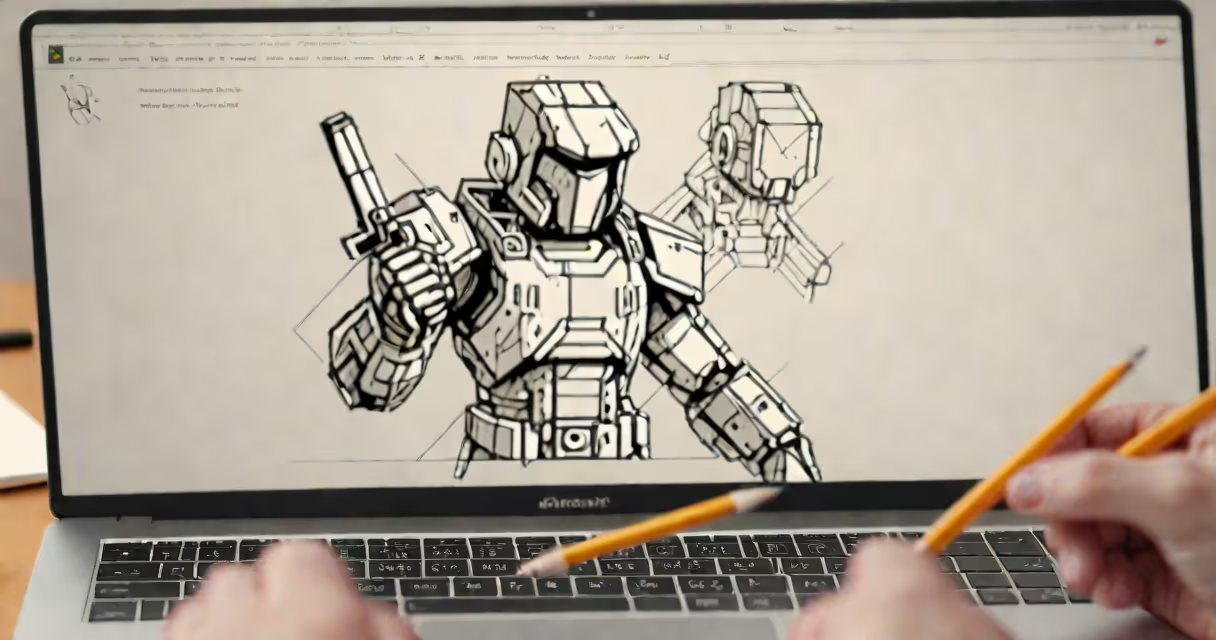
A video game programming degree is a college-level academic program focused on teaching the technical skills needed to develop interactive video games. It combines computer science fundamentals with specialized coursework in game engines, real-time rendering, physics simulation, and multiplayer networking. Unlike general computer science degrees, it emphasizes practical application in game development workflows.
Students learn to write efficient, real-time code using languages like C++, C#, and Python. They build systems for character movement, collision detection, AI behavior, and changing environments. The curriculum includes hands-on projects involving Unity, Unreal Engine, and custom game frameworks. Graduates enter roles such as game programmer, engine developer, or tools engineer in studios ranging from indie teams to major publishers.
According to the U.S. Bureau of Labor Statistics, employment for software developers-including those in gaming-is projected to grow 25% from 2022 to 2032, much faster than average. This growth reflects rising demand for interactive digital experiences beyond entertainment, including training simulations and virtual reality applications.
Video game programming degrees follow a structured sequence of core and elective courses. Students begin with foundational computer science topics: algorithms, data structures, and object-oriented programming. These form the basis for writing optimized code under tight performance constraints common in real-time graphics.
As they progress, students take specialized classes in game-specific domains. A typical course list includes:
Capstone projects require teams to design and release a complete game within a semester. One class at the University of Southern California had students create a cooperative puzzle game using procedural level generation. The project involved integrating a custom scripting system with Unity's animation and audio pipelines, resulting in a playable prototype with changing difficulty scaling.
Programs vary in focus. Some emphasize low-level systems programming, others prioritize high-level game logic and rapid prototyping. The following table outlines common specializations:
| Type | Focus | Typical Courses | Outcomes |
|---|---|---|---|
| Game Software Engineering | Production-grade code, team collaboration, version control | Agile development, CI/CD, testing frameworks | Studio roles in large-scale game production |
| Graphics and Simulation Programming | Rendering, physics, AI behavior trees | GPU programming, ray tracing, constraint solvers | Specialist roles in visual effects and simulation |
| Mobile and Web Game Development | Performance on limited hardware, browser compatibility | WebAssembly, touch input systems, asset optimization | Roles in casual and social games |
Many programs offer dual tracks. For example, DigiPen Institute of Technology offers a Bachelor of Science in Game Design with a concentration in Programming. Students take 16 credits in advanced programming, including courses on multithreading and GPU compute shaders. This allows graduates to work on high-performance titles like *Halo* or *The Last of Us*.
People often confuse a video game programming degree with general computer science or art-focused game design programs. While all three support game creation, their outcomes differ.
Computer science degrees cover broad theory-algorithms, cryptography, distributed systems-but may lack direct game-specific content. A student with a CS degree might understand sorting algorithms deeply but struggle to implement a responsive character controller in real time.
Art and design programs teach visual storytelling, level layout, and narrative structure. They produce concept artists and level designers-not coders. A graduate from a design-focused school might create stunning assets but lack the ability to integrate them into a functioning game engine.
One key distinction: video game programming degrees train students to solve problems under strict timing constraints. A single frame delay in rendering can break immersion. Code must run reliably at 60 frames per second across diverse hardware. This requires deep understanding of memory allocation, CPU/GPU synchronization, and profiling tools-skills rarely emphasized in general CS curricula.
Major game studios hire graduates from video game programming degrees for roles requiring technical depth. Companies like Naughty Dog, Insomniac Games, and CD Projekt Red recruit from schools with strong industry ties. These employers value candidates who've built working prototypes and understand the full development lifecycle.
Smaller studios and independent developers also seek this training. A solo developer building a roguelike dungeon crawler on Steam reported that a video game programming degree helped them avoid common pitfalls-like frame rate drops during combat sequences-by teaching early optimization techniques.
Some programs partner with industry. The University of Utah's School of Computing runs a capstone program where students collaborate with local studios on actual game projects. One team developed a VR escape room app used in a museum exhibit. The project required integrating motion tracking, spatial audio, and hand gesture recognition-all taught in the program's advanced input systems course.
I once spent a summer working with a team of students from a video game programming degree program at Full Sail University. We built a multiplayer survival game using Unreal Engine. The lead programmer, a senior in the program, had already designed a network replication system that synchronized player positions across devices with minimal latency. His solution used delta compression and predictive interpolation-techniques taught in the course on real-time networking.
Many assume that game programming is primarily about graphics or animation. In reality, most game code handles logic, state management, and system integration. A single function managing player inventory can involve database queries, save/load operations, and UI updates-all while maintaining consistent performance.
Another misconception is that learning to code a game means mastering a single tool. In practice, programmers must adapt quickly between engines, APIs, and platforms. A developer might use C++ in Unreal for console releases, switch to C# in Unity for mobile builds, and then write JavaScript for web-based demos. The video game programming degree teaches cross-platform thinking and modular design patterns to handle this variability.
Finally, people often think game programming is only for hobbyists or creative types. But the field demands rigorous problem-solving. Debugging a crash that occurs only under specific network conditions requires systematic analysis-skills honed through formal education and structured lab work.