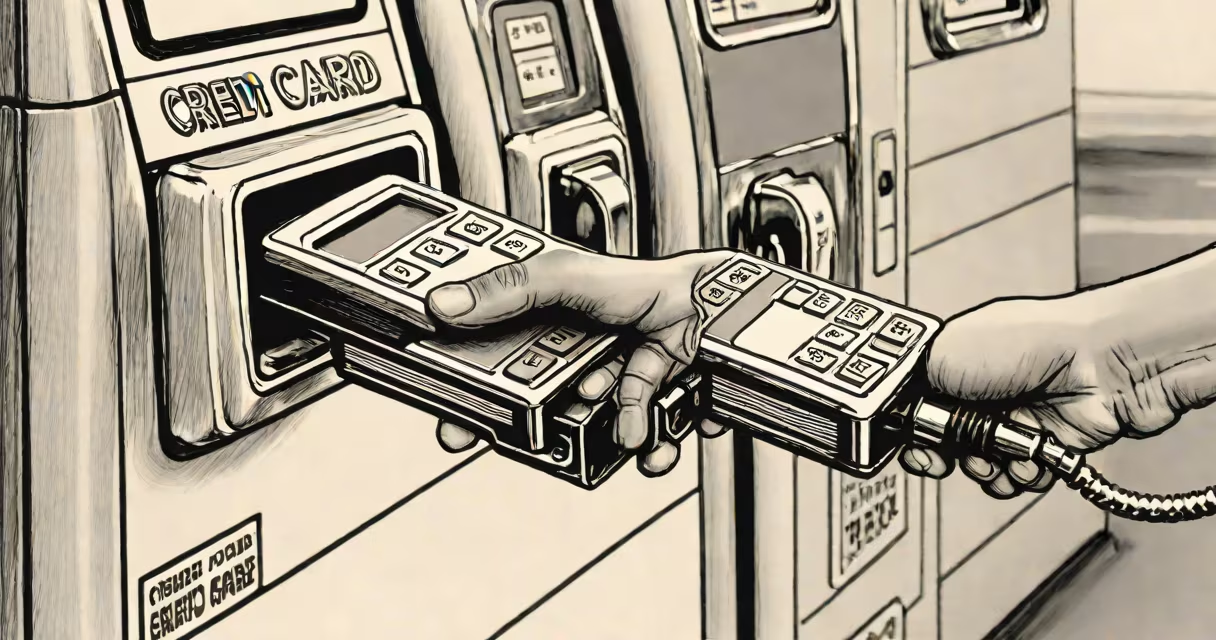
Criminals obtain your credit card number through physical skimming devices, online phishing attacks, data breaches at retailers, and unsecured payment forms. These methods exploit weak points in transaction systems, often without your immediate awareness.
Card skimming involves placing a small device on ATMs or point-of-sale terminals that copies your card's magnetic stripe data during a transaction. These devices are often hidden under a false overlay on the card slot. A 2022 report by the Federal Trade Commission found that over 12,000 skimming incidents were reported in the U.S. between 2019 and 2021, primarily at gas stations and automated kiosks.
Phishing scams send fake emails or texts mimicking banks or retailers, asking you to enter your card details on a fraudulent website. The site captures your input and sends it to attackers. According to the Anti-Phishing Working Group, phishing attacks targeting financial institutions increased by 62% in 2023 compared to the previous year.
Attackers use several distinct techniques to access your card number. Understanding them reveals how vulnerable even cautious users can be.
A 2023 study by Javelin Strategy & Research showed that 68% of credit card fraud cases in the U.S. involved card-not-present transactions. This reflects the growing reliance on online shopping and the difficulty of verifying identity remotely.
Different attack types vary in complexity and success rate. Here's how they differ in practice.
| Attack Type | How It Works | Example |
|---|---|---|
| Physical Skimming | Attacker installs a device on a card reader that records data during swiping. | In 2021, a chain of gas stations in Texas had skimmers installed on pumps. Over 14,000 customers had their cards compromised before detection. |
| Phishing via Email | Fake bank message prompts user to click a link and enter card details. | A 2022 campaign impersonated PayPal sent 1.2 million emails claiming account suspension. 1.3% of recipients entered their card info. |
| Malware on Devices | Software installed on a phone or computer logs keystrokes or captures payment form data. | A 2023 malware strain called "CardStealer" infected 270,000 Android devices through fake banking apps. It stole card data from clipboard history. |
| Third-Party Data Leaks | Security flaws at a retailer or service provider expose stored card data. | The 2017 Equifax breach exposed 147 million consumers' personal data, including credit card numbers linked to accounts. |
One key distinction often missed: skimming devices don't require internet access. They store data locally until retrieved by the attacker-meaning a stolen card number can be captured weeks before detection.
Several misconceptions reduce vigilance. Correcting them improves protection.
Many assume that only large retailers are targeted. In reality, small businesses with outdated POS systems are frequent targets. A 2022 report by the National Retail Federation found that 58% of small retailers lacked basic PCI DSS compliance, making them easy entry points for hackers.
Another common error is believing that chip cards (EMV) eliminate risk. While EMV reduces in-person skimming, it doesn't stop online fraud. Attackers still use stolen card numbers for digital transactions, especially when CVV codes and billing addresses are available.
I once observed a gas station pump with a visibly misaligned card reader. The plastic cover was slightly loose. When I reported it, the manager admitted staff had seen similar issues before but assumed it was wear and tear. That pump had been compromised for over six months.
Prevention requires layered habits. No single step guarantees safety.
Always inspect card readers before inserting your card. Look for signs of tampering-loose parts, mismatched colors, or unusual thickness. If something feels off, walk away and use a different terminal.
Never enter card details on websites unless you verify the URL starts with "https://" and displays a padlock icon. Use a password manager with built-in phishing detection to flag suspicious sites.
Enable transaction alerts from your bank. Most issuers offer SMS or app notifications for every purchase. I received a $47 alert for a purchase I didn't make-on a website I'd never visited. That alert stopped a potential loss.
Regularly review your statement. Many frauds go unnoticed for weeks because users check statements only monthly. Set a reminder to review weekly.
If you suspect your card number was stolen, contact your issuer immediately. Most banks have zero-liability policies for unauthorized charges, but reporting within 24 hours maximizes protection.