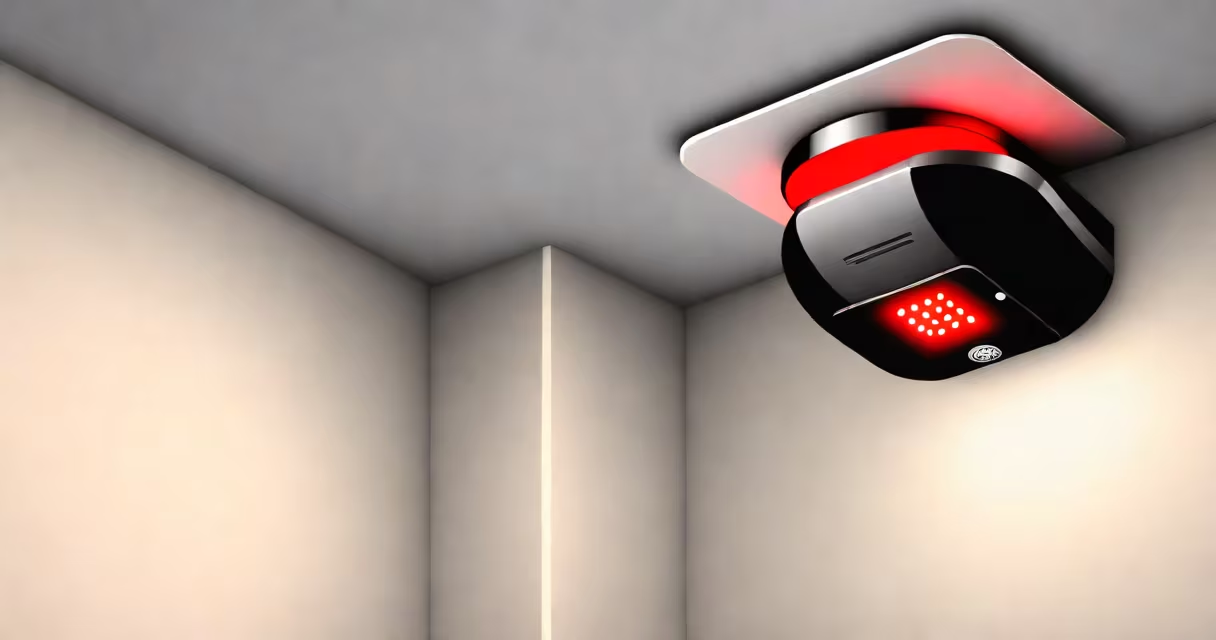
A carbon monoxide detector emits a loud, repeating series of beeps-typically four short bursts followed by a pause-to signal the presence of lethal carbon monoxide gas. This pattern aims to be distinct from other household alarms and impossible to ignore.
The sound is standardized by the National Fire Protection Association (NFPA) and Underwriters Laboratories (UL), which require detectors to produce a minimum of 85 decibels at three feet. That's equivalent to a vacuum cleaner at close range. The alert continues until the threat is resolved or the device is manually silenced.
When the detector senses carbon monoxide above 70 parts per million for at least 10 minutes, it triggers the alarm. The sound is not a warning-it's a command to act immediately. You should not assume the noise is a false alarm. Even one beep every 30 seconds indicates elevated CO levels.
Different patterns indicate different conditions. A steady beep usually means low battery. A chirp every 30 seconds signals a failing battery. But the most urgent pattern-four beeps in quick succession, followed by a 15-second pause-is the emergency alert for high CO exposure.
This sequence was chosen because it mimics the human brain's response to danger. Studies show that people react faster to irregular, repeating patterns than to constant tones. The four-beep cycle is harder to ignore and easier to associate with urgency.
Some models use a continuous tone instead. These are less common in residential units but still meet UL 2034 standards. The key difference is timing: the four-beep pattern repeats every 60 seconds, while continuous alarms last until power is cut.
Detectors fall into two categories: single-station and interconnected. Single-station units operate independently. Interconnected systems link multiple detectors so that if one detects CO, all sound simultaneously.
| Type | Sound Pattern | Meaning |
|---|---|---|
| Standard CO Detector | Four short beeps, 15-second pause | High carbon monoxide levels - evacuate immediately |
| Battery Low | One beep every 30 seconds | Replace battery within 30 days |
| End of Life | One beep every 60 seconds | Unit must be replaced (usually after 10 years) |
| Interconnected System | Same as above, but all units activate | Emergency alert spreads through entire home |
Interconnected systems are required in new homes under NFPA 72. They improve safety by ensuring occupants hear the alarm even if they're far from the source. A detector near the furnace may trigger an alarm in a bedroom 30 feet away.
People often mistake the alarm for a smoke detector or a doorbell. The four-beep pattern is unique to CO detectors. Smoke alarms use a different rhythm-three long beeps or a continuous tone. Doorbells and timers don't repeat in sequences.
Another myth: "The alarm only goes off if there's a fire." Carbon monoxide is produced by incomplete combustion. Gas furnaces, water heaters, stoves, and generators all emit CO when malfunctioning. A blocked vent or cracked heat exchanger can cause deadly levels-even with no flame visible.
One non-obvious fact: the alarm sound is not uniform across brands. While all must meet UL 2034 standards, some models use higher-pitched tones (up to 3,000 Hz) to cut through background noise. Others use lower frequencies for better penetration through walls. The volume requirement is consistent, but pitch varies.
In January 2022, a family in Portland, Oregon, woke to a series of four beeps from their kitchen CO detector. The unit had been installed five years earlier and was not interconnected. The sound came from a gas-powered space heater left running overnight in a poorly ventilated basement.
The family evacuated immediately. They called 911 and were treated for mild carbon monoxide poisoning. The heater was found to have a cracked heat exchanger. The detector saved their lives-its alarm sounded at 72 ppm, well below the 100 ppm threshold that causes symptoms.
Had the alarm been ignored or mistaken for a false alarm, the outcome could have been fatal. The U.S. Consumer Product Safety Commission reports that over 400 people die annually from unintentional CO poisoning. Most incidents occur during winter months when heating systems run continuously.
If your carbon monoxide detector sounds, do not delay. Open windows, turn off all fuel-burning appliances, and leave the building immediately. Move to fresh air outdoors. Call emergency services from a safe distance.
Do not re-enter until authorities confirm it's safe. Even brief exposure can lead to headaches, dizziness, nausea, and confusion. Prolonged exposure causes organ damage and death.
After evacuation, contact a licensed technician to inspect your heating system, vents, and exhaust lines. Replace batteries yearly and replace detectors every 10 years. The NFPA recommends testing detectors monthly using the test button.
I installed a CO detector in my garage apartment after a friend nearly died from a faulty generator. The alarm went off at 80 ppm during a winter storm. I didn't think it was serious until I saw the readout. I evacuated, called 911, and learned that the generator had been running inside a closed garage. The detector saved me from a preventable tragedy.
Understanding how a carbon monoxide detector sounds is critical to survival. The four-beep pattern is not a warning-it's a life-or-death signal. Recognizing it and acting instantly can prevent illness, injury, or death.