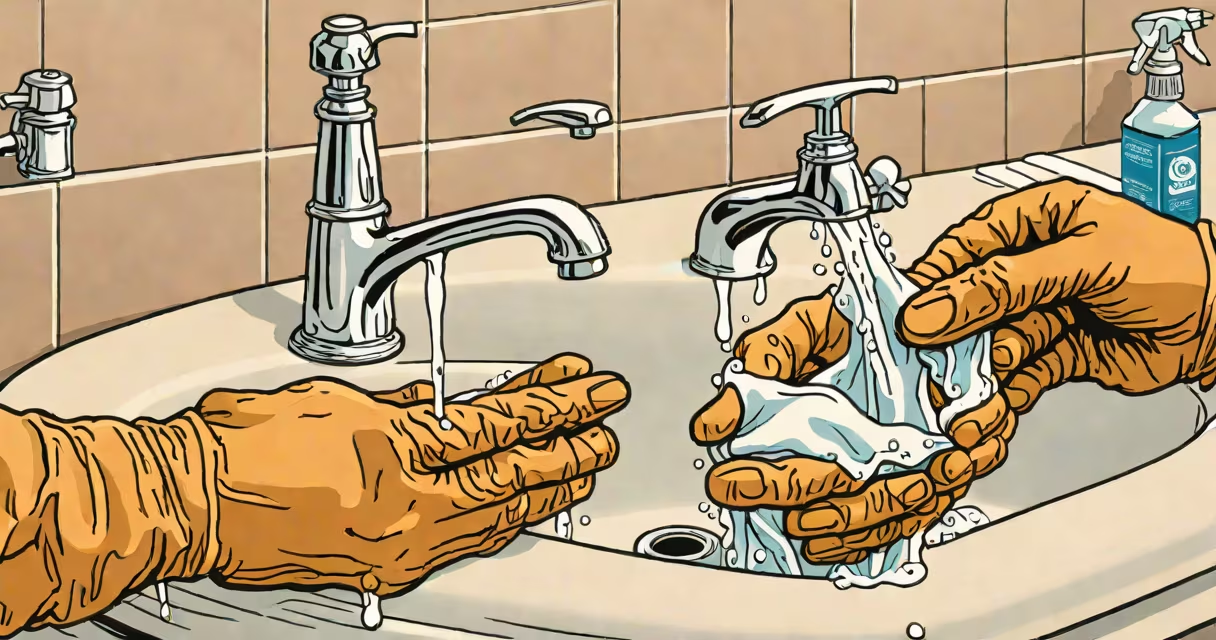
Remove vomit from a sink by wearing gloves, blotting excess material with paper towels, applying a bleach-based disinfectant, scrubbing with a brush, and rinsing thoroughly. Follow CDC guidelines for biohazard cleanup to prevent infection.
Vomit contains pathogens including norovirus, hepatitis A, and bacteria like Salmonella. The Centers for Disease Control and Prevention (CDC) states that surfaces contaminated with vomit require immediate disinfection with a solution containing at least 1,000 parts per million (ppm) of sodium hypochlorite (bleach).
Failure to disinfect properly increases risk of illness. A 2021 study published in the Journal of Hospital Infection confirmed that norovirus remains infectious on surfaces for up to 14 days without proper cleaning. This makes prompt action essential.
Wear disposable gloves before touching any surface. Use paper towels to absorb as much liquid as possible-do not wipe, which spreads contaminants. Place used towels in a sealed plastic bag and discard immediately.
Flush the sink with hot water to dilute remaining residue. Do not use the drain until the area is disinfected. Running water through a contaminated drain risks spreading pathogens into the plumbing system.
Apply a commercial disinfectant labeled effective against norovirus or mix 1 part household bleach (5.25% sodium hypochlorite) with 9 parts water. Pour the solution onto the affected area and let it sit for at least 10 minutes. The CDC recommends this dwell time for effective pathogen kill.
Use a stiff-bristled brush designed for sink cleaning. Avoid sponges-they retain moisture and harbor microbes. Replace brushes every 3 months or when bristles fray.
Household bleach must be fresh. Expired bleach loses potency. Check the expiration date on the bottle. A 2019 study in the American Journal of Infection Control found that bleach older than six months reduced virucidal effectiveness by 60%.
For porcelain or enamel sinks, avoid abrasive cleaners. They scratch the surface, creating micro-pits where bacteria can hide. Use pH-neutral cleaners like dish soap for routine maintenance.
| Material | Recommended Use | Do Not Use With |
|---|---|---|
| Bleach solution (1:9) | Disinfecting after vomit spill | Acidic cleaners, ammonia, or metal surfaces |
| Stiff nylon brush | Scrubbing sink basin | Porcelain or glass-can cause scratches |
| Paper towels | Blotting excess fluid | Reusing-increases cross-contamination risk |
Many people attempt to clean vomit with just water and soap. This removes visible matter but fails to kill viruses. Soap reduces surface tension but does not destroy pathogens. The CDC emphasizes that disinfection is required after biological spills.
Another error is using vinegar or baking soda. These are effective for lime scale or odors but offer no virucidal activity. A 2020 study in Applied and Environmental Microbiology showed that vinegar failed to inactivate norovirus on stainless steel after 15 minutes of contact.
Some assume flushing the sink eliminates the threat. However, the P-trap-a U-shaped pipe under the sink-can harbor contaminants. If vomit enters the drain, pathogens may survive in the trap's stagnant water. Cleaning the P-trap prevents recurring contamination.
I once cleaned a bathroom sink after a child's vomiting incident. I followed standard procedures but missed the P-trap. Within two days, a faint odor returned. After inspecting the trap, I found dried mucus and bile residue. Flushing with bleach solution resolved the issue. This taught me that visible areas aren't the only concern.
Dispose of all materials used-gloves, towels, and brushes-in a sealed trash bag. Wash your hands with soap and warm water for at least 20 seconds. The World Health Organization (WHO) recommends handwashing duration based on the time it takes to sing "Happy Birthday" twice.
Run the tap with hot water for 30 seconds after cleaning. This flushes residual disinfectant and prevents chemical buildup. Avoid mixing bleach with other cleaners-this creates toxic chlorine gas.
Keep a dedicated cleaning kit near the sink. Include gloves, paper towels, bleach, and a brush. Store in a locked cabinet if children are present. Regular maintenance reduces emergency response time.
When dealing with blood, feces, or large volumes of vomit, treat the site as a biohazard. Contact professional cleanup services. The EPA warns that improper disposal of biohazard waste violates federal regulations.
Prevention is key. Keep a small container of bleach solution ready. Use it within 24 hours-diluted bleach degrades rapidly. Always label containers.
Understanding how to clean vomit out of a sink ensures safety and hygiene. Use bleach-based disinfectants, wear protective gear, and address the entire drainage system. This process protects health and maintains sanitation standards.