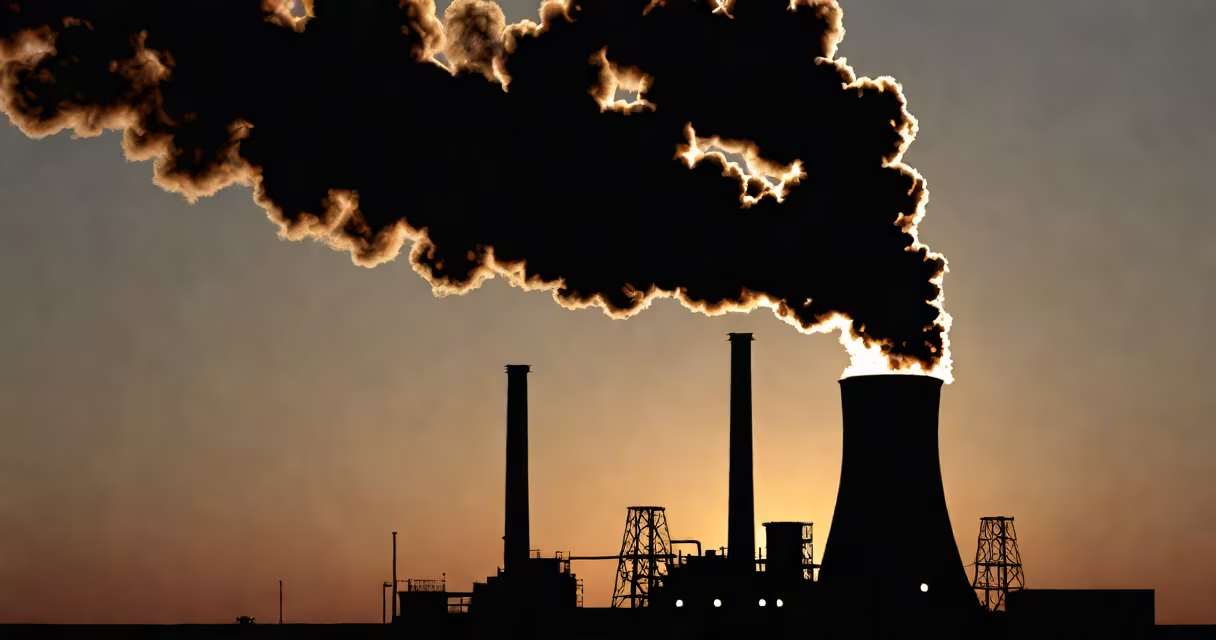
The combustion of fossil fuels is the chemical process in which coal, oil, or natural gas reacts with oxygen to release heat, light, and carbon dioxide. This reaction powers electricity generation, transportation, heating, and industrial processes worldwide. Over 80% of global energy comes from burning fossil fuels, making it central to modern infrastructure.
Combustion occurs when hydrocarbon molecules in fossil fuels break apart and combine with oxygen. The primary products are carbon dioxide (CO₂), water vapor (H₂O), and thermal energy. For example, burning methane (CH₄), the main component of natural gas, follows this equation: CH₄ + 2O₂ → CO₂ + 2H₂O + energy. The energy released heats water to produce steam, which drives turbines to generate electricity.
Global reliance on fossil fuel combustion dates to the Industrial Revolution. Today, it accounts for about 65% of human-caused CO₂ emissions, according to the Intergovernmental Panel on Climate Change (IPCC). Without this process, modern economies would collapse-but its environmental cost is now measurable in rising sea levels, extreme weather, and biodiversity loss.
Combustion begins when a fossil fuel reaches its ignition temperature and mixes with air. Oxygen molecules break the bonds in hydrocarbons-chains of carbon and hydrogen atoms-then form new bonds with carbon and hydrogen to create CO₂ and H₂O. The reaction releases energy because the new molecular bonds are more stable than the original ones.
Complete combustion produces only CO₂ and H₂O. In real-world settings, incomplete combustion occurs due to limited oxygen or poor mixing. This generates harmful byproducts like carbon monoxide (CO), nitrogen oxides (NOₓ), sulfur dioxide (SO₂), and particulate matter. These pollutants contribute to smog, acid rain, and respiratory diseases.
A 2021 study by the Global Carbon Project found that fossil fuel combustion emitted 36.8 billion metric tons of CO₂ annually. That's equivalent to 1.2 million cars running nonstop for a year. Even small inefficiencies in engines or power plants amplify these numbers. A typical coal-fired power plant converts only 33% of fuel energy into electricity-the rest escapes as waste heat.
Fossil fuels differ in energy density, carbon content, and emission profiles. Coal has the highest carbon-to-hydrogen ratio, producing more CO₂ per unit of energy than oil or gas. Oil burns cleaner than coal but still emits significant NOₓ and SO₂. Natural gas, rich in methane, burns the cleanest among the three, though leaks during extraction release methane-a greenhouse gas 80 times more potent than CO₂ over 20 years.
| Fuel Type | Energy Density (MJ/kg) | CO₂ per kWh (g) | Primary Pollutants |
|---|---|---|---|
| Bituminous coal | 24.5 | 1000 | CO₂, SO₂, NOₓ, ash |
| Crude oil (gasoline) | 46.0 | 750 | CO₂, NOₓ, VOCs, particulates |
| Natural gas (methane) | 55.5 | 450 | CO₂, NOₓ, trace methane |
These differences matter. Switching from coal to natural gas can cut CO₂ emissions by nearly half per kilowatt-hour. But even gas combustion contributes to atmospheric warming. The U.S. Energy Information Administration reports that natural gas accounted for 40% of U.S. electricity generation in 2023, up from 19% in 2005-driven by lower costs and perceived cleanliness.
Electricity generation remains the largest application. In 2022, fossil fuels supplied 61% of global electricity, according to the International Energy Agency (IEA). Power plants burn coal or gas to boil water, spin turbines, and deliver current to homes and factories. In developing nations, coal plants remain dominant due to low upfront costs and existing infrastructure.
Transportation relies heavily on liquid fossil fuels. Internal combustion engines in cars, planes, and ships burn gasoline or diesel. A single long-haul flight from New York to London emits roughly 1.2 tons of CO₂ per passenger-equivalent to a car driving 5,000 miles. The aviation sector alone contributed 2.5% of global CO₂ emissions in 2022.
Industrial processes such as steelmaking, cement production, and chemical manufacturing depend on high-temperature heat from combustion. Cement plants, for example, emit 0.8 kg of CO₂ per kilogram of cement produced-nearly all from fuel combustion and chemical reactions in limestone.
People often confuse combustion of fossil fuels with "fossil fuel use" broadly. But not all fossil fuel applications involve burning. Extraction, refining, and transport generate emissions too. For example, methane leaks during natural gas drilling account for up to 2.5% of total emissions-more than the entire aviation industry's CO₂ output.
Another myth: that renewable energy can replace fossil fuels overnight. While solar and wind capacity has grown rapidly, they cannot yet provide constant baseload power. During periods of low sunlight or wind, fossil fuel plants still fill the gap. In Germany, coal use rose 15% in 2022 after nuclear plants closed and wind output dropped-proving combustion remains essential for grid stability.
Even the term "clean coal" misleads. While technologies like carbon capture and storage (CCS) exist, they're not widely deployed. The Petra Nova project in Texas captured 90% of CO₂ from a coal plant-but shut down in 2020 due to high operating costs. Only 0.1% of global fossil fuel plants have CCS installed.
Consider a 500-megawatt coal plant in Indiana. It burns 10,000 tons of bituminous coal daily. Each ton yields about 2.5 tons of CO₂. So the plant emits 25,000 tons of CO₂ per day-over 9 million tons per year. That's equivalent to planting 110 million trees annually to offset it.
On average, such a plant runs 70% of the time. When demand spikes, it ramps up to full output. At peak load, it burns 400 tons of coal per hour. The exhaust contains 1.2 million cubic meters of CO₂ hourly-enough to fill 480 Olympic-sized swimming pools. This output is invisible but accumulates in the atmosphere, contributing to global warming.
I once toured a decommissioned coal plant in Pennsylvania. The boiler room was cold, rusted, and silent. But the stack still bore soot stains from decades of combustion. The scale of emissions wasn't abstract-it was visible in the grime. That moment clarified something: fossil fuel combustion isn't just a chemical equation. It's a physical legacy etched into infrastructure and air.
The combustion of fossil fuels is the dominant method of energy conversion on Earth, releasing stored ancient sunlight as heat and electricity. It powers cities, industries, and transportation systems. Yet it also releases vast quantities of CO₂ and other pollutants, accelerating climate change. Reducing dependence on this process requires not just new technologies, but systemic shifts in energy policy, infrastructure, and consumer behavior.
Understanding the combustion of fossil fuels is essential for evaluating climate solutions. Transitioning away from it demands alternatives like wind, solar, geothermal, and green hydrogen-each with its own trade-offs. The choice isn't between energy and environment. It's between continuing a process that warms the planet or building systems that sustain it.
Explore the geological origins of coal, oil, and gas.
Learn why fossil fuels are finite and irreversible.